What VHS Tape Damage Actually Looks Like, and What Can Still Be Saved
A guide to the five types of VHS tape damage and what professional restoration can recover.
Contents
VHS tape damage falls into five categories: mold and fungal growth, sticky shed syndrome, oxide shedding, physical damage to the housing or tape, and magnetic signal degradation. How recoverable a tape is depends entirely on which type of damage is present, some types give you warning, others quietly destroy footage with no visible signs until playback. This guide covers what each type looks like, what it means for your footage, and what a professional transfer can still recover.
Last updated: April 2026
Most of these tapes turn up when sorting through holiday decorations, preparing a move, or clearing out a home. The question families face is always the same: is the damage reversible, or is the footage already gone? The answer depends on knowing which type of damage you are actually dealing with.
Why the Condition of the Tape Matters More Than Its Age
One might suppose that the primary variable at play in all of this would be the age of the tapes. That, for example, a tape from 1985 would generally be in worse shape than a tape from 1999. This is not always the case.
Most people believe that the shelf life of a tape is roughly equal to its age in years. Actually, the life of a tape is greatly affected by the conditions it is placed in between viewing. As long as a tape is handled properly and kept in a cool, climate controlled space at stable humidity, it will likely last 40 years or more. Conversely, the same tape can deteriorate in less than 5 to 10 years in extremely hot environments such as attics, dusty garages, or musty, damp basements. For a deeper look at average tape lifespans and what degrades them, see our guide on how long VHS tapes actually last.
No consideration is given to the age of the tape, and evaluation is based on the physical condition of the tape (the shell) and of the spool, as well as on the condition of the tape ribbon and the oxide.
Damage Type 1: Mold and Fungal Growth
When working with VHS tapes that have been sitting around for decades, it is almost certain that you will encounter mold at some point. Although this problem is very common, and well-documented in Library of Congress magnetic media preservation guidelines, it is little understood. Mold growth typically afflicts tapes stored in very humid environments, such as damp basements or musty attics, or in over-crowded storage facilities.
What mold looks like on a VHS tape
The mold on VHS tapes will generally look white or yellowish and may appear as gray or greenish mildew. The mold is usually chalky, cottony, or fuzzy. On VHS tapes this mold or mildew is visible on the clear holder on the front of the tape in the form of a spot or widespread discoloration. Some of the moldy VHS tapes we have come across have been opened, and the mold or mildew is visible on the tape itself in a similar manner. There may also be a smell, ranging from earthy and dirt-like to musty.
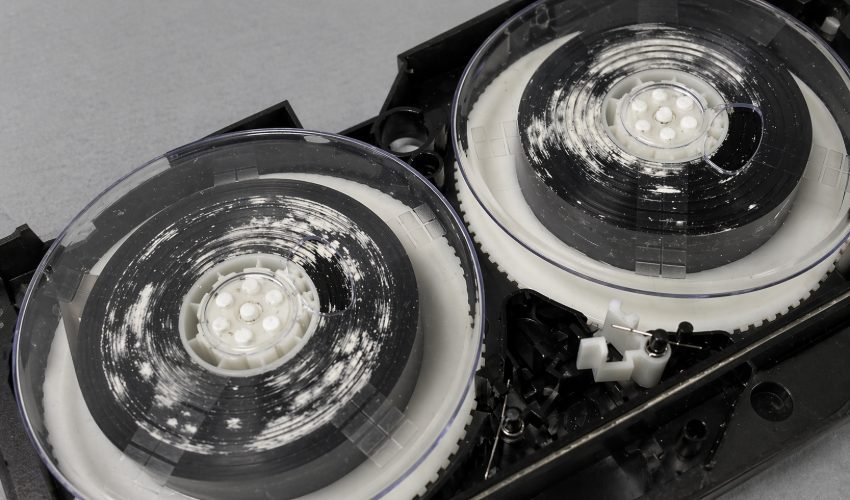
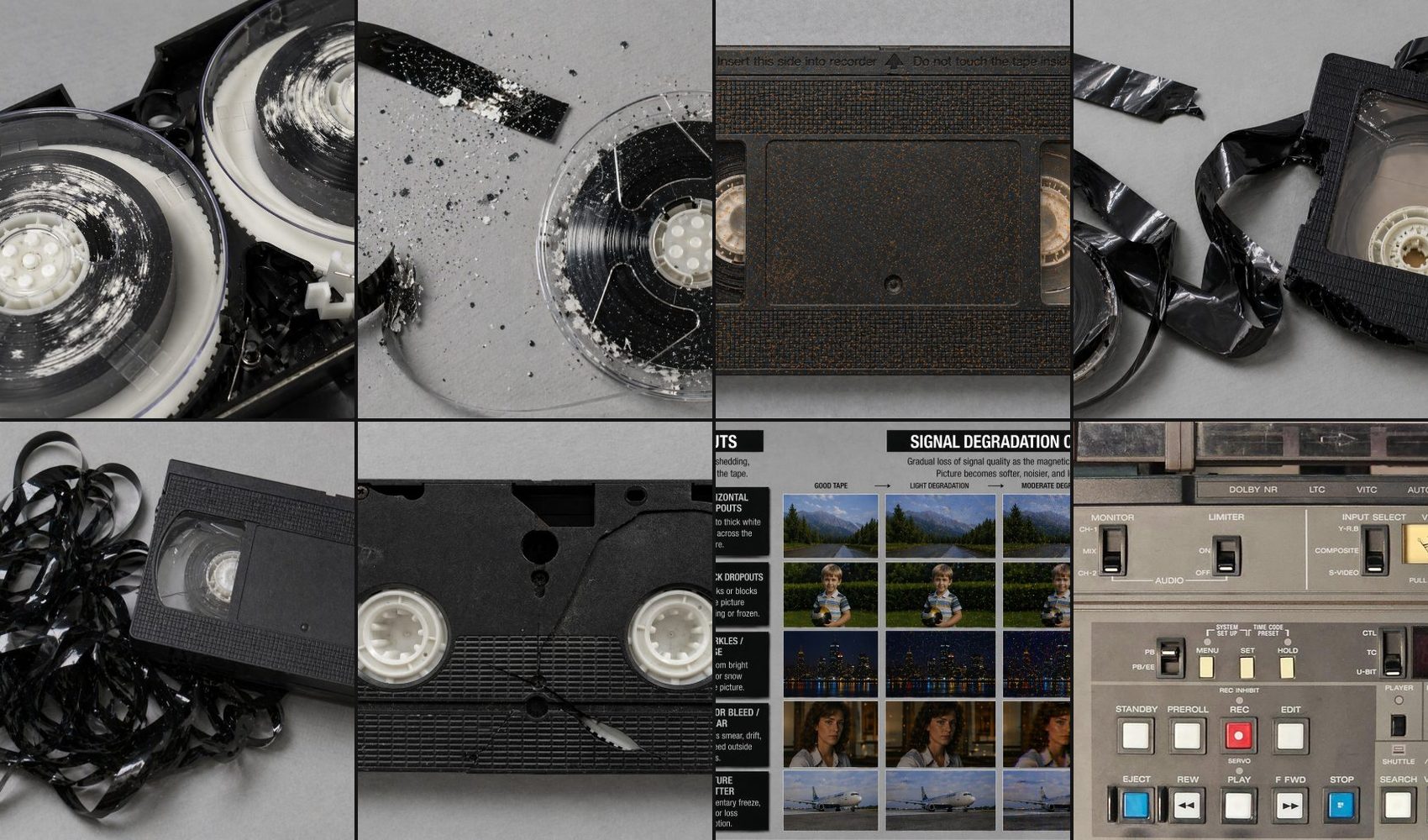
White, cottony mold growing inside a VHS cassette around the reel hubs. At this stage the mold must be fully cleaned before any playback attempt, or the spores will spread onto the video heads.
What this means for your footage
Mold is very bad news, but it is not necessarily fatal to your reels. With proper cleaning by a skilled technician and the right methods and techniques, the problem can be treated before the mold makes contact with the oxide layer on the tape surface and starts to etch it irreparably.
Even after mold has attacked the oxide and caused permanent damage, the remaining material can still contain salvageable footage. But if one waits too long, the mold will have additional time to cause damage to the affected areas and irreparably destroy the contents of the tape. If mold is treated before it has time to cause severe damage, there is a good chance that professional restoration can recover significant amounts of media. However, if one waits six months, restoration options will be greatly diminished.
What to avoid
Never attempt to clean and restore mold using common over-the-counter cleaning solutions or by using paper towels and cotton swabs to wipe away the dirt. The oxide layer on the footage is extremely thin and fragile, so any abrasive contact could easily scratch the footage along with the mold. This is a job for specialized equipment and controlled conditions.
Damage Type 2: Sticky Shed Syndrome
When people refer to sticky shed syndrome, they are referring to the deterioration of the binder of magnetic tape, a process documented extensively in the CLIR report on magnetic tape storage and handling. The binder is the non-magnetic material which holds the magnetic oxide particles, which IASA technical guidelines on magnetic tape identify as the primary mechanism of permanent data loss to the tape base material. As the binder slowly breaks down due to absorption of water from the air, the magnetic oxide particles are released one by one from the tape causing shed. Playing shed tape results in these particles adhering to your tape heads and other surfaces, leaving a sticky residue behind.
The consequences of sticky shed syndrome upon playback are two-fold. First, the tape may not play through completely, eventually coming to a halt in the transport mechanism of a VHS player. Second, every time that the problem tape passes over the playback heads it will shed more of its oxide layer, removing more of the recorded information from the tape.From a Forever Studios transfer technician: "The tapes that concern me most are the ones that look completely fine on the outside. The housing is intact, there is no visible mold, and the person assumes it is probably okay. But when you put it on the deck and it will not transport, that is sticky shed, and the window to treat it is already smaller than it was a year ago."
Signs of sticky shed
A tape that a VCR transport slow-plays into the reel slot, or plays badly with squealing noises, can have sticky shed. One way to check is by feeling the tape gently with clean hands after carefully opening the cassette. We do not recommend attempting to feel a tape for sticky shed while it is still in the plastic case at home, as this can be extremely dangerous to the longevity and structure of the tape.
Sticky shed is named for the coating that becomes sticky and transfers residue to anything the tape touches during playback. Oxide shedding can occur through physical stress or damage to the tape, exposure to high heat or cold, and is typically a late life failure for a particular tape material.
What this means for your footage
Although there has been some shedding of the oxide, there is still time to rescue this video. With today's techniques the shed oxide can be mitigated to provide a very enjoyable watch. All affected video is first treated by a brief, low temperature baking to rehydrate the oxidation into a sticky paste, then a single playback pass is captured before it degenerates. The affected video is then stored safely in a digital format and the original tape is marked as depleted.
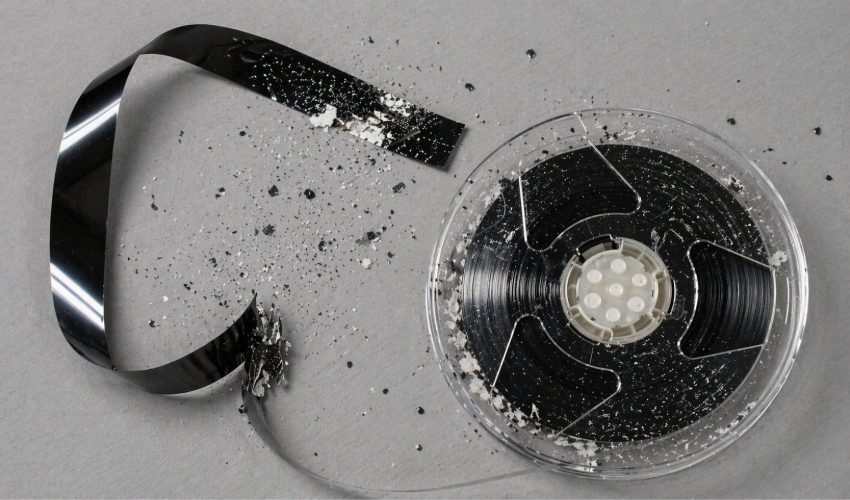
Sticky shed in action: loose oxide particles flaking off a degraded VHS tape. Each pass over a VCR's playback heads removes more of what was originally recorded.
Damage Type 3: Oxide Shedding
The ferric oxide (iron) pigment in magnetic video tape has a tendency to leak out when exposed to light, appearing as a fine reddish-brown powder within the cassette shell or as a dust on the magnetic tape ribbon.
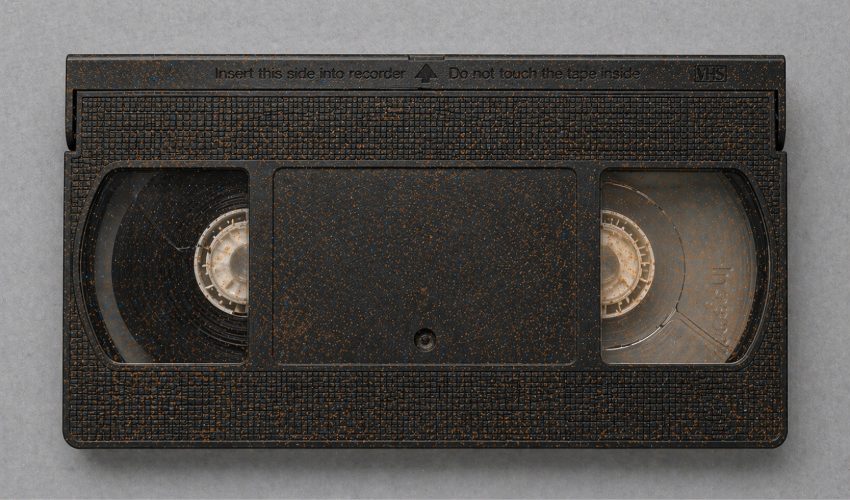
A VHS cassette tape window. Oxide shedding first shows up as a fine reddish-brown dust visible inside this window, or as uneven tone on the ribbon surface.
What this means for your footage
There is inevitable oxide shedding in any old magnetic video tape. The original footage was stored in the magnetic oxide that coated the tape, which has flaked off into a fine powder and is now separate from the ribbon of the old tape. Unfortunately, this means that in the worst affected areas of the old tape what you will see instead of your original footage is either random and distorted video, or a series of dropouts or blocks of dead space.
Typically, early in the cleaning process, it becomes apparent just how much loss there will be. In some areas, the tape will have shed only moderately, and therefore yield a considerable amount of still usable video. In other locations, the tape will have completely shed, removing any hope of video recovery.
Damage Type 4: Physical Tape Damage
While chemical problems do cause many symptoms with tape, physical problems are also very common and can have a number of different causes.
Broken or creased tape
A problem with the ribbon inside the cassette. The ribbon could be broken or creased (folded or buckled). A crease usually appears on the cassette as a thin diagonal line. A break in the ribbon can cause the playback to stop. This type of problem occurs when a VCR failed while playing the tape or when the tape was dropped or jerked and then erratically rewound.
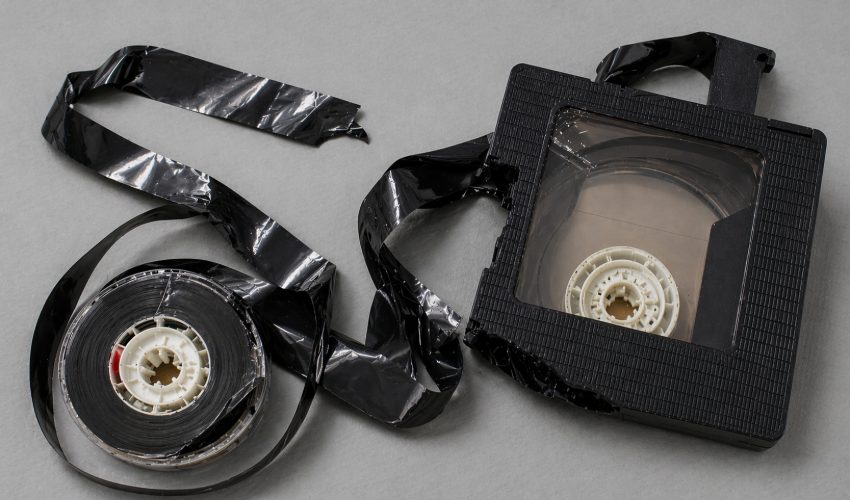
A VHS cassette with a broken shell and ribbon damage. Creases show up as thin diagonal lines across the ribbon, and a full break stops playback entirely.
Loose or tangled ribbon
Although rare, the tape ribbon may come loose from the large spools it sits upon while stored inside the cassette housing. If this occurs, the ribbon is likely to tangle. While this problem is generally repairable by carefully unspooling the tape and making sure it is lying flat and even within the cassette housing, the delicate nature of the ribbon makes it a time consuming process that requires patience and care.
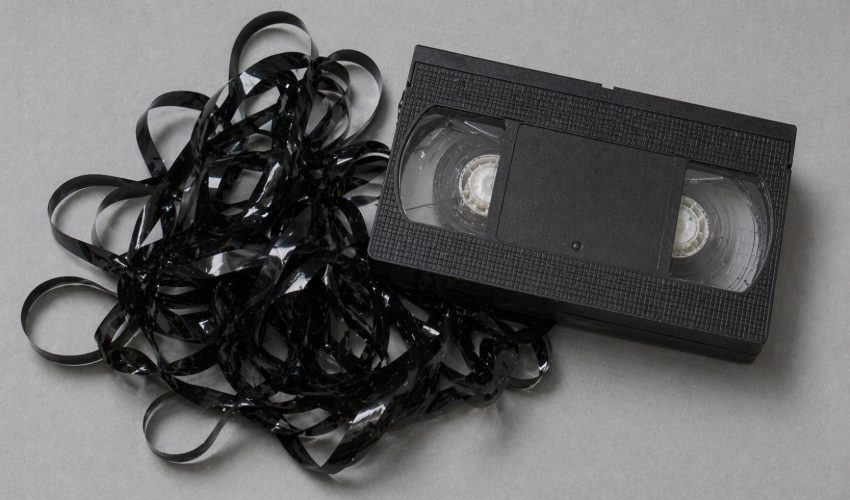
Loose, tangled tape pulled from a VHS cassette. Usually salvageable with careful unspooling, but the process is slow and has to be done by hand.
Damaged cassette housing
A damaged cassette shell that has broken from trauma will typically break at a point where the spool hub is destroyed, or where the tape lock mechanism has failed, leaving the sensitive tape ribbon itself unplayable. But in most cases, the tape can be carefully removed from the broken shell and re-mounted onto a replacement donor cassette shell.
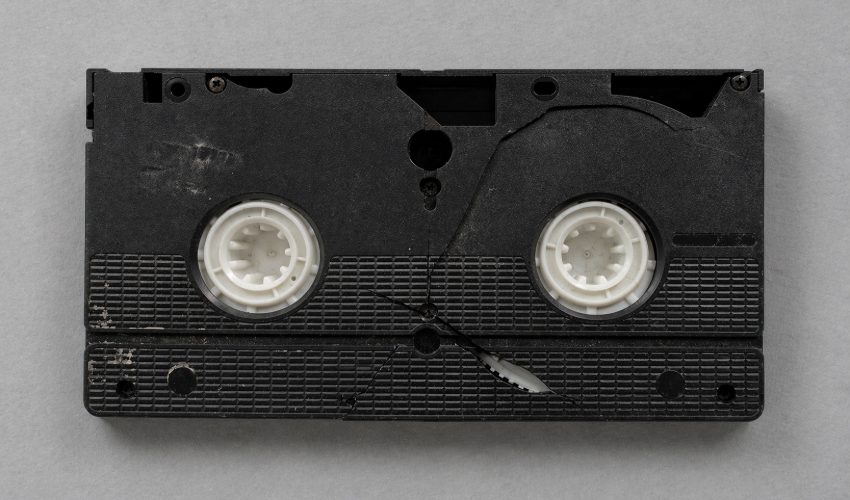
A VHS cassette with the shell opened to expose the spool hubs. When the housing is fatally damaged, the tape is carefully transferred into a donor shell for playback.
What this means for your footage
Physical damage is generally the easiest to repair as it is mechanical as opposed to chemical and can be repaired by a skilled technician. As long as the housing is not too badly damaged and the reels are securely in place, there is a good chance that the footage is 100% intact. All the tape needs is a path to play it out.
Damage Type 5: Magnetic Dropouts and Signal Degradation
It is also possible that the tape looks and sounds fine while playing, but has suffered from magnetic degradation, the least detectable form of deterioration that most people miss.
These problems can appear as horizontal white or colored bars, brief freezes, or other kinds of seemingly random visual noise. Magnetic dropouts occur when the magnetic oxide of the tape has lost charge, or when the oxide particles have shifted and there are gaps in the information that has been recorded.
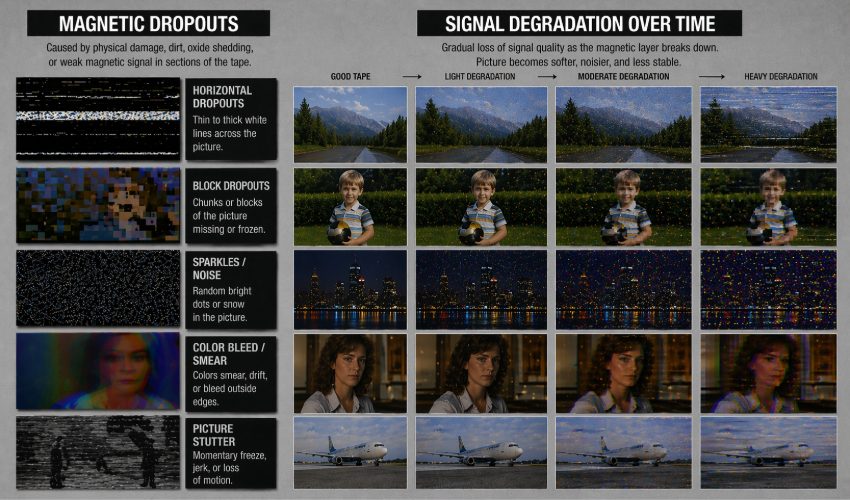
Reference comparison: magnetic dropouts show up as sudden bars and glitches in a single frame, while signal degradation is the slow loss of color, sharpness, and stability over time.
All tapes drop out to some extent, whether it be modern or old media. VHS was never a lossless format, and all magnetic media has a degradation limit, or point where it will no longer function. What is important to video restoration professionals is not so much whether or not the tape has some dropouts, but rather the rate at which it is degrading, and the pattern in which the dropouts occur. A few random dropouts are generally of little consequence, but a dense, recurring dropout occurring in the same pattern all over the tape can indicate that the magnetic layer is reaching the end of its life.
What this means for your footage
Although signal processing can offer some improvement during the transfer process, it is important to be aware that once dropout occurs, that which is erased by the dropout cannot be recovered. All that can be done is to transfer the remainder of the signal as cleanly as possible before it too becomes degraded.
What Can a Professional Transfer Recover From a Damaged Tape?
Most professional services do not simply play out your VHS tapes when transferring them. Instead, the VHS tape is played through calibrated equipment to obtain the optimal quality possible for that specific recording. The video and audio signals are then captured and stored as a digital copy of the recording permanently. If you want a walk-through of what actually happens from intake to final delivery, our guide on how to transfer your VHS home movies covers the steps in detail.
We cannot add footage or information not contained on the original tape, but we can provide a professionally transferred copy so you can see what is really on the tape. Even though we can state there is oxide loss and dropouts we cannot guarantee that we can reverse or restore lost footage due to oxide shedding if it existed on the original. What you will receive is the very best copy of the information that is on the tape. Understanding how professional digitizing and restoration works helps set realistic expectations before you send anything in.
The difference between playing a tape on a worn consumer VCR and running it through calibrated professional playback equipment is not cosmetic. Professional decks are tuned to extract the maximum signal from degraded tape, capturing detail that a home setup would simply lose.
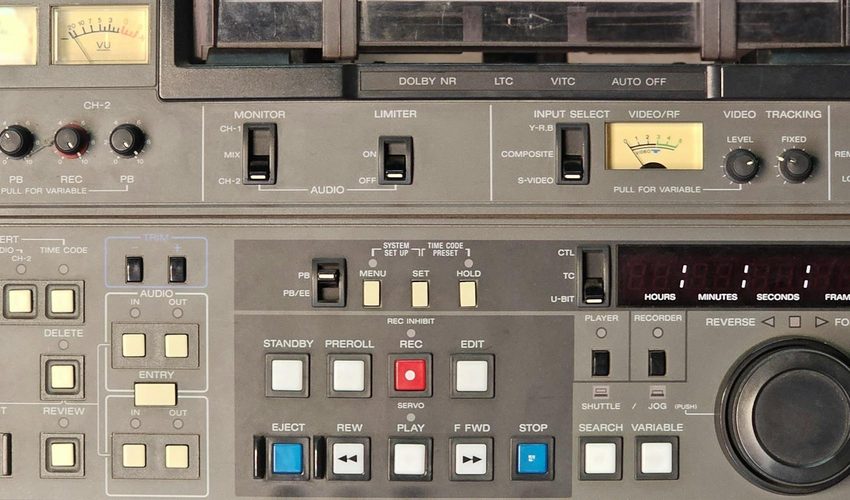
Professional Betacam and U-matic videocassette decks. Broadcast-grade playback equipment extracts signal that a consumer VCR simply cannot.
How Much Time Do You Have Before a Damaged VHS Tape Is Unrecoverable?
The degradation of VHS tapes is often misconceived as occurring in an instant. What actually happens is ongoing and currently occurring, differing in severity depending on storage conditions, brand of tape and the extent to which early degradation mechanisms have already impaired the material.
People ask if we can transfer their family video from VHS, but really the more important question is how much of it will actually be restorable.
Restoring decades old video tape is often far easier than you might imagine, especially if acted upon quickly enough. As long as there is still some recoverable content on the tape, mold can be treated before it eats through the delicate oxide layer on your old video tapes. Sticky shed can also be mitigated before the binder completely fails, allowing a possible partial or even complete recovery. However, each year the tape spends sitting in less than ideal storage conditions shrinks that window just a little bit more.
The same principle applies to other analog formats sitting in storage. 8mm film reels undergo their own chemical breakdown process, and the sooner that media gets transferred, the better the end product is likely to be.
What to Do With Tapes You Are Not Sure About
For your best results, it is recommended that you take a look at the old tapes before deciding on a cleaning and transfer process. Even experienced transfer technicians can give the tape a once over to check for any damage and give you a general idea of what the transfer and restoration process will be like and what the final product will look like for your old footage.
You do not have to guess. You do not have to risk further damage by trying to play the old tape on a VCR. You do not have to assume that a visibly damaged tape is a total loss. Usually it is not.
That kind of careful assessment is exactly what the team at Forever Studios provides. Forever Studios scans for any defects in the tape and makes repairs to ensure the best quality possible before even beginning the conversion. We treat your old tapes with care and respect. Our VHS to digital transfer service starts with understanding what you have, which means looking at each tape carefully before anything goes into a machine. If there are problems we can address, we address them. If there are limitations we cannot overcome, we tell you honestly what to expect.
We can determine the residual value of the content in VHS tapes and other libraries held in storage. If you have VHS tapes sitting in a box right now, we can help you figure out what is still there. If you are in Florida, our South Florida VHS tape transfer service handles local drop-offs directly.
Related reading: How 8mm Film Degrades Over Time | Our Digitizing and Restoration Process

Ready to digitize it right the first time?
Bring your tapes, film, and photos to the team that treats every project as irreplaceable. All work is handled in-house in Boca Raton, never outsourced.