Reel-to-Reel and Cassette Tapes: What Actually Threatens Your Old Audio
Sticky shed, disappearing decks, and which of your audio tapes are actually at risk
Contents
Most audio tape is just fine for now, and we can put the panic about impending doom for old audio tape into storage. Preservationists completed a comprehensive study of legacy magnetic audio tape, meaning reels and cassettes, and the news was very good. Published by the Council on Library and Information Resources, the study tested magnetic audio tape under various storage conditions and concluded that good-quality polyester tape, kept in normal cool, dry conditions, is likely to be playable for decades, and in the best cases over a century.
Key takeaways
- A 2022 preservation study found good polyester audio tapes may stay playable for decades, even up to about 100 years, so a blanket "digitize now or lose everything" deadline is a myth.
- Sticky shed syndrome is a binder breakdown that mainly affects reel-to-reel and certain professional and consumer tape stocks from the 1970s and 1980s; it makes tape gummy, squeal, and shed.
- Tape baking is a temporary fix: gentle low heat drives moisture out of the binder so a tape can be played once to transfer it, then it reverts.
- The bigger long-term problem is equipment: reel-to-reel decks and quality cassette players are out of production, and the alignment skills to run them are getting rare.
- Store tapes upright, tails out, in a cool, dry place around 30 to 40 percent humidity, away from heat and magnets.
This is a longer read than usual, because the honest answer depends on the format, the stock, and how the tape was stored. Here is a guide to which of your treasured audio tapes are likely to go bad and which will be safe for years to come.
Do old audio tapes really go bad?
Some do, and many do not. Most tape is built on a sturdy polyester film base, and that base is chemically stable. As long as the tape is not physically damaged, good-quality polyester-based audio tape is likely to remain playable for decades, even centuries, when stored in normal room conditions. What fails is usually not the base but the binder, the layer that holds the magnetic coating onto it. When the binder deteriorates, the coating can shed from the tape, which makes the tape squeal, eventually jam, and leave a residue on the heads that read it.
A 2022 study published by the Council on Library and Information Resources investigated the preservation of audio tape collections and reached an encouraging conclusion. Good-quality polyester-based tapes, like those used for cassettes and reel-to-reel recorders, that play well today and are kept in normal conditions are expected to remain playable for decades, and in some cases a century or more. That expected life drops sharply, though, once a tape has already started to deteriorate.
So the accurate picture is not that all audio tape is dying quickly. A specific subset of tapes has a specific problem, and the machines to play any of them are getting scarce. The rest of this article is about telling those apart.
What is sticky shed syndrome, and which tapes get it?
The chemical process behind most tape decay is called binder hydrolysis. Over time, the binder in the tape's coating absorbs moisture from the surrounding air, and that moisture drives the binder to break down. This affects all magnetic tape to some degree, but tapes made with a polyurethane binder are especially susceptible. As the binder breaks down, the coating turns soft and sticky. It leaves residue on the tape guides and heads, and it can shed or flake off the tape entirely. That residue harms both the sound quality and the tape player, and it is difficult to remove. This is sticky shed syndrome.
The shed residue can be very damaging. The Library of Congress, which runs a dedicated research project on the problem, notes that the residue can harm playback equipment and degrade the audio signal, and it can leave a black or brown stain on the guides and heads that then affects other tapes.
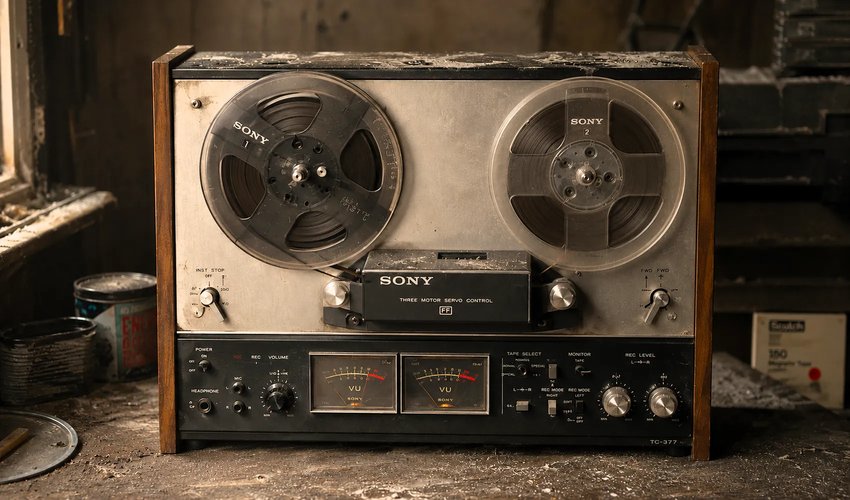
Shed coating, powder inside the shell, or a squeal on playback are the signs to watch for.
Not all tape is equally at risk. Professional-quality reel-to-reel tape, especially older stocks, is more likely to develop sticky shed than consumer cassettes. Some cassette stocks are worse than others, and in general tapes made in the 1970s and 1980s are more likely to develop problems than those made in the 1990s and stored indoors. If you have reel-to-reel tapes from that era, treat them as the highest-risk items in your collection. A shelf of 1990s cassettes kept indoors is a much safer bet.
Reel-to-Reel & Cassette Transfer
We digitize reel-to-reel tape, audio cassettes, and micro-cassettes, including sticky shed tapes that need baking before they can be played, captured at archival quality in a single careful pass.
GET STARTEDHow long do cassette and reel-to-reel tapes actually last?
What actually breaks down inside a tape, and why heat and humidity speed it up.
On average, cassette tapes recorded in the late 1980s and 1990s begin to degrade after 20 to 30 years in ordinary storage. That rule of thumb is why tapes from that era are worth attention now, though ones stored indoors can generally wait their turn.
The recent preservation research widened that picture. In the study cited above, good-quality polyester-based tape that plays well in normal conditions of temperature and humidity is likely to remain playable for decades, and in some cases up to a hundred years or more. As with so many things, the longevity of audio tape comes down largely to how it is stored, and to two variables in particular: heat and humidity. Both are damaging, and humidity is the worse of the two, because at high humidity fungi can grow and eat the binder.
For a family in South Florida this matters. A box of audio tape in a garage or an exterior-wall closet is probably deteriorating faster than an identical box in a cool, dry, air-conditioned interior room. A climate assessment of the storage location is as important as an assessment of the chemical stability of the tape itself.
Can a sticky or squealing tape be saved?
Usually, yes, at least long enough to rescue the recording. To transfer audio from old tape you have to play it, and if a tape has sticky shed it often needs to be baked first so that it will play long enough to capture. Baking heats the tape gently for a set period to drive the moisture out of the binder. Researchers at the Library of Congress identified the specific temperature at which the binder undergoes a physical change, which is what makes the treatment work.
That is the whole window, however. The tape is baked, played once to record the signal to a computer, and after that it can no longer be safely played, because further playback will shed even more coating than before. From then on the digital transfer is the copy you use. When the Library of Congress works with a sticky shed tape, it opens the tape once, captures the best recording it can, moves it to a digital medium, and never plays the original again.
"We bake and transfer sticky shed tapes every week, and almost all of them still hold the recording," says Zachary Goldberg, owner of Forever Studios. "The mistake people make is running a squealing tape through a home deck a few more times to get it working. That is usually the pass that destroys it."
One warning: do not play squealing tapes on a home stereo repeatedly, hoping the problem will clear itself. Each pass strips more coating from the tape, fouls the heads, and pulls poor signal. Tapes in bad shape should be transferred promptly by someone with the right equipment to bake and capture them in one careful pass.
Is the bigger risk the tape or the machine?
For most collections, the machine. Reel-to-reel decks have not been made for the consumer market in decades, and quality cassette decks followed them out of production, so the supply of good machines shrinks every year. The ones that remain increasingly live in the hands of studios, archivists, and engineers, and playback is a skill that is not quickly learned.
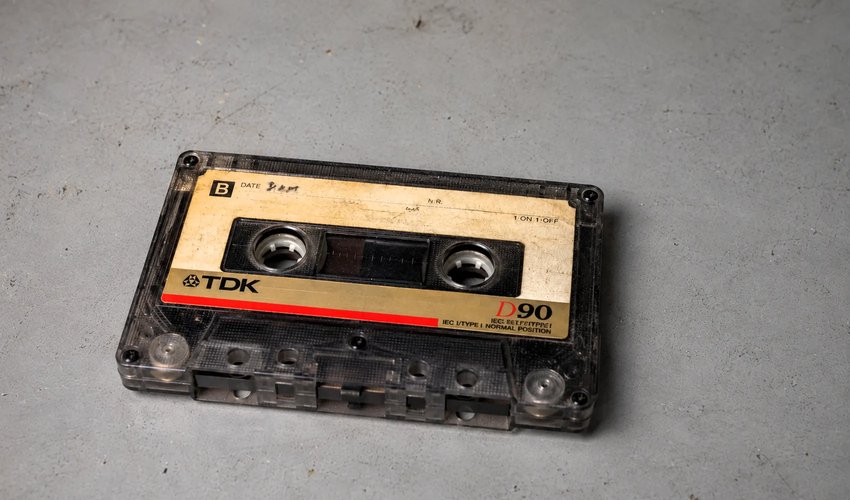
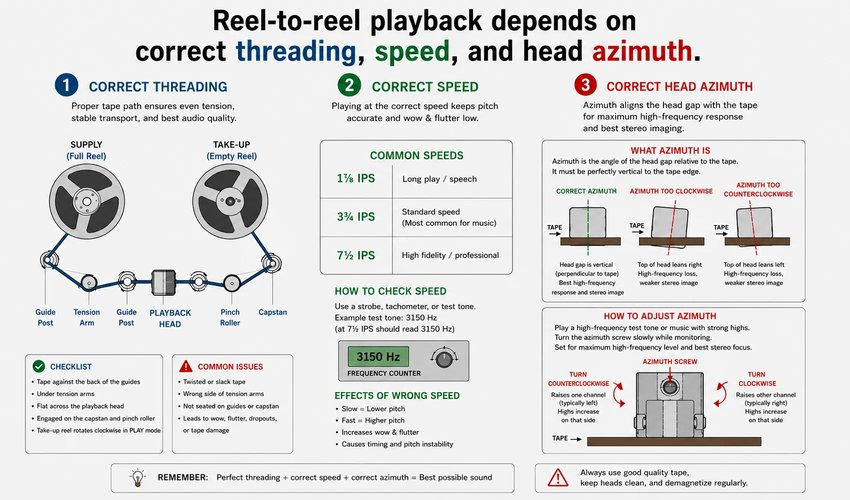
Reel-to-reel playback depends on correct threading, speed, and head azimuth.
Reel-to-reel tape in particular has to be threaded correctly, played at the right speed, and read with the tape head set to the correct azimuth, the angle at which the tape's magnetic tracks were recorded. If the head is set to the wrong azimuth, the sound comes out muffled and dull even from a tape that played back perfectly when it was new.
The equipment clock for reel-to-reel is shorter than the chemistry clock for the tape. A tape that could last a hundred years or more can still be lost within a few decades if there is no way left to play it.
Full Collection Media Digitizing
Audio tapes, video tapes, film reels, photos, and slides in one project. We inventory, digitize, and return everything with organized files you can share with the whole family.
GET STARTEDHow should you store audio tapes to keep them playable?
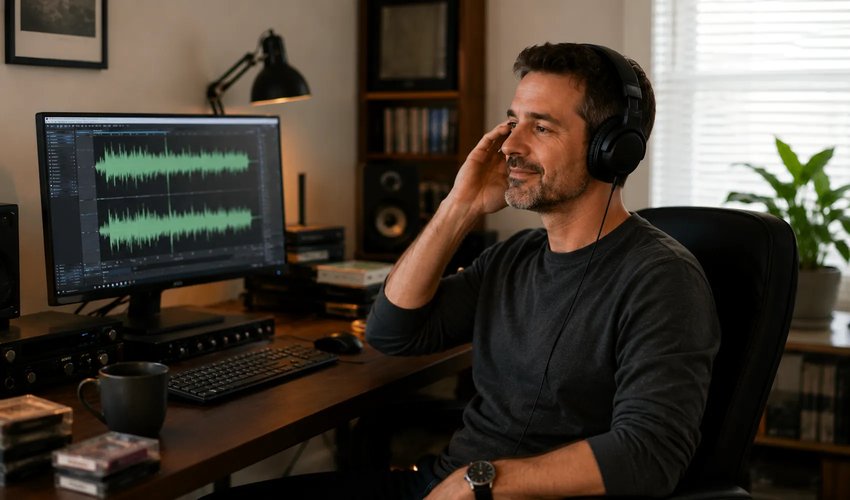
Cool, dry, upright, and tails out: the storage that buys your tapes decades.
Storage is the one part of preservation fully within your control, so it is worth getting right. Store tapes in a cool, dry, stable interior room, not in an attic, garage, or exterior-wall closet where the climate swings too much. Aim for a relative humidity of about 30 to 40 percent. Sudden, extreme changes in temperature and humidity are harder on tape than moderate, steady conditions, so stability matters as much as the numbers.
A few tape-specific habits help. Store cassettes and reels upright, on edge, rather than stacked flat. Reel-to-reel tape is best stored tails out, meaning played to the end and not rewound, which leaves a smoother pack and reduces print-through, the faint echo that can transfer between adjacent layers. Keep tapes away from heat sources and from strong magnetic fields such as loudspeakers.
Good storage slows the process. It does not reverse damage that has already happened, and it cannot bring back a recording that has already shed. For anything irreplaceable, storage buys time to digitize rather than replacing the need to.
Which of your tapes should you digitize first?
Sort by two things: how irreplaceable the recording is, and how at-risk the tape is. Home recordings are generally more valuable than commercial recordings of the same songs, so a tape of irreplaceable family audio, or a band's only session, should be digitized before anything else, regardless of format. After that, work through the collection starting with the most fragile format and stock.
Reel-to-reel tapes come first among the rest, because they are the most prone to sticky shed and the hardest to find working machines for. Cassettes in bad shape come next. Mass-produced commercial cassettes of music you can simply buy again come last, because the recording itself is not at risk even if the tape is. Any tape already squealing, smelling musty, or showing visible residue should be set aside from the healthy tapes and transferred soon.
"A reel or cassette that squeals the first time you play it is telling you it has one clean pass left," says David Jacobs, lead media transfer technician at Forever Studios. "We bake it if it needs it, capture it once, and work from the digital file after that."
What to do with your tapes now
Start by making an inventory, listing your reel-to-reel tapes separately from your cassettes, and noting which are irreplaceable and which are commercial music you could rebuy. Then check each tape for the warning signs of sticky shed. Open the cassette shells, even on tapes you are not currently playing, and look for shed coating as a fine white powder or a sticky residue inside the shell or on the tape. Set aside anything showing those symptoms, and move the whole collection out of hot or humid storage into a cool, dry interior room.
Then digitize the irreplaceable and at-risk tapes, starting with reel-to-reel. The tape itself may have many years of life left, but the machines and the trained hands needed to play it are the parts that are genuinely running out.
Forever Studios, a professional photo and video preservation studio in South Florida, digitizes reel-to-reel tape, audio cassettes, and micro-cassettes alongside film, photos, slides, and negatives. Our audio transfer work includes handling sticky shed tapes that need baking before they can be played, capturing each recording at archival quality in a single careful pass. If you have reel-to-reel tapes or a box of old cassettes holding a voice you cannot replace, those are the ones worth starting with.
What customers say
The audio transfers are some of the most personal work Forever Studios does, and they run all through its 3,100-plus reviews across Google and Reviews.io at a 4.97 average. A few:
“The transfer of my cassette tapes to digital turned out great! The cassettes had been in storage for over 30 years, and I’m so thankful to finally hear my great-grandfather singing. There was excellent communication throughout the process.”
Brian, verified Forever Studios customer ★★★★★
“I sent in two audio tapes of my deceased father's voice, the only items I have with his voice. I admit I was nervous. But in about ten days I received the tapes back along with the items I ordered and everything was perfect. Forever Studios kept me advised the whole way.”
Rebecca, verified Forever Studios customer ★★★★★
“After over 16 years since my Dad passed away, it was awesome to hear his beautiful tenor voice once again from our new CDs that were made from our old cassette tapes. What a treasure!”
Robin, verified Forever Studios customer ★★★★★
More are on the Forever Studios reviews page.

Ready to digitize it right the first time?
Bring your tapes, film, and photos to the team that treats every project as irreplaceable. All work is handled in-house in Boca Raton, never outsourced.