Your 35mm Slides and Negatives Are Fading Faster Than Your Prints. Here's Why.
Color dyes, vinegar syndrome, and why the film 'original' is the fragile part of your archive
Contents
Photos fade, and prints usually fade less than color slides and film negatives. The dyes used in color images are not permanent, and some color film fades in the dark within a few decades. The chemical base the images were recorded on can also break down. Film made on an acetate base is subject to a deterioration commonly known as vinegar syndrome, which can cause shrinkage, brittleness and curl, buckling or channeling across a strip, a strong odor, crystalline deposits on the surface, and plasticizer leaking out through tiny bubbles. In many families the box of slides and negatives is treated as the "original" of the photos printed from them. In many cases, however, those original color films are the most fragile part of the archive, and the first to fail.
Key takeaways
- Color images are made of three dye layers (cyan, magenta, yellow); the yellow layer is least stable in the dark, which is why old film drifts pink or magenta.
- Slide film dyes fade faster in dark storage than color negative dyes, so the "original" is often more at risk than the print.
- Kodachrome is extremely stable in the dark but fades quickly when projected; Ektachrome and Fujichrome are more light-stable but less dark-stable.
- Vinegar syndrome is autocatalytic: once acetate film starts giving off acetic acid, the decay accelerates and spreads to nearby film.
- Ideal storage is cool (colder is better), 30 to 40 percent relative humidity, and dark.
Some of you will have slides and others will have negatives, stored in a range of ways. To give a meaningful answer, this article explains how the film deteriorates, outlines the signs of deterioration, and then covers what can be done to save your photographs before it is too late.
Do 35mm slides and negatives really fade?
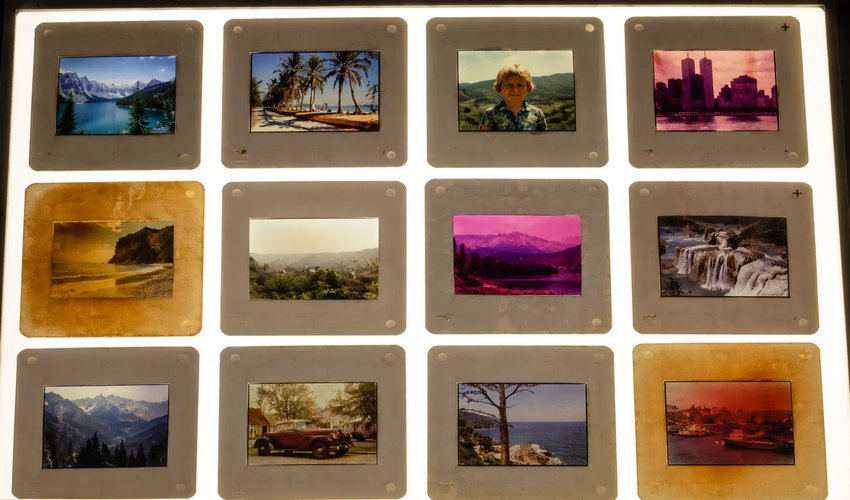
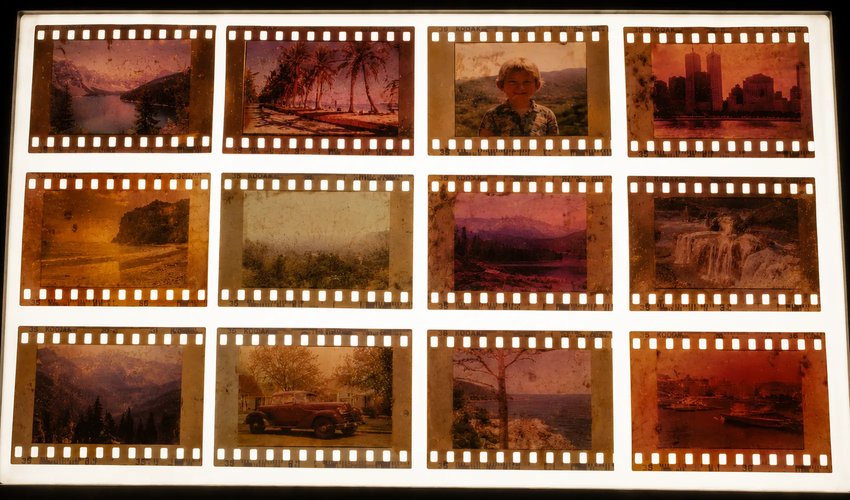
The vast majority of color film is made with organic dyes suspended in gelatin. These are not fixed images the way prints or engravings are. They degrade over time, and as they do the image fades and takes on the color cast of the most stable dye, usually a shade of pink, magenta, or orange.
In terms of physical deterioration, color slides (positive film, or transparency) are more prone to fading than their color negative counterparts. This is because the dyes used in most color transparency films are less stable in the dark than the dyes used in color negative films. So the "original" slides in your family's archive may actually be the least stable items in the collection.
All types of color image fade in a similar way. The maximum amount of color you will ever see in a slide is the amount you can see today. It will not increase with time, and it will always reduce. Temperature is the single biggest factor affecting color fade in storage. Slides kept in a very hot attic or closet in South Florida will fade faster than the same slides stored in a cool, dry interior.
Why does color film fade at all?
A color image is made up of three layers of dye: the cyan, magenta, and yellow layers. Each layer is a different organic chemical dye, and as a result each fades at a different rate over time.
The least stable of the three is the yellow dye. As the yellow layer fades first, it throws the image out of balance with the other two layers, and the picture begins to take on a magenta or pink cast. This kind of fading is most noticeable in images from the 1970s and 1980s. The cause is not the paper the print was made on, nor the amount of light it was exposed to. It is the natural degradation of the yellow dye in the color film itself.
The dark can be as detrimental to film as light. The most common form of decay in storage is chemical, and it is driven by the storage environment. Temperature and humidity are the two primary factors, which is why the recommended storage environment for film is always a cool, dry place.
35mm Slide & Negative Scanning
We scan 35mm slides and negatives at high resolution and color-correct the fading and pink shift that build up over decades, so the image you get back is closer to the original than what is left on the film.
GET STARTEDWhich lasts longer: slides, negatives, or prints?
Color negative films are generally more stable in dark storage than color transparency and slide films. Color prints kept in a cool, dark place in a sturdy album, away from light, will often last longer than the original slides or negatives from which the prints were made.
That ordering surprises people, because the slide or negative feels like the master copy. In practice the film "original" can decay quickly while the print lasts almost indefinitely. The safest approach is to treat every format in a collection with equal importance and start working with all of them as soon as possible.
Black-and-white film is a different story altogether. When a negative is properly processed and washed, the result is a permanent image of silver on film base, and silver is far more stable than dye. As the Library of Congress notes in its guidance on negatives, stored in a cool, dry place black-and-white negatives can last for decades or longer, and archives of 1950s black-and-white negatives still look nearly perfect. This is why, in a mixed archive of color and black-and-white film, the color films are the most urgent to transfer before they all fade to pink.
What is vinegar syndrome, and how do you know if your film has it?
Vinegar syndrome is a chemical deterioration of the acetate base used in most film from the 1930s to the end of the twentieth century. The acetate base reacts with moisture in the air to release acetic acid, the acid that gives vinegar its smell. According to the National Film Preservation Foundation, once that acetic acid forms it acts as a catalyst for further deterioration, which is why the process speeds up once it starts.

A light table reveals color shifts and physical damage that are invisible in the sleeve.
The signs of deterioration are easy to recognize once you know them:
- A sharp vinegar smell when the box or film sleeve is opened, usually the first sign
- Shrinkage, where the film no longer fits its original package or reel
- Brittleness and curling, so the film cracks rather than folds
- Channeling, buckling, or warping across the film strip
- Clear or colored crystal formations on the film surface
- Small liquid-filled bubbles in the emulsion or on the surface, from plasticizer leaching out of the base
Vinegar syndrome is an autocatalytic process: the film deteriorates, and the byproducts of that deterioration cause more deterioration, so the decay accelerates over time. It can also spread, since one badly affected roll can speed the decay of film stored next to it. As documented by the National Archives, affected film should be isolated. As soon as you find film that is deteriorating, begin digitizing it as quickly as possible and store the original in a separate location.
Does Kodachrome fade differently from Ektachrome and Fujichrome?
There are big differences between films in how they degrade, and in how they were used. The most stable color film in dark storage is clearly Kodachrome, the 35mm slide film that was for many years the dominant color film on the market. Slides shot on Kodachrome and stored in the dark for 30 to 40 years can look almost perfect, with no signs of fading. Its weakness is light: the dyes in Kodachrome are unstable under the heat and brightness of a projector, so Kodachrome slides that were projected many times can deteriorate rapidly.
The dyes used in Ektachrome and Fujichrome behave the opposite way. They are more light-stable, so they hold up better under projection than Kodachrome. But once in storage, these dyes decay much faster in the dark than Kodachrome, often turning deep red or nearly colorless after several decades in a dark closet.
The practical takeaway is that you cannot judge a slide by how carefully it was stored alone. A slide can be faded to an unacceptable degree and still project perfectly, and a never-projected Ektachrome slide can be as damaged as a heavily projected Kodachrome one, for opposite reasons.
Faded Photo & Slide Restoration
When color has shifted or detail has washed out, our art team restores and rebalances the image by hand after scanning, recovering faces and color the naked eye can no longer see.
GET STARTEDHow should you store slides and negatives to slow fading?
Cool, dry, dark, and out of the garage: the storage that slows the fade.
The three controls for film deterioration are temperature, humidity, and light. Temperature is the primary one, and the cooler the storage the better: every degree of reduction increases the life of the dyes. Film is also best kept at a reasonably dry humidity, around 30 to 40 percent relative humidity, because high humidity accelerates deterioration of both the dyes and the acetate base. The last control is light, and film is best stored in the dark to slow light-driven fading.
In practical terms for a family collection, and echoing the Smithsonian Institution Archives guidance on storing slides, store slides and negatives in the coolest, driest, darkest interior part of your home, out of the garage, attic, or exterior-wall closet. Keep any reels or sleeves giving off a strong vinegar odor apart from the rest of the archive, and store film in archival-quality sleeves made of polypropylene, not PVC.
Good storage buys time. It does not stop deterioration, and once an image has faded it cannot be un-faded. For images that matter, cold storage buys time to digitize rather than a permanent reprieve.
Can faded slides and negatives be restored?
Yes, in part, and the sooner the better. If a slide has faded, the image can be scanned and then color corrected, either in software or by a professional. The result will have less color intensity and less detail than the original, but the picture can be retrieved. When a dye has faded to complete loss, however, there is no information left in the slide to rebuild that color from. The best that can be done in that case is to guess what the lost color most likely was and apply it in the scanned image, which is reconstruction rather than restoration.
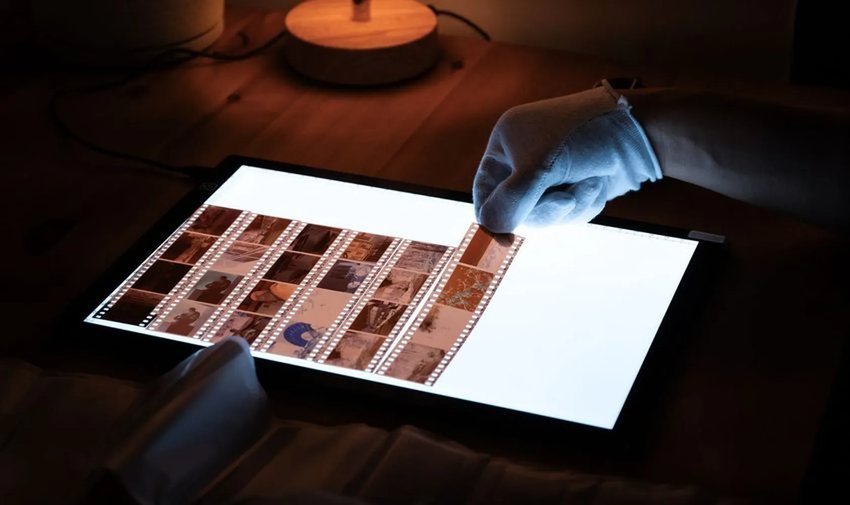
Fragile film is handled with gloves and inspected before it goes anywhere near a scanner.
"Most of the slides people bring us thinking they are ruined can be recovered and brought back close to their original color," says Zachary Goldberg, owner of Forever Studios. "The heartbreak is the ones that sat in a hot garage for another ten years first. By then the color that could have been saved just is not there anymore."
Film with vinegar syndrome can usually still be transferred if it is caught before it becomes too brittle and distorted to track through a scanner. That is why the items with the worst vinegar odor should be transferred first.
"By the time a slide looks pink to the eye, a lot of the color is already gone," says Olivia, lead restoration artist at Forever Studios. "We can rebalance what is still there, but we cannot invent a dye layer that has fully faded, which is why the timing matters more than people expect."
What should you do with your slides and negatives now?
Start by reviewing the film in your collection and looking for the signs of deterioration: a vinegar smell on the rolls, shrinkage of frames or reels, brittleness or curling, buckling or warping, crystalline deposits, or small bubbles from leaching plasticizer. Note how far gone each item is, and store the most severely deteriorated pieces separately to protect the rest.
Then move the collection to the coolest, darkest, driest part of the home, and begin digitizing the slides, negatives, and prints that already show fading or a vinegar odor. Start with the color items, slides and negatives, and then move on to the black-and-white ones, because color is the part of the archive with the shortest clock.
Forever Studios, a professional photo and video preservation studio in South Florida, has scanned hundreds of thousands of slides, negatives, and prints. Our photo scanning service captures 35mm slides and negatives at high resolution and includes color correction for the fading described above, and our team can advise on film reels suffering from vinegar syndrome. If your slides have been sitting in a box slowly shifting toward pink, the color left in them is worth saving now.
What customers say
Forever Studios has scanned and color-corrected slides and negatives for thousands of families, part of more than 3,100 five-star reviews across Google and Reviews.io at a 4.97 average. In their words:
“The results were so much better than I hoped. This is the second company I used to digitize my father’s slides and the scans are so crisp and color is so much better. Thank you!”
Alyse, verified Forever Studios customer ★★★★★
“The only picture of my mom's parents was so faded you could not see any details or color. The new picture was fantastic. My grandparents looked just as I remembered them.”
Edward, verified Forever Studios customer ★★★★★
“The work performed on my extremely damaged photo was absolutely amazing. I will tell everyone to give them a try and they will not regret it.”
Ophelia, verified Forever Studios customer ★★★★★
More are on the Forever Studios reviews page.

Ready to digitize it right the first time?
Bring your tapes, film, and photos to the team that treats every project as irreplaceable. All work is handled in-house in Boca Raton, never outsourced.