How 8mm Film Degrades Over Time (and Why Timing Matters)
8mm film degradation is not a future risk. It is an active chemical process destroying your footage right now. Learn why the condition of your film at the moment of transfer determines the quality of the result permanently.
Contents
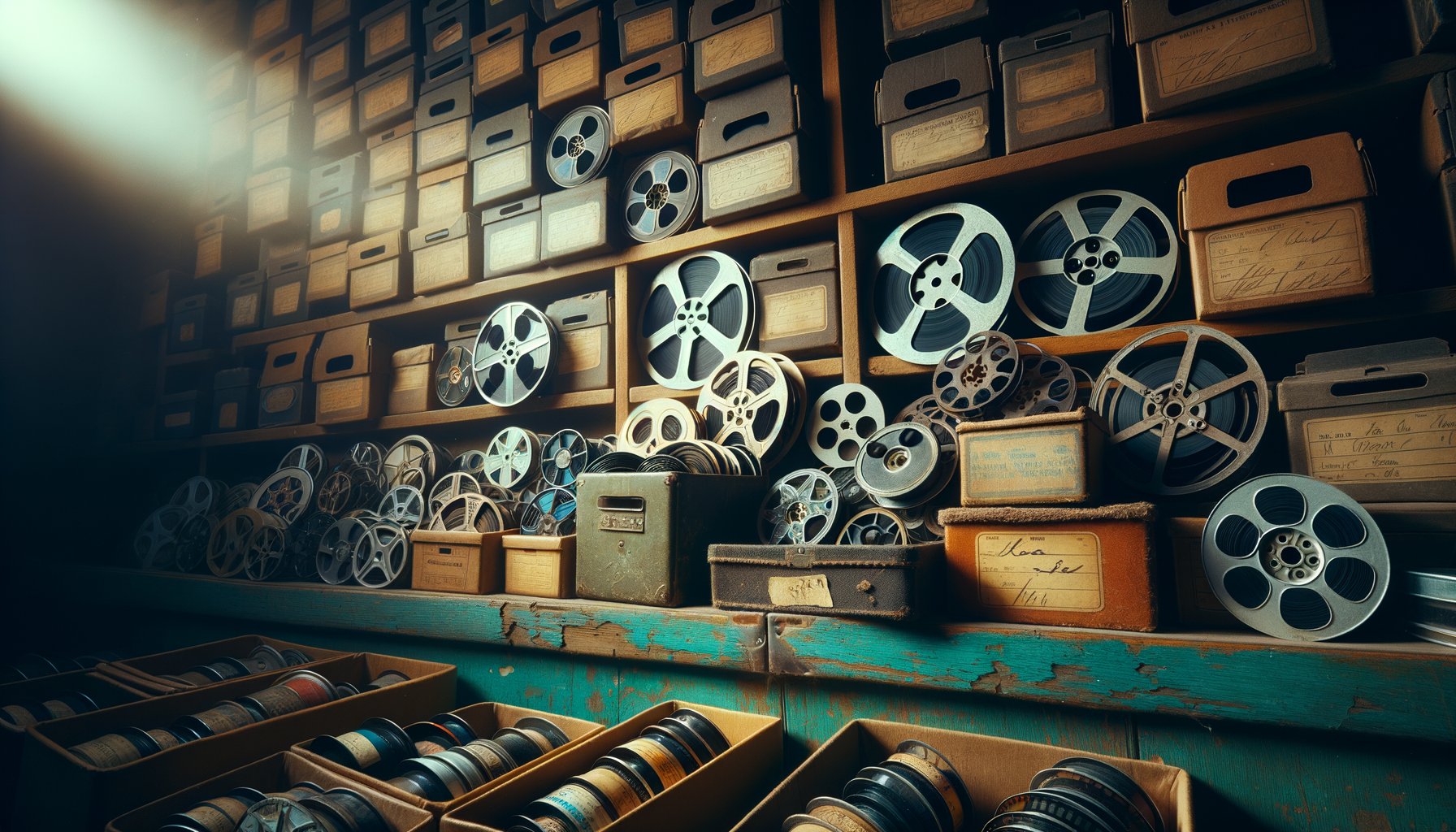
8mm and Super 8 film is all around us, tucked away in dusty attics, in boxes on shelves and forgotten in trunks, some even stuck in car trunks. These fragile little reels of old movies and memories are yellowing and breaking, often with no one even aware of their existence. Few even remember making them.
Most people don't realize that those old reels need fixing. They have been idle for decades or more and nobody has the interest to fix and reload them. Everything appears to be in satisfactory working order.
This is extremely dangerous. Film never waits for you. At best, it is slowly decomposing through unknown mechanisms, at worst it is already too late. Any digital transfer which can be accomplished in the future will never be worth more than the transfer of the film as it exists today, and with every passing year the film deteriorates further.
So what’s going on in the reels, why do they speed up, and what does it mean for our footage?
What 8mm Film Is Actually Made Of
Before we can go on to discuss the degradation of film it is helpful to ask the question: what do we mean by film? Most people are familiar with 16mm, but 8mm and particularly Super 8 are also widely used. When we buy 8mm or Super 8 we often receive the film on a reel. It looks solid enough to last us for ever, but film is not a monolithic material. It consists of a number of separate layers and each of these layers has its own decay rate.
Every film has a base, which is the actual flexible strip on which the rest of the film is layered. In these clips, the base is made of cellulose acetate plastic, made from wood pulp treated with acetic acid. Introduced in the 1930s as a “safety film” since it was less flammable than the then-standard cellulose nitrate, cellulose acetate has remained the base for home movie film for nearly a century, and is the base for nearly all film formats, 4:3, 16:9 and even 4k, made since the 1930s.
Above the base is found the emulsion layer. This is the most fragile part of the film and is a very thin gelatin layer containing light-sensitive silver halides in black and white film, or the three colors cyan, magenta and yellow in color film. This is where the actual image is recorded and everything that we see when the film is projected comes from this very thin emulsion layer.
In between and around the base coatings and the optical lacquer are various subbing layers, anti-curl coatings, and occasionally magnetic audio strips. Each of these has a particular degradation pattern. However, two elements have the greatest potential to cause your footage to fail completely: the acetate base, and the color dyes. These two components can permanently damage your footage over time.
Vinegar Syndrome: The Chemical Clock You Cannot Stop
The vinegar syndrome is one of the most well documented forms of film degradation, and one that is not rare. In fact, it is the expected end state of every acetate base film made, and the question is not if, but when.

The difference between Stage 2 and Stage 4 can be just a few years, but it is the difference between a clean transfer and a partial rescue.
How It Works
One of the things that can happen to film base is that the acetyl groups off the polymer chain can break off as the base ages, forming free acetic acid and turning into that nasty “vinegar smell” so common in old film solution.
Vinegar syndrome is particularly destructive because it is an autocatalytic reaction. The acetic acid produced by the decomposition is itself a catalyst for further decomposition, so that one acid molecule can quickly turn into two, those two into four, eight, sixteen, etc. Initially, the process is slow, taking years or decades to reach critical levels of deterioration. But when that threshold is reached, the reaction accelerates dramatically.
The Six Stages
When film is preserved using the common acetate film stock, it goes through six stages of deterioration. Both Library and Archives Canada and the Image Permanence Institute discuss these deterioration levels.
Stage 1: No Detectable Degradation
After having a look at the film it appears to be in reasonable condition and on analysis shows no increase in acidity. It is known that safety film begins to decompose after this period, i.e. it is not indestructible.
Stage 2: Faint Vinegar Odor
After storage there is a slight acidic smell to the canister. You can smell the smell when you open the canister. It wont affect the film in any way, and there are plenty of images to transfer. This is the point where the cost of restoration turns negative.
Stage 3: Strong Vinegar Odor, Early Shrinkage
When I smelt this I knew straight away that the film base had begun to shrink, on average less than 1% but enough to start to bend and put some stress into the film - fortunately the shrinkage is not so severe that the images are not still easily visible and can be scanned ok. Notice though the tiny shrinkage starting to bend and distort the edges.
Stage 4: Visible Warping, Brittleness Beginning
This film is bowed/wavy so great care must be taken not to further damage it. The emulsion is beginning to peel from the base but is not flaking off as the base shrinks. Because of this, transfers are possible but would have to be made with an oversized negative holder made for this purpose as well as for handling severely bowed or damaged motion picture film.
Stage 5: Severe Shrinkage and Emulsion Damage
The overall shrinkage is estimated to be 5% or more. In addition to this shrinkage, the surface of the emulsion is cracked and is flaking off the support base. Large areas of some of the images are missing. When transferred, only portions of each image will be salvaged with some tondo frames being partially recoverable and others not at all.
Stage 6: Film Is Brittle and Unusable
The reel was too short for the footage on it, and quite rigid which made it a real danger to unspool. I tried to base and emulsion separated, but it’s hopeless. The images have decomposed out of the emulsion and there is no technology that can retrieve them.
A reel goes through six stages over the years but they are not evenly spaced. The first stage (Stage 1) can be about 30 years. Then it can spend about 10 years in Stage 2, 5 years in Stage 3. The final three stages (Stages 4-6) can then race by in a handful of years. This is autocatalytic acceleration, a process that speeds up and becomes worse faster and faster until you even realize there’s a problem.
Color Fading: The Invisible Loss
While many people are familiar with the challenges of preserving media due to Vinegar syndrome, few realize that problems with the color of a video are more likely to cause permanent damage to the media itself than the infamous odor.
While everything may seem rosy when it comes to your old film footage, the reality is that the colors in color film (cyan, magenta and yellow) fade at different rates. It’s not simply a case of everything fading equally to produce a generally paler image – in practice, the cyan dye tends to be the most stable, with yellow and magenta degrading most rapidly. So your footage could gradually change from looking muted and old to having a deeply reddish or even pinkish tone.
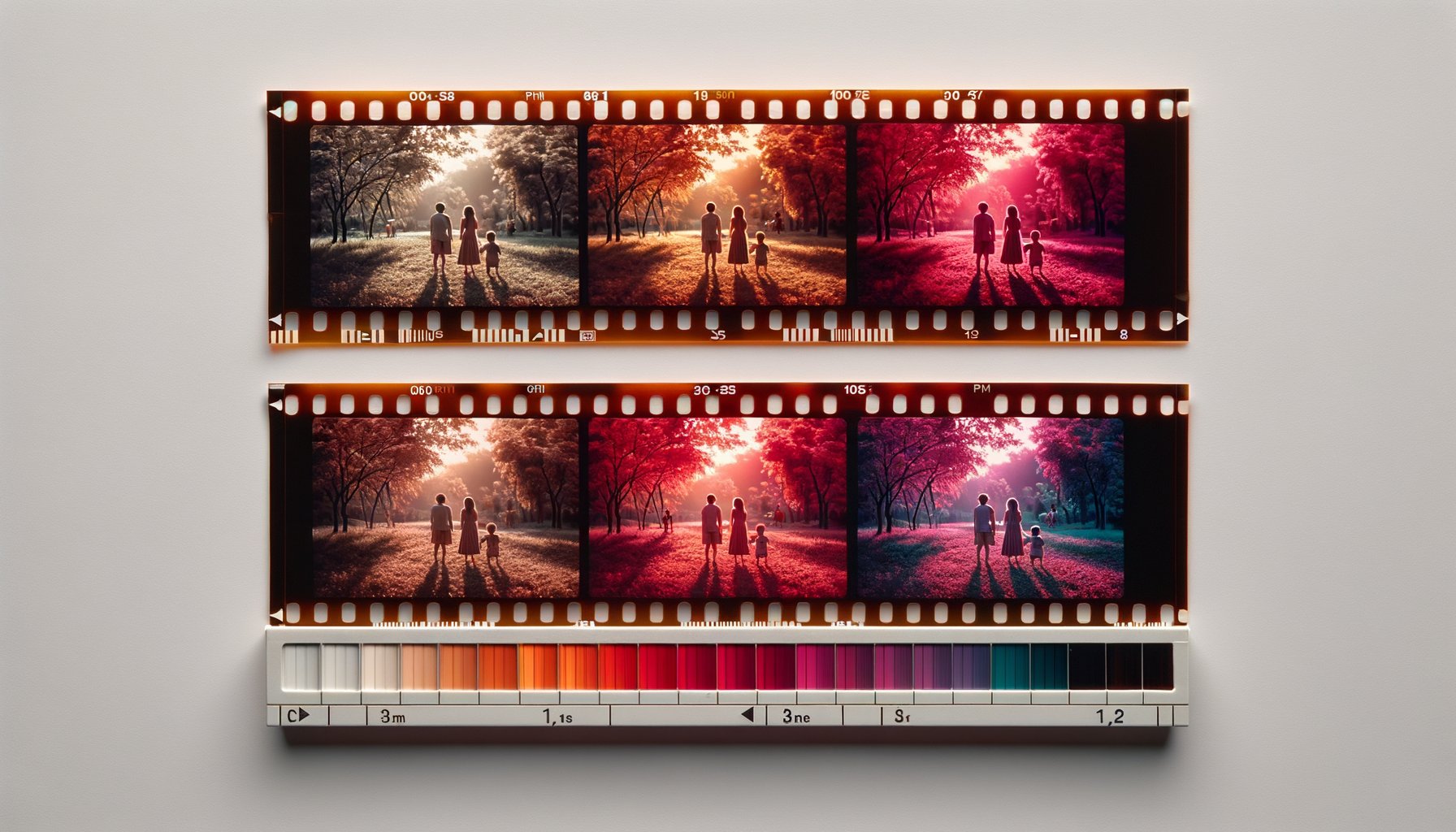
Color fading is not uniform, the dyes degrade at different rates, producing the characteristic reddish shift seen in most aging home movie film.
Those old home movies that look red weren't shot in red. That is decades of uneven dye degradation.
What Accelerates Color Fading
Heat is the enemy of color dyes. Dyes are organic compounds and are therefore thermally unstable meaning they break down and degrade as the temperature goes up. That means the film you spent good money on is going to go bad on you a lot sooner if you leave it in a hot garage or storage area in the attic as opposed to a cool air-conditioned closet at room temperature. Attics during the summer can reach 110°F or more. Your stored film would start to go bad in this environment on a very rapid degradation cycle.
It's common knowledge that light can cause unprocessed black and white film to spoil, and most home film collections are safely stored in the dark. However, it's a different problem when it comes to relative humidity (RH) as most of us store film in a basement or damp area of the house. Each film base contains a certain amount of moisture content and it is these reactions that we must seek to avoid.
Why This Matters for Transfer Quality
A common misconception is that the fading of color from illuminated manuscripts is reversible. In fact, the irreversible loss of dye molecules from the paper support means that once fading has occurred, it cannot be restored.
A very skilled transfer editor can color correct some of this during or after scanning, 'restoring' some of the colors, but often only partially able to reverse the color shift. Then there is the amount of fading, and how much of the original colors are actually left to correct for, and how accurately they can be recovered.
Just got to transfer another 2" reel and even with moderate video degradation it yielded a very nice batch of footage. I'm glad I got to it before it sat around for 5 more years and lost even more data.
Mold, Moisture, and Physical Contamination
While the individual components of a film stock are permanently frozen within the plastic tri-afex film clip, it is the external storage conditions of temperature and humidity that determine the greatest risk to film longevity.
Mold is the bane of archival film restorers everywhere, and it is an incredibly common problem. Mold requires high relative humidity to thrive, generally above 60%. Most basements and some garages are unconditionally mold prone, in addition to any unclimate controlled space in a very humid climate. The mold will grow on the gelatin emulsion layer of the film, using it as a food source. Mold can cause permanent damage to the emulsion, and symptoms can appear in every copy of the problem film, making early detection and cleaning critical.
Early detected mold can be scrubbed off film, but if it has gone too far into the emulsion it can cause permanent damage to your pictures.
Moisture causes film to shrink, but it also causes the layers of the film on a reel to stick together. When unspooling such footage, the emulsion of one layer of film can peel off onto the back of the following layer of footage, effectively ripping the images off the film that they belong to and depositing them in places where they are not wanted. Such damage can be complete for particular frames.
However, even when the more dramatic problems have been addressed, there can remain the insidious effect of dust and particulate matter having adhered to the surface of the print as it was originally shown. Should such material have accumulated on the screen, it inevitably stuck to the surface of the print as it was wound onto the can. As the film is tightly wound onto the can over the decades, such particles are irretrievably lodged in the print. Even with the most advanced ultrasonic cleaning, such embedded particles can not be removed.
Why Storage Conditions Are Almost Never Good Enough
National Archives recommends storage at 35 F (1 C) and 30% relative humidity, the Image Permanence Institute makes a similar recommendation. With proper packaging film is expected to last 100 years or more.
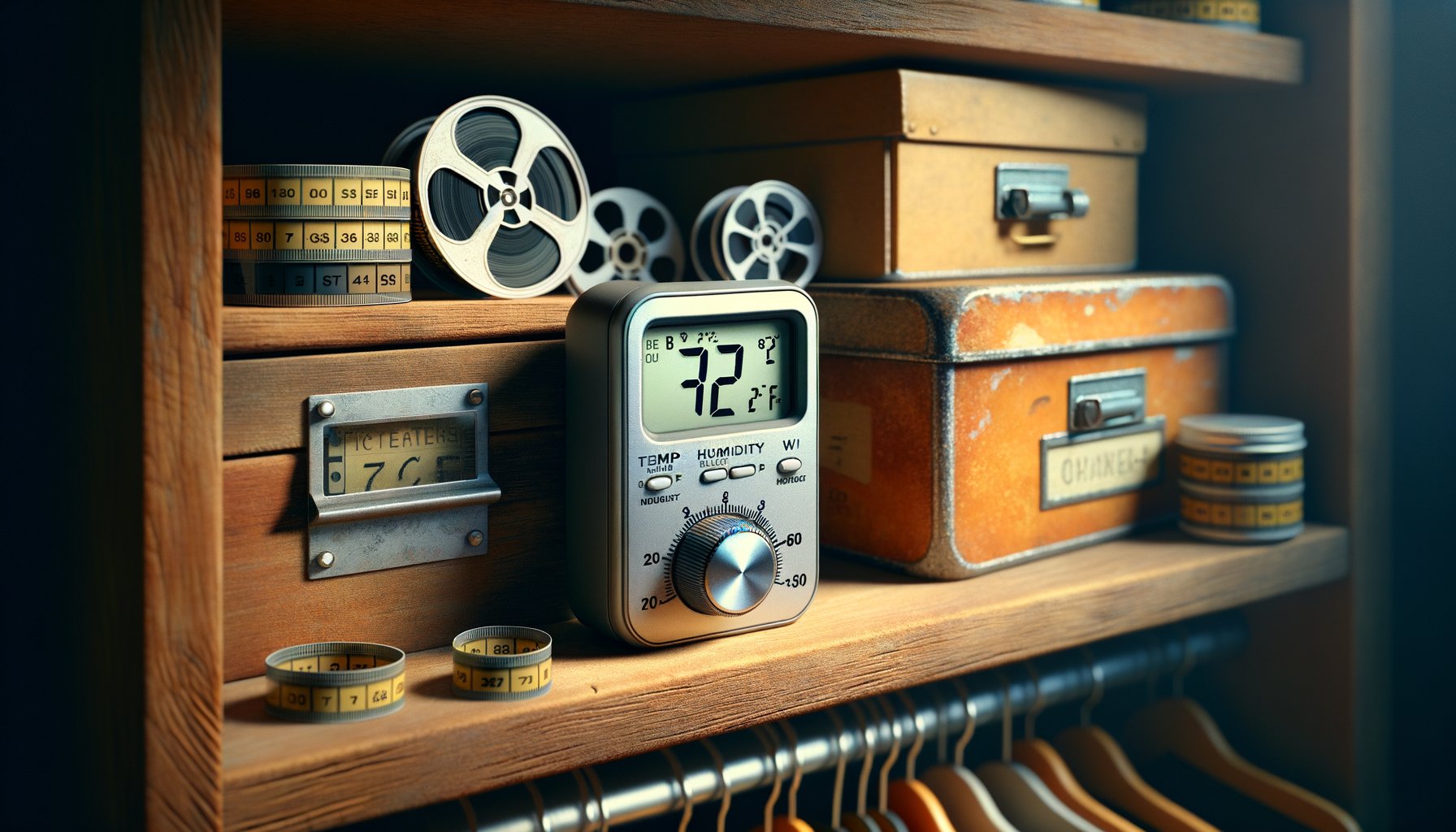
The gap between archival-quality storage (35°F, 30% humidity) and a typical household closet (72°F, 50% humidity) is enormous in terms of chemical degradation rates.
But where do real home movie collections live? In a cloud somewhere, perpetually locked behind a passcode and a vague
I store my film in a bedroom closet in a climate controlled house. It's not ideal storage conditions (around 68-74°F with 40-60% humidity) but that's what you can expect with home media storage these days. You can still tell the film is slowly deteriorating though.
Store unprocessed black and white film in a garage or attic where it will be subjected to temperatures around 50-110°F and varying humidity levels. This accelerates the aging of the film to determine its “real-world” shelf life. Note that summer months will see occasional temperature spikes that have the potential to be ruinously destructive due to the exponential, rather than linear, increase in chemical reaction rates.
When film preservationists finally retrieve boxes of old Reels from dusty storage rooms or cluttered basements, they might breathe a sigh of relief, glad to have their treasured images back home again. But are they really safer stored in a cold, dark space such as a basement? The general consensus on optimal film storage conditions is a cool temperature between 58°F and 60°F and humidity between 50% and 60%. Most homes, and their notoriously variable basements, don’t come close to those ideal figures. A typical basement might be around 55-65°F, but with humidity readings anywhere between 50% and 80% from one day to the next. That’s worse than the sweltering storage room from which these archives were recently rescued, and can encourage the same deadly mold growth as well as kick-start the notorious “vinegar syndrome” that turns film stock toxic and turns audiences away in disgust. The humble home basement, it seems, might be the worst of both worlds for the film preservationist.
Storage units must be climate controlled. Most storage units are not and can swing 40°F or more between the hot summer and cold winter seasons. This can drastically reduce the time it takes for items stored under these conditions to break down over a period of decades.
I want to be clear that my goal is not to make people feel guilty over how their film has been stored, naively or otherwise, over the years. Rather it is to make people aware that the film that sits right there before them is as good as it will ever be, and that tomorrow it will degrade a little more, the day after that a little more, and so on.
The Transfer Window Is Not a Deadline, It Is a Gradient
A question often asked is when 8mm film goes “bad.” The answer is not simple and can vary anywhere from very poor to very good quality depending on the quality of the final digital product. There is no magical expiration date when film “Expires” this is entirely dependent on how well your original footage is preserved in the transfer process.
This will another Stage 1 transfer with almost no color change. It will look AMAZING. This Stage 3 transfer has moderate color change but the tape will still look GOOD and watchable. This Stage 5 reel will only yield a PARTIAL TRANSFER with some segments of recoverable video and some segments that will be lost due to emulsion break down.
I’ve read and heard many people say that film doesn’t go bad overnight and that there is a slow degradation in quality until it reaches a point where it is no longer worth using. While this is somewhat true, there is also a slow degradation in quality of the photographer until they reach a point where what they produce is less than what they could have achieved earlier.
One should also remember that waiting till "someday" to do a film-to-digital transfer constitutes a loss, because by the time you get around to it, the chances of a good transfer decrease with every passing year.
What Actually Determines Transfer Quality
Of all the factors that you face when preparing the film for professional high quality scanning, the condition of the original film is the biggest single factor in achieving a good result. Of course, the quality of the scanner and the skill of the operator are important considerations, but separate from that is the color correction issue. If the original material has been colored by the chemistry used to make it then there is little that can be done to improve the result.
Our professional film transfer process starts with damage inspection, de-molding and cleaning of the original print followed by frame by frame scanning of the entire reel. Frame by frame color correction and stabilization are then applied to the entire film transfer. The finished product is a highly detailed digital file ready for reproduction.
Use the best original film possible for each stage of the restoration. For the color restoration, every scan of each frame will be improved by the best original film possible. For optical restoration, the best original reel will be easier to work with if it has been properly cleaned, flattened, and stored in a proper manner. For vaulting or archiving, the best original film will make more of a difference than the worst. And for the digital restoration, a severely faded reel (say, fully gagged) will give the colorist almost nothing to work with, while a fully gagged reel with full color information will give the colorist the richest palette to work with.
No matter how hard you, or your crew, or the lab works at it, there is NO TRANSFER that can create bits of data that are NOT ON THE FILM.
What You Can Do Right Now
So you have a collection of 8mm or Super 8 reels sitting around gathering dust? While you may be eager to have them digitized into HD, there are a few simple preservation steps you can take before making the leap.
Store them in their original packaging in a cool, dry location such as a cool, dry bedroom closet in an air-conditioned house. Do not store in an attic, garage or basement because the moderate temperature difference and humidity difference will help to slow down the degradation of your supplies.
Reels should NOT be stored in airtight containers. Kodak testing has shown that sealed canisters can actually CAUSE the vinegar syndrome to go into an autocatalytic reaction by trapping the vapors of the acetic acid that is outgassing from the film against the film itself. It is best to store film in a well ventilated container or in a well ventilated archive box.
Smell Vinegar? The Reel's Gone Bad. Check the smell. Open up the canister and smell. If you smell strong acidic or vinegar smells, the bait reel is in Stage 2 or worse. However, it is still transferable but the window of opportunity is quickly closing.
However, it's best to keep those reels separated from the other tapes in your collection. Once a reel has entered the vinegar syndrome stage, it can "infect" other reels through the release of acetic acid fumes. Once you discover a reel has turned sour, store it separately and immediately.

When film is transferred while it is still in good condition, the results are remarkably vivid, a permanent digital record that will never degrade further.
Don’t wait. Prioritize your transfer. The quality you would receive right now is the highest quality you will receive at any point in time. Not because of hype or sales tactics, but because of the opportunity for the best possible chemical blend for you.
You Do Not Have to Figure This Out Alone
Film preservation is something that is not immediately intuitive to most people, including film lovers and film professionals. No one has ever really explained the basic chemistry of the acetate base of film and how the dyes break down over time. There is no reason that the public should understand film preservation, but they should understand that film is actively decaying, that this decay happens at an increasing rate, and that the quality of any future digital transfer is dependent on how the film is currently.
That is exactly why Forever Studios exists. Our team specializes in professional film digitizing services for 8mm, Super 8, and 16mm reels. We handle the inspection, cleaning, frame-by-frame scanning, and color correction so you don't have to worry about the technical side. Whether your reels are in great shape or already showing early signs of vinegar syndrome, we are here to help you preserve what matters most before any more quality is lost.
We are constantly amazed at the number of reels filled with precious footage of families, loved ones (even some who have since passed away), fond memories and places around the world that our customers treasure. Whatever the content on these items of history, whatever their importance to you, the most important thing you can do with them is to not delay in having them preserved. The perfect moment to act was years ago. The second best moment is now.

Ready to digitize it right the first time?
Bring your tapes, film, and photos to the team that treats every project as irreplaceable. All work is handled in-house in Boca Raton, never outsourced.