Costco, Walgreens, & the Service Shutdown Problem: Why Retail Photo & Tape Services Keep Disappearing
Major retailers are discontinuing photo and video transfer services. Here's what happened and what it means for you.
Contents
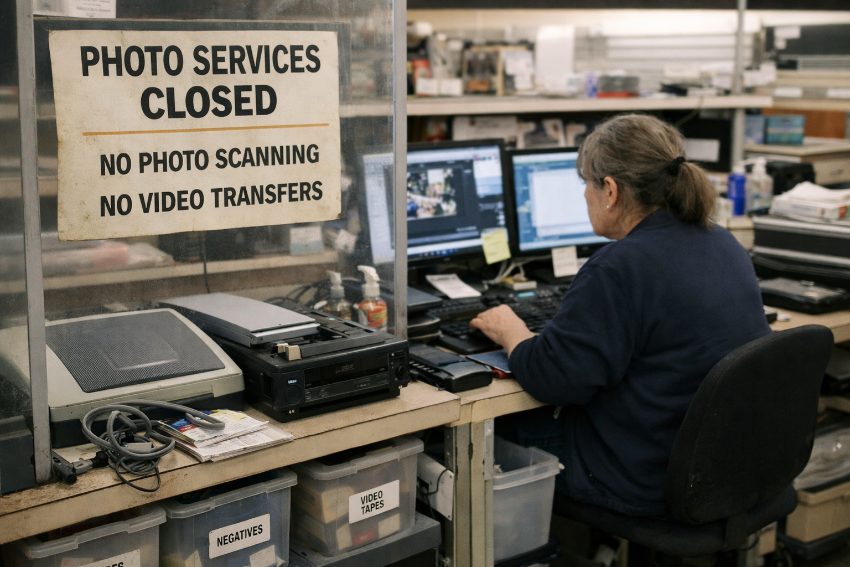
In 2024 Costco ended its in-store photo and video transfer services. The other chains took a quieter route: the counter stayed, the work left. CVS is explicit about it — its fulfilment partner Capture states that “CVS Photo does not convert video, photo, or film media inside its stores” and that “every order placed at a CVS Photo Center or through CVS’s digitization website ships to Capture” in Norcross, Georgia (Capture, CVS digitization services). Offering in-store analog media transfer services requires special equipment, highly experienced and specially trained store staff, and most importantly, careful handling of customers' irreplaceable media. All of these requirements cannot be met by the time and experience that in retail locations today, store associates are not equipped to provide.
Since 2007, Forever Studios has helped families preserve irreplaceable memories. The company processes all work in-house at its Boca Raton facility with triple quality control. Pay-per-item pricing starts at $12 per video tape, $15 per audio cassette, 50¢ per loose photo, and 60¢ per slide. There are no box minimums or hidden fees. Each order goes through technician review, studio leader verification, and project manager final inspection before delivery.
According to Retail Dive, chain stores have consistently reduced or eliminated photo departments over the past decade as digital photography reduced demand for prints while simultaneously making analog preservation services more complex. What remains in many retail locations is typically fulfilled by third-party digitization vendors who ship materials to centralized facilities, adding weeks to turnaround and creating potential points of loss that worry customers with irreplaceable family memories.
- Costco, Walgreens, and CVS closed in-store photo departments over the past decade as digital photography reduced print demand while making analog preservation more complex.
- Retail photo services typically ship materials to third-party fulfillment centers, adding weeks to turnaround and creating potential loss points for irreplaceable originals.
- In-house preservation studios maintain full custody of materials, use triple quality control, and eliminate transit risks inherent in retail fulfillment models.
- High employee turnover at retail locations produces inconsistent quality, while dedicated studios assign work to trained specialists using calibrated equipment.
- Turnaround varies by media type and season; rush options add 25% for five-day or 100% for next-day completion at most preservation providers.
Major retail chains continue to shutter photo departments as economics and complexity make preservation services incompatible with high-volume retail models.
"We regularly work with customers who initially used retail photo services but switched after experiencing inconsistent scans, damaged materials, or extended waits from third-party fulfillment. Retail photo services prioritize convenience and volume. Preservation work requires different priorities: careful handling, controlled environments, and quality control at every stage. Those aren't compatible business models."
Zachary G., Preservation Specialist, Forever Studios
Why Have Chain Stores Closed Their Photo Departments?
The business model of photo labs fails in a few areas. First, photo labs are typically located in retail stores where they are dependent on footfall through the store and impulse buying. However, from the survey conducted by the Pew Research Center, when it comes to preservation of photos, consumers are generally very cautious and like to research before making a purchase. This customer profile doesn't align with impulse-driven retail traffic. Second, high-end photo scanners and digitization equipment require regular calibration and replacement. High-end photo scanners and other pieces of hardware for digitization need to be fine-tuned on a regular basis and therefore can become very expensive as they have to be replaced regularly. For a lab that only processes twenty orders a month as opposed to two hundred, the cost of keeping the best equipment up to date could be too high.
Poor and inconsistent quality is typically found in retail photo services, as reported by a study from Consumer Reports. This means that even in the same retail chain, the quality of your photos can vary greatly, depending on the employee who processes them. Due to the high levels of employee turnover, employees are often moved from department to department within a week. The cost of training employees in photo processing is not worth the investment, as the revenue from photo printing is a very small portion of the overall revenue of a retail store.

Forever Studios · Boca Raton, FL
Photo Scanning Service
High-resolution scanning for prints, albums, and loose photos.
LEARN MORE →How Do In-House Studios Differ From Retail Photo Services?
In-house preservation studios maintain full custody of originals from intake through delivery. Forever Studios processes all work in its Boca Raton facility under climate-controlled conditions, with a triple quality control protocol on every piece of media: technician review, studio leader check, and project manager final inspection. Materials never leave the building where you hand them to us. This controlled chain of custody eliminates the multi-week shipping delays and loss risk inherent in retail third-party fulfillment models. Dedicated preservation equipment is calibrated regularly and operated by specialists trained on each format, not general retail staff rotating between departments. The equipment investment is justified by volume: a studio processing hundreds of orders monthly can maintain professional-grade film scanners and tape decks that retail photo counters handling twenty orders cannot economically support.
What Happens to Materials When Retail Photo Services Shut Down?
Items that are currently being processed or in transit are the most vulnerable when a retailer makes a closure announcement. Although early 2024 saw the announcement by Costco of the closure of their photo department with 90 days’ notice to be given to their customers, other retailers have closed their photo departments on much shorter notice. Copies of materials that have been sent to external digitizing facilities can take several weeks to return. In the meantime customers have provided duplicate copies of original photos which have been lost when a retailer’s photo department has closed - either locally or nationally.
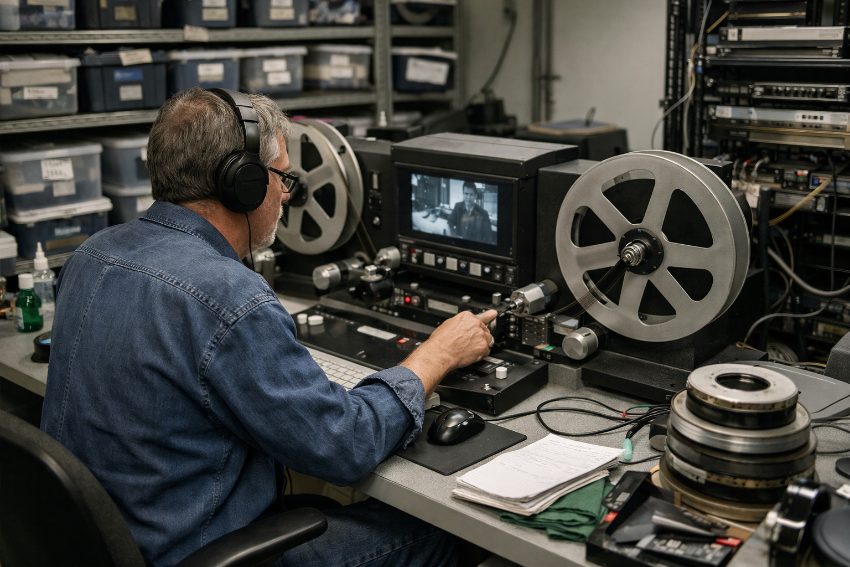
In-house preservation studios maintain specialized equipment and controlled environments for analog media transfer
Forever Studios · Boca Raton, FL
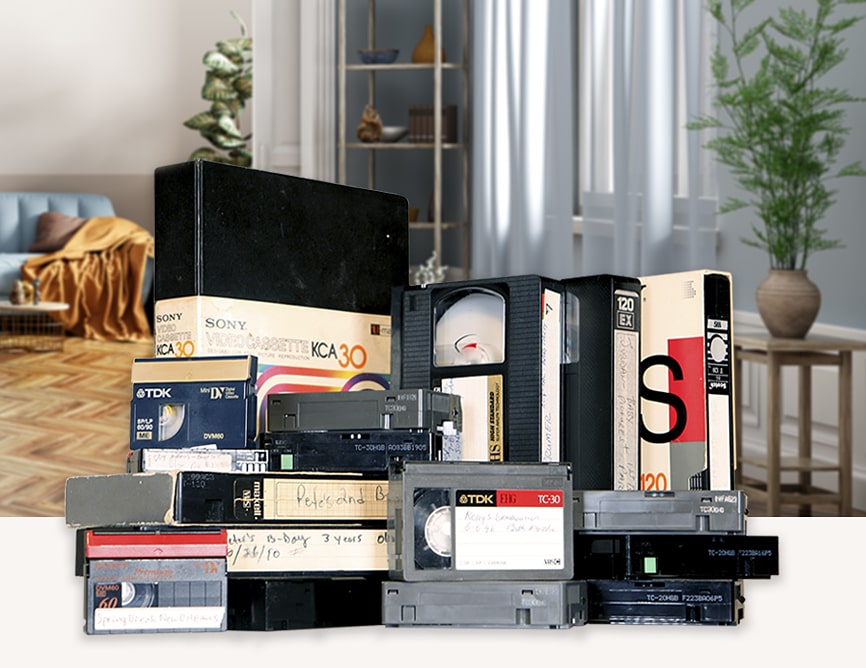
VHS Tape Transfer
We clean, repair, and digitize VHS and camcorder tapes, including flood-recovery cases.
GET STARTED →★★★★★
"Like most people, for the past several years, I have been planning to convert my old VHS and HVS-C tapes which I had filmed from my family, into the digital base. Unfortunately, every time I took the time to convert one, it took a long time. So as you can imagine, I had a huge guilt feeling that they will be destroyed before I get them all converted. After some research online, I discovered that it is not the ones that advertise the most with the highest consumer satisfaction but perhaps the quieter companies that put their resources into better quality customer service rather than marketing. To this point, I came across Forever Studios and from what I gathered online, they appeared to be more to my liking. I contacted them about my tapes. They took their time to find out how many tapes and what kind I had. They shipped me two boxes to use to send them my tapes. They immediately contacted me and informed me that they had received my tapes. After about three weeks, they contacted me once again to inform me that all my tapes had been converted and they are all available online for me to review and download. I had also invested an additional $5 per tape to use the digital enhancement option which I was happy to do so since these tapes were from my precious memories. I must say I was pleasantly surprised as several of my tapes had lost most of the color due to old age but, they were able to add the color back into those videos. Please note that this addition option is not able to take care of all deteriorations as I could still see the lines and other imperfection on the converted material. So please keep in mind that this additional investment, although well worthed, it is not the answer to all problems. Finally, I just received all my original tapes. SO, I have the option to either keep them or destroy them. I am sure thee are other companies out there who would do a fine job. However, if you are not sure, I do recommend Forever Studios."
Kris, verified customer review
Where Can You Preserve Family Memories After Retail Closures?
A preservation studio is run differently than a retail store. In a preservation studio, people work within a controlled environment following set procedures. Their main focus of work is within the preservation studio. From a business perspective, a facility can complete a lot more preservation work than they can complete for retail work. Typically, a preservation studio is run by multiple full-time preservation specialists.
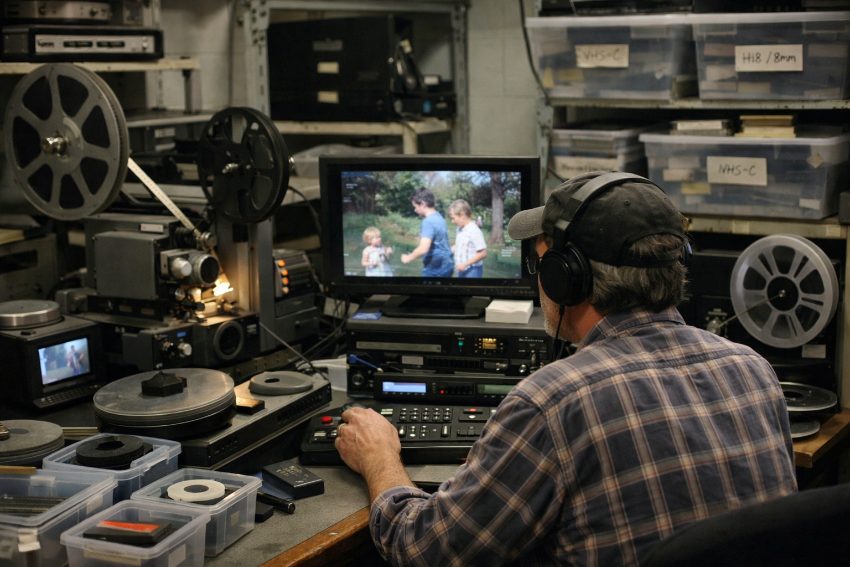
Dedicated preservation facilities maintain specialized equipment and trained staff that retail economics cannot support.
Can I still get photos and videos digitized after retail stores closed their photo departments?+
Yes, independent preservation studios continue to offer photo scanning and video transfer services with more specialized capabilities than retail locations provided. Local studios like Forever Studios process all work in-house rather than shipping to third-party fulfillment centers, reducing turnaround time and loss risk. Many studios offer free pickup on orders $250+ in Palm Beach, Broward, and Miami-Dade counties on larger orders and maintain climate-controlled environments specifically designed for handling fragile analog media. Unlike retail photo departments that operated as secondary services within broader store operations, dedicated preservation providers focus exclusively on digitization quality and archival standards.
Why did Costco close photo departments in 2024?+
Costco ended in-store photo and video transfer services in early 2024, and closed its Costco Next digitizing channel on 31 August 2026 — its fulfilment partner Capture notes that “the Costco Next platform is no longer active as of August 31” (Capture, Costco). CVS and Walgreens took a different route and still accept digitizing orders at the photo counter — the media is simply shipped elsewhere to be processed. The retail business model struggles with analog preservation work that requires specialized equipment, trained technicians, and careful handling protocols. High employee turnover, low transaction volume per location, equipment maintenance costs, and the shift toward digital photography all contributed to the decision.
Do retail photo services ship materials to third-party facilities?+
Retail photo service locations are increasingly functioning as drop-off points that send incoming materials to central third-party digitization vendors. Such third-party vendors add weeks to the processing time of incoming materials, creating additional points of failure and risk of loss or damage to irreplaceable originals. This contrasts sharply with in-house studios that process all materials from intake to delivery at a single location – on-site in controlled facilities where originals never leave the building.
Ready to digitize it right the first time?
Bring your tapes, film, and photos to the team that treats every project as irreplaceable. All work is handled in-house in Boca Raton, never outsourced.