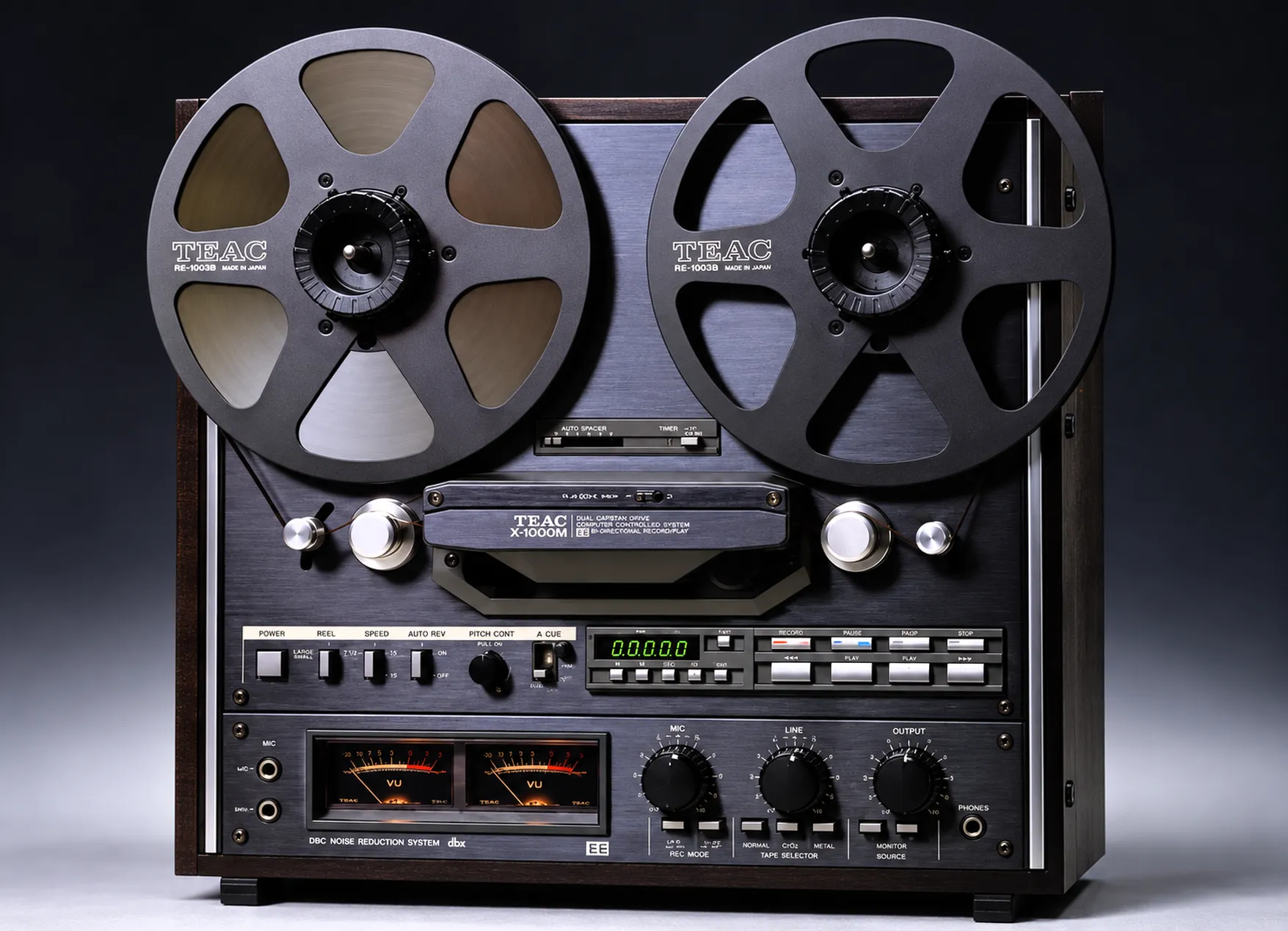
Reel-to-Reel Audio Tape Recording: How It Works, Quality Differences, and Preservation
How reel-to-reel recording works, quality differences from cassettes, and preservation methods for open-reel tapes.
Contents
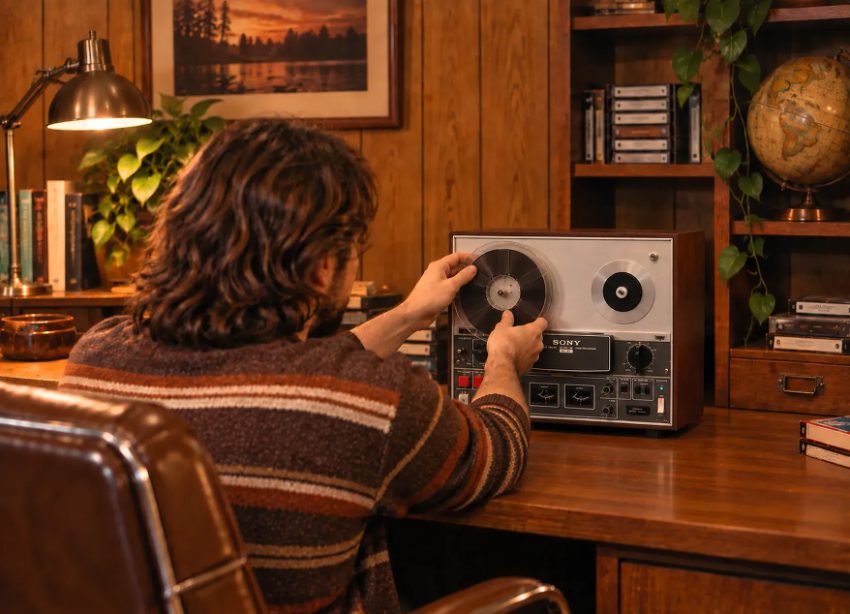
Reel-to-reel tape recorders remain valued tools for their distinct sound characteristics and archival capabilities.
- Tape speed determines fidelity: 7½ ips produces noticeably clearer sound than 3¾ ips; professional studios recorded at 15 or 30 ips
- Quarter-inch open-reel tape deteriorates faster than cassettes due to unprotected exposure to air, humidity, and temperature swings
- Binder hydrolysis (sticky-shed syndrome) affects tapes made between 1970–1990; symptoms include squealing playback and tape sticking to heads
- The Library of Congress rates magnetic tape lifespan at 10–30 years under ideal conditions; most home tapes exceed that window
- Professional digitization requires calibrated playback speed, azimuth alignment, and often tape baking to temporarily restore playability
- Forever Studios transfers reel-to-reel tapes at $35 per reel with triple quality control, preserving fragile recordings before playback becomes impossible
What's the Difference Between Reel-to-Reel and Cassette Tape Quality?
At 7½ ips, reel-to-reel tape delivers better frequency response, dynamic range, and signal-to-noise ratio than cassette tape. A quality reel-to-reel deck operating at 7½ ips typically achieves 30–20,000 Hz response (±3 dB) and 60+ dB dynamic range. Cassettes, running at a fixed 1⅞ ips with narrower tracks, generally manage 50–15,000 Hz and 50–55 dB dynamic range even with noise reduction. At 15 ips, reel-to-reel approaches studio-grade specifications with flat frequency response extending to 25 kHz and dynamic range exceeding 65 dBs, reel-to-reel approaches studio-grade specifications: flat response to 25 kHz, 65+ dB dynamic range, distortion below 1%. The quality gap comes from basic physics. Cassette tape moves four times slower than reel-to-reel at 7½ ips, compressing the magnetic information into less physical space. This compression limits high-frequency detail and makes the tape more sensitive to microscopic defects. Cassette tracks are also narrower (0.6 mm versus 1–2.5 mm on reel-to-reel), reducing the magnetic signal strength and increasing crosstalk between adjacent tracks.
Forever Studios · Boca Raton, FL
Audio Transfer Service
Cassettes and reel-to-reel audio digitized to WAV and MP3.
LEARN MORE →How Long Do Reel-to-Reel Tapes Last Before Degrading?
The Library of Congress estimates magnetic tape lifespan at 10–30 years under controlled storage conditions (68°F, 30–40% relative humidity, minimal temperature fluctuation). Most home reel-to-reel tapes exceed that window. Tapes recorded in the 1960s are now 60+ years old; tapes from the 1980s are 40+ years old. Degradation is not theoretical, it is measurable and accelerating. The question is not whether they will degrade, but how much sound quality has already been lostt whether these tapes will degrade, but whether they remain playable today.
Storage conditions accelerate or slow degradation. High humidity (above 60%) promotes binder hydrolysis and mold growth. Low humidity (below 20%) makes tape brittle and prone to cracking. Temperature swings cause tape layers to expand and contract at different rates, creating stress fractures and print-through (magnetic signal transfer between adjacent layers). Tapes stored in attics, basements, or garages experience temperature swings of 30–50°F seasonally, accelerating all forms of chemical and physical degradationr garages without climate control typically show advanced degradation from seasonal temperature swings, summer humidity spikes, and exposure to dust and airborne contaminants. Even well-stored tapes degrade; the rate varies but the direction does not.
What Causes Reel-to-Reel Tape Damage?
Physical damage originates from improper handling, playback wear, and environmental stress. Tape edges crumple when reels are dropped or wound unevenly under tension. The oxide coating flakes off when tapes are played on misaligned or dirty heads. Splice failures (where tape segments were joined with adhesive) cause abrupt dropouts or complete playback stoppage. Tapes stored without tail-out winding often exhibit audible pre-echo from print-throughng (rewinding after playback) develop print-through, where the magnetic signal bleeds onto adjacent layers, creating faint pre-echoes or post-echoes audible during quiet passages.
Environmental damage includes mold growth, smoke contamination, and insect activity. Mold appears as white or colored fuzzy patches on the tape surface; it digests the binder layer and leaves permanent pitting. Smoke residue from fires or cigarettes embeds in the tape, causing odor and altering magnetic properties. Insects occasionally nest in tape boxes, leaving waste and chewing through tape layersers. Water damage is catastrophic: even brief exposure can dissolve the binder, fuse tape layers together, or promote rapid mold colonization.
Magnetic deterioration occurs over time as magnetic particles gradually deviate from their correct orientation causing signal loss and noise. As tapes age, the signal can ‘bleed’ between layers causing print-through. A tape can also go into self-erasure where the magnetic field slowly collapses and this cannot be undone. It happens with age. According to National Archives documentation tapes held for over 20 years show some degree of signal deterioration even in the best of archival conditions. The sound is still there but it degenerates over time into increasing levels of noise and inferior audio quality.
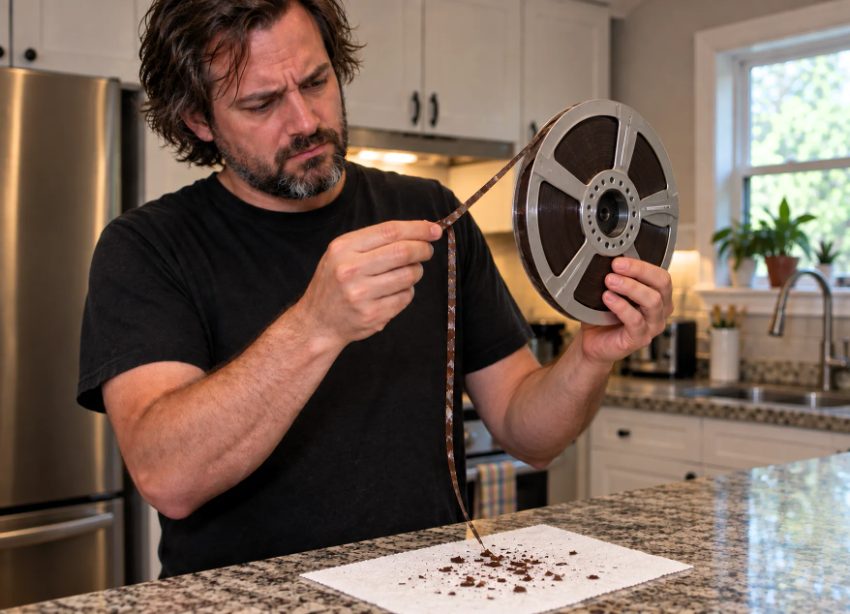
Magnetic tape degrades over time as the binder holding particles together deteriorates and sheds.
What's the Best Way to Preserve Reel-to-Reel Tapes?
Preservation begins with stable storage conditions. The Image Permanence Institute recommends storing magnetic tape at 65–70°F and 30–40% relative humidity with minimal temperature fluctuation (less than 5°F per day). Store tapes vertically on shelves, not stacked flat, to avoid warping. Keep tapes in their original boxes or archival-quality polypropylene cases. Avoid cardboard boxes in humid climates; cardboard absorbs moisture and transfers it to the tapeates; cardboard absorbs moisture and promotes mold. Place tapes away from magnetic fields (speakers, motors, transformers) and direct sunlight.
Wind tapes onto the takeup reel after playback (tail-out storage). This practice minimizes print-through by placing the most magnetically active oxide layer (the recorded side) away from adjacent layers. Tapes stored heads-out (wound back to the beginning) for decades often exhibit audible pre-echo. Rewinding before storage adds one extra pass through the tape path but significantly reduces long-term signal bleed.
Digitization is the only preservation method that fully protects the audio content. Magnetic tape degrades regardless of storage quality; digital files do not. Once transferred to digital format, the recording can be copied without loss, backed up across multiple locations, and played indefinitely without further wear. The Audio Engineering Society recommends digitizing archival audio at 96 kHz / 24-bit for maximum fidelity, though 48 kHz / 24-bit captures all audible information from analog tape. Waiting to digitize increases the risk that the tape becomes unplayable before transfer occurs. Sticky-shed syndrome, oxide shedding, and base deterioration can render tapes unplayable within months once symptoms appear.
Forever Studios · Boca Raton, FL
Audio Transfer Service
Cassettes and reel-to-reel audio digitized to WAV and MP3.
LEARN MORE →"Tapes that played successfully five years ago may now be unplayable without baking to temporarily restore the binder. The degradation curve is not linear. A tape can seem stable for decades, then cross a threshold where playability collapses rapidly. Digitizing before that threshold is the only reliable preservation strategy." Zachary G., Audio Preservation Specialist at Forever Studios, Forever Studios
How to Digitize Old Reel-to-Reel Recordings
Digitization requires a working reel-to-reel deck, an audio interface, and recording software. The deck must be calibrated for the correct tape speed (identifiable by markings on the tape box or reel, or by trial playback at different speeds). Speed errors are common: a tape recorded at 7½ ips played back at 3¾ ips sounds slow and low-pitched; played at 15 ips it sounds fast and high-pitched. Professional transfer services identify correct speed by analyzing pilot tones, comparing duration to known references, or auditioning at multiple speedsessional decks often support 1⅞, 3¾, 7½, and 15 ips; consumer decks may only support two or three speeds.
Before playback, inspect the tape for physical damage: brittleness, edge damage, mold, or sticky residue. If the tape shows signs of binder hydrolysis (gummy feel, squealing during hand-winding), it may require baking: heating the reel in a food dehydrator or convection oven at 130–140°F for 4–8 hours to temporarily drive off absorbed moisture and restore temporary playability. Baking is not permanent; tapes typically remain playable for only a few days to weeks after treatment before sticky-shed symptoms returnnent; the tape typically reverts to a sticky state within days to weeks. Digitize immediately after baking.
Connect the deck's line output to an audio interface with at least 24-bit resolution. Set recording levels to peak around -6 dB to avoid clipping on loud passages while maintaining low noise. Record the entire tape in real-time; there is no way to speed up analog playback without altering pitch. Save files in uncompressed WAV or FLAC format. After transfer, listen to the entire recording to check for dropouts, speed errors, azimuth misalignment, and other artifacts that may require retransfer for dropouts, speed errors, or azimuth misalignment (phase issues in stereo recordings where one channel sounds muffled or lacks high frequencies). Clean the tape path and heads between reels to prevent oxide buildup from contaminating subsequent tapes. Using levels to peak around -6 dB to avoid clipping on loud passages while maintaining low noise. Record the entire tape in real-time; there is no way to speed up analog playback without altering pitch. Save files in uncompressed WAV or FLAC format. After transfer, listen to the entire recording to check for dropouts, speed errors, or azimuth misalignment (phase issues in stereo recordings where one channel sounds muffled or lacks high frequencies). Clean the tape path and heads between reels to prevent oxide buildup from contaminating subsequent tapes. Alignment, a process best left to professionals with test tapes and oscilloscopes.
Home users can digitize stable tapes played on properly serviced equipment. But home decks have not been serviced in decades. They have worn belts that wobble, dirty heads that clip high frequency, and azimuth that’s off so the images don’t sit properly in the stereo field. A professional service like Forever Studios’ audio and cassette transfer uses specially calibrated decks that are kept in top working order. The heads are cleaned and demagnetized between tapes. Playback settings are optimized for each tape. What you hear is stable speed, full frequency response, and very little noise.
Set at 3¾ inches per second, frequency response extends to 12-15 kHz. This speed was typically used for home recordings of family parties, gatherings and events of a similar nature as well as for radio broadcasts and low-music recordings. The standard setting for many consumer recorders, it was a compromise between adequate audio and cost of tape. The resulting sound has a musical quality but is not as crisp or immediate as would be achieved with higher recording speeds.
At 7½ ips, frequency response reaches 18–20 kHz, approaching the upper limit of human hearing. This speed became the standard for serious home recording and semi-professional work. Albums recorded from vinyl onto reel-to-reel at 7½ ips often sounded better than the original cassette releases of the same material. Tape hiss becomes less intrusive, transients sound sharper, and stereo separation improves. Most high-quality home recordings worth preserving were made at 7½ ips.
At 15 ips, professional-grade fidelity is achievable. Studios used 15 ips for master recordings; some specialized applications (classical music, broadcast mastering) used 30 ips. Frequency response extends beyond 20 kHz, dynamic range exceeds 65 dB, and tape hiss drops below the noise floor of most playback systems. Home users rarely recorded at 15 ips due to tape cost (a 7-inch reel at 15 ips holds only 15 minutes per side, making it impractical for extended recordingsds only 15 minutes per track versus 60 minutes at 3¾ ipsds only 15 minutes of stereo audio), but archives and radio stations generated substantial 15 ips material. Playback at the wrong speed is immediately obvious: pitch shifts make voices sound wrong, and skilled listeners can identify speed errors within seconds.
The use of reel-to-reel recording for production purposes ceased in the early 1990s with the introduction of DAT, hard disk recording and software-based recording workstations. Currently no major manufacturer produces consumer reel-to-reel recorders, with the last models being discontinued in the late 1980s. Studios using analog multi-track tape have long since switched to digital workstationstrack recording systems offering unlimited editing, no degradation with subsequent generations and no deterioration of the recorded material over time. By 2000, reel-to-reel recording existed in a few archives, some restoration studios and in the homes of a few enthusiasts recording onto and playing back legacy equipment. In commercial production, reel-to-reel had become largely obsolete by the end of the 1990s.
A very dedicated band of enthusiasts is keeping reel-to-reel technology alive by restoring and maintaining machines from Studer, Revox, Ampex and even Technics. Repair work for vintage reel-to-reel equipment is now performed by a shrinking number of specialized technicians worldwide. A handful of manufacturers worldwide still produces high-quality tape at premium prices, but mastering engineers primarily use it for niche analog projects rather than everyday recordingeers from time to time return to the medium, due to specific sonic characteristics: the saturation and even the unwanted harmonic distortion included in the signal as it is processed through analog tape. The reel-to-reel community is very niche, focused almost entirely on playback of historic recordings rather than new productions.
Many archives and libraries retain the equipment to play reel-to-reel tapes, including interviews, field recordings, broadcasts and performances. The collections of the Smithsonian Archives, Library of Congress, and university libraries include millions of hours of material on reel-to-reel tape, much of it awaiting digitization as funding and equipment availability permit. As working tape decks become scarcer and qualified technicians retire, the window for successful playback narrowsber of skilled technicians able to repair them dwindles, the time available to play and digitize deteriorating tapes is decreasing with each passing year.
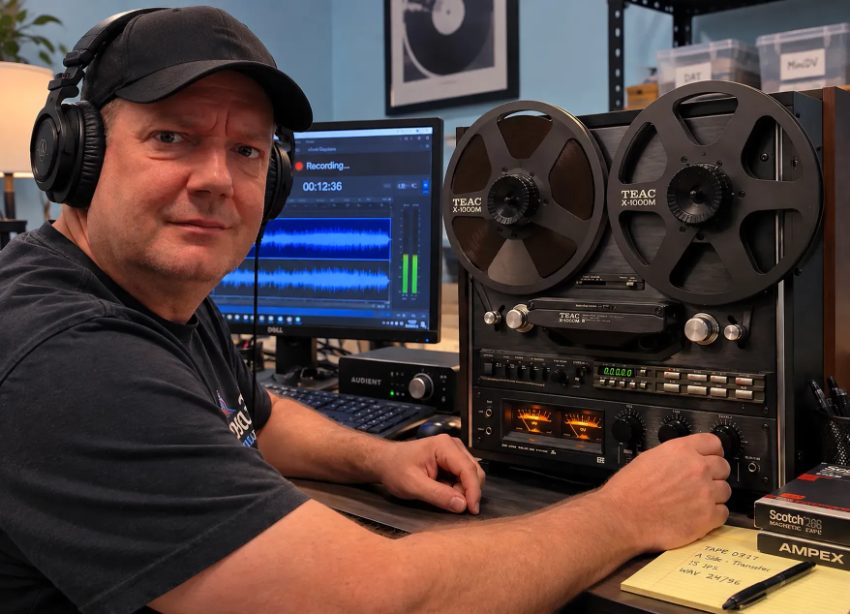
Transferring reel-to-reel tapes to digital formats requires proper playback equipment and careful monitoring to preserve the original recording quality.
Can I play a reel-to-reel tape without a reel-to-reel deck?+
No. Reel-to-reel tape requires manual threading through a deck's tape path and correct speed/track configuration. Playing at the wrong speed or track format produces distorted audio, silence, or unrecognizable sound. Professional facilities maintain multiple decks configured for different speeds and track formatseral different models of deck.
What is tape baking and when is it necessary?+
Tape baking is a temporary solution to sticky-shed syndrome. Heating affected reels at 130–140°F for 4–8 hours temporarily drives off absorbed moisture, restoring short-term playability. The treatment does not repair the binder; tapes become sticky again within days to weeks. Not all playback problems stem from sticky-shed; some result from oxide shedding, splice failures, or physical damage that baking cannot addressning tapes will benefit from baking. For example, acetate-backed tapes, as well as tapes with severe oxide shedding, may even deteriorate further when exposed to heat. However, if a tape develops squealing, becomes sticky, or displays signs of residue while playing back, baking may be necessary.
How can I identify the speed a tape was recorded at?+
Check for speed indications on the tape box or reel. Common speeds are 1⅞, 3¾, 7½, and 15 ips. If markings are absent, play the tape at different speeds and listen for natural voice pitch and tempo. Slow, low-pitched audio indicates playback speed is too slow; fast, high-pitched audio indicates playback is too fastk at too fast a speed. Also, music recorded at the wrong speed will be played back at the wrong pitch and tempo. Most transfer facilities use test tones and frequency analysis to verify correct playback speed for tape with no indications.
★★★★★
"The transfer of my cassette tapes to digital turned out great! The cassettes had been in storage for over 30 years, and I’m so thankful to finally hear my great-grandfather singing. There was excellent communication throughout the process. I’ll definitely be doing more business in the future!"
BRIAN, verified customer review
Transfer Your Reel-to-Reel Tapes Before Playback Becomes Impossible
Reel-to-reel tapes are deteriorating whether they are in storage or being played. The recordings on these tapes, family conversations, rare musical performances, historical events, are degrading. Waiting for a better price or until it is more convenient to transfer tapes can result in tapes that play today not playing in five years. Tapes with slight wear and tear could become unplayable within a few years as degradation accelerates binder in the tape begins to break down through hydrolysis or the oxide on the tape begins to shed.
Forever Studios, a professional photo and video preservation studio in South Florida, transfers reel-to-reel tapes at $35 per reel with triple quality control: a technician performs the transfer, a studio leader reviews the audio file for quality issues, and a project manager verifies the final output before delivery. We handle tapes with binder hydrolysis, speed identification challenges, and azimuth correction. Digitized audio is delivered as high-resolution WAV files on USB drive or DVD, with optional cloud delivery. Originals are returned fully insured. Learn more about our process at our how digitizing and enhancing works page, or contact us to discuss your specific tapes. The format is obsolete; the recordings are not.

Ready to digitize it right the first time?
Bring your tapes, film, and photos to the team that treats every project as irreplaceable. All work is handled in-house in Boca Raton, never outsourced.