Miami VHS to Digital, Photo Scanning & Film Transfer | Forever Studios
By Greg E.
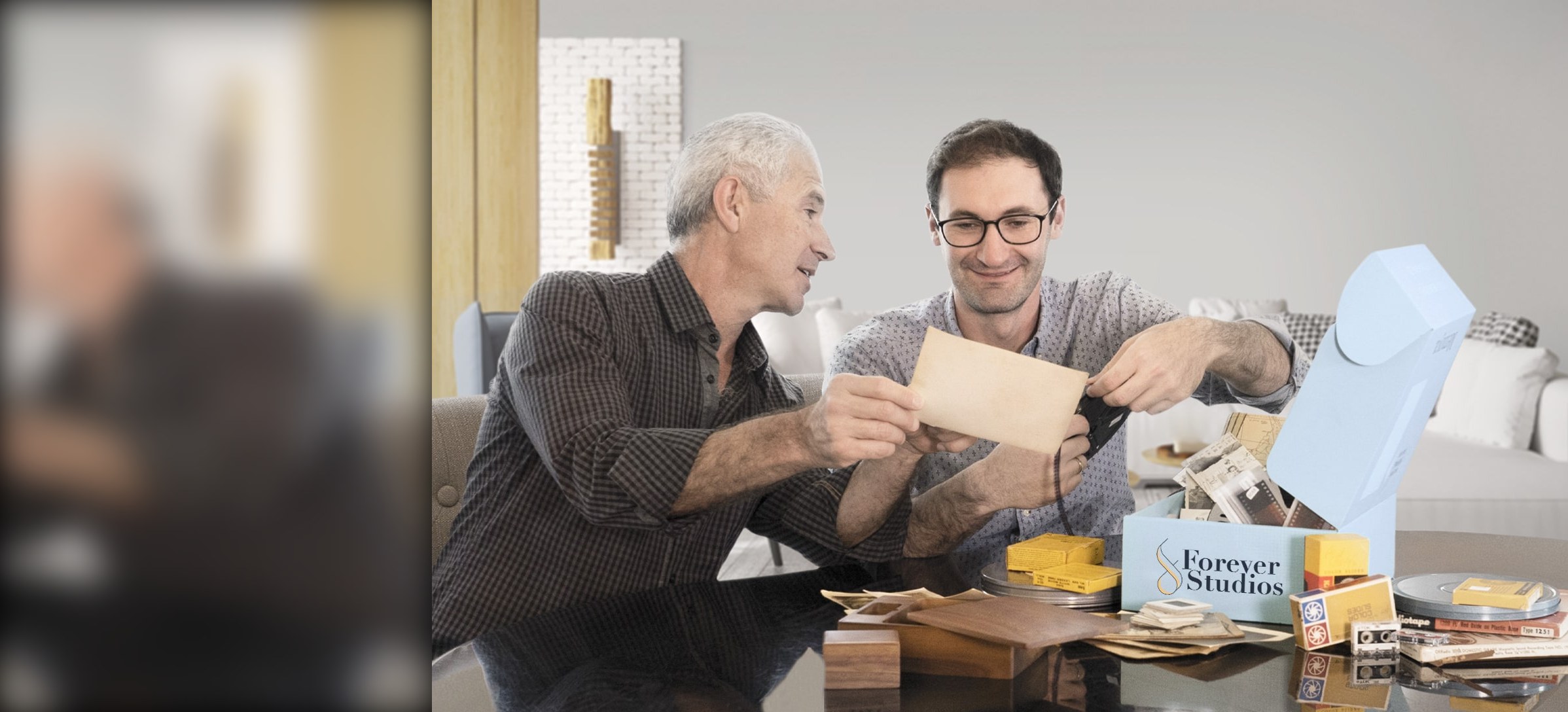
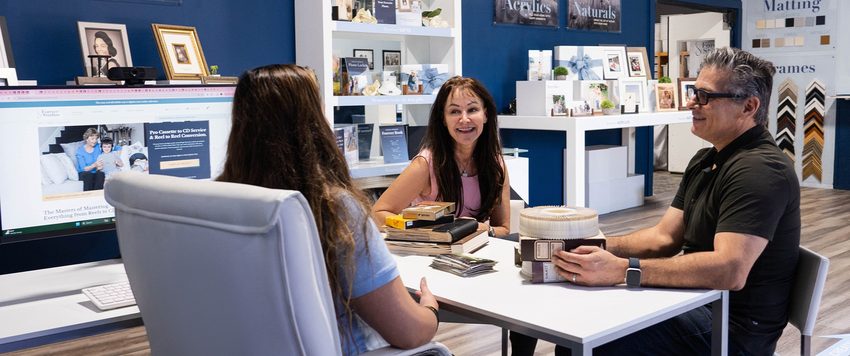
Our table at 1000 Clint Moore Road, Suite 208, Boca Raton. Every order starts with somebody going through the box by hand. Miami customers get the same call, and the same table.
Does Forever Studios serve Miami, Florida?
Yes. We drive to you, and your collection never enters a shipping network. There is no drop-off counter in Miami, no partner shop and no franchise. We come to the house, sort the collection with you, and the same company that picked it up is the one that digitizes it, 46 miles up the road.
- The studio
- 1000 Clint Moore Road, Suite 208, Boca Raton. 46 miles from Miami. One building, no partner shops.
- Getting it to us
- Concierge pickup across Miami, Thursdays. Free on orders of $250 or more, otherwise $30 plus mileage.
- What it costs
- Per item, not per box. $12 a tape, $0.50 a photo, $0.75 a slide, $15 a film reel or cassette, $13 a disc, $35 a hand restoration.
- How long
- 3 to 4 weeks standard. Rush is +25% at five days, +100% next day.
- What comes back
- Your originals, insured at declared value, with the files on USB, DVD or digital delivery.
Not sure what you have? Describe the pile over the phone and we will tell you what is worth doing.
Call (561) 235-7808. A real person answers, Monday to Friday 9 to 6, Saturday 10 to 5.
Where we actually are
Close enough to drive. Or we come to you.
We are one studio in Boca Raton, about an hour from Miami. Bring it in yourself and hand it to the people who will do the work, or stay home and we will collect it on Thursday.
What matters is not how close the drop-off is. It is how many buildings your originals pass through between leaving your house and coming home.
For us that number is one. For a mail-in warehouse, nobody will tell you.
Or bring it in yourself
1000 Clint Moore Road, Suite 208
Boca Raton, FL 33487
Open Monday to Friday 9 to 6, Saturday 10 to 5
Driving directions from Miami1
building your media ever enters
an hour
door to door, Miami to us
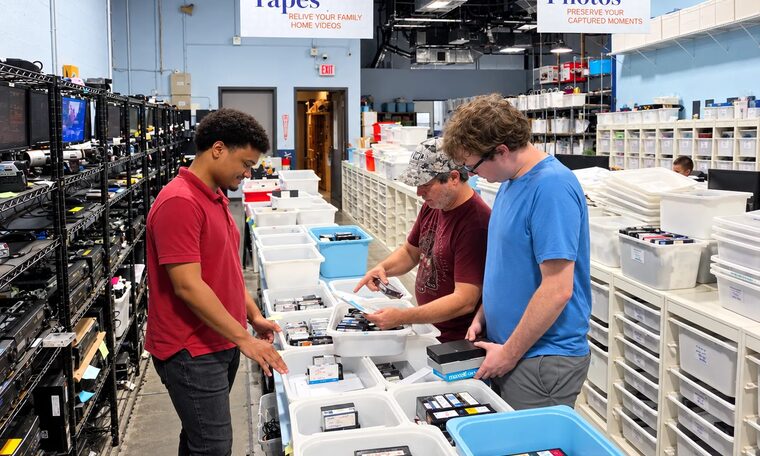
Logged by name on arrival. Checked three times by hand. Brought back the same way it left.
Call the studio
A real person answers.
Tell us what is in the box and we will put a pickup on the Thursday route to your Miami address.
What Miami sends us
South Florida collections, mostly.
Since 2007 you start to recognize a city by what turns up in its boxes.
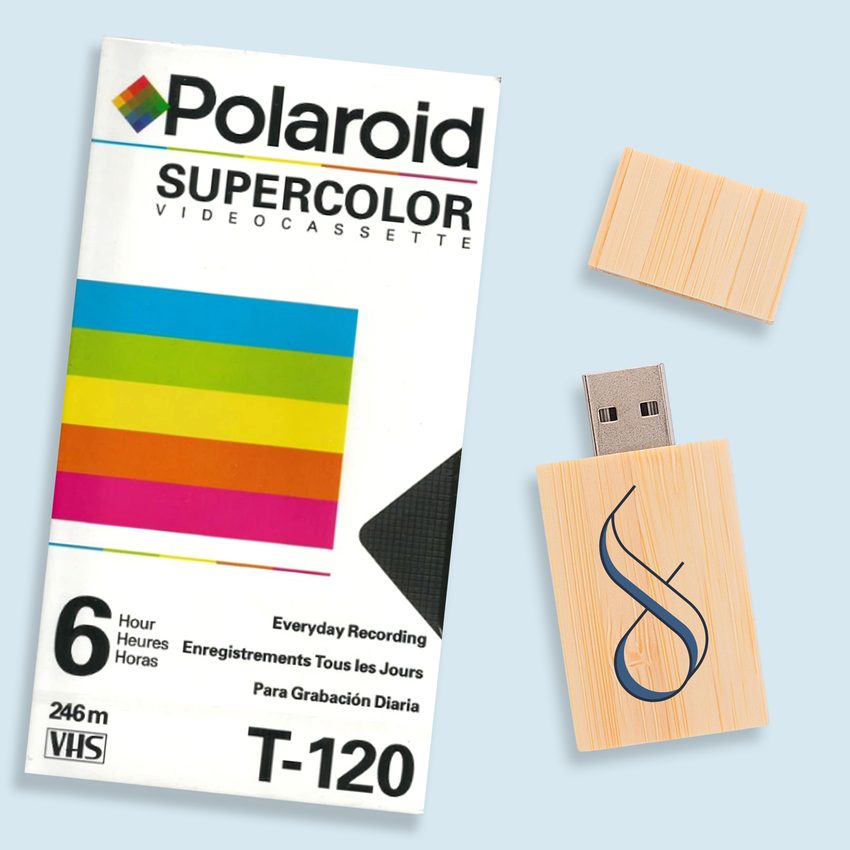
From $12 per tape
VHS and camcorder tape
Quinces, communions, the trip back to see family. Recorded in Spanish or Creole and kept in a closet that has never been dry.
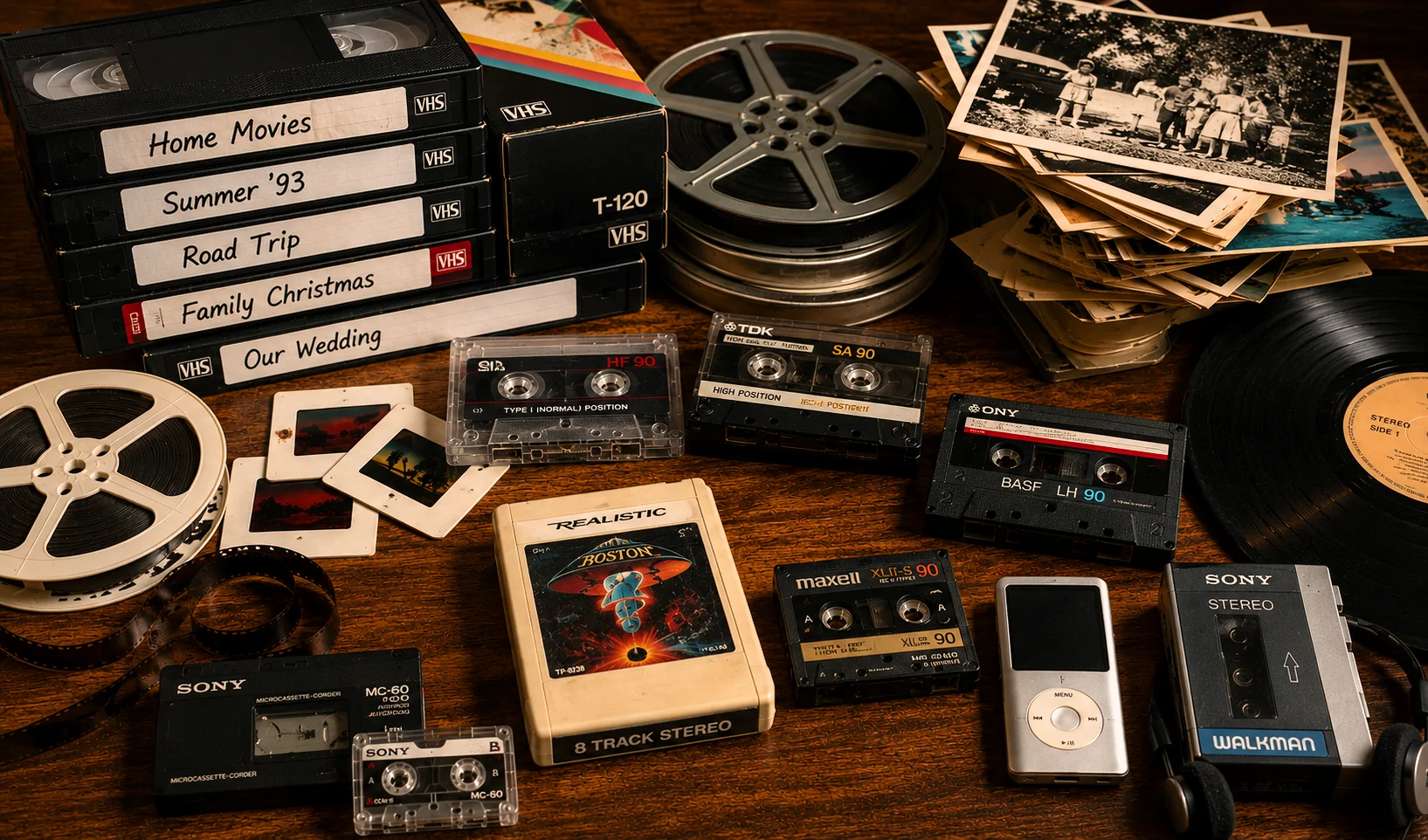
- VHS, VHS-C, S-VHS, Hi8, MiniDV, Digital8, Betamax, MicroMV, U-matic
- Audio transferred exactly as recorded, in any language
- MP4 on USB, DVD or digital delivery
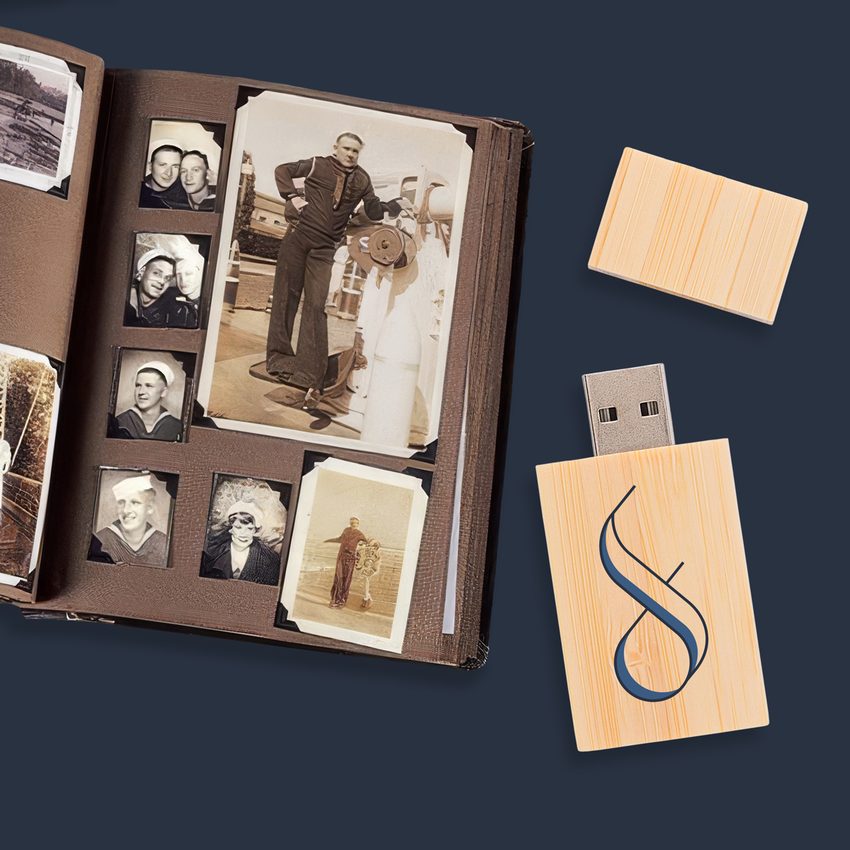
From $35 per image
Photo restoration and repair
Prints that travelled in a suitcase out of Cuba, Haiti, Nicaragua or Venezuela, then sat through sixty Miami summers. Creasing, silvering, humidity spotting and fading all reverse.
- Water and mold damage assessed before you commit
- Restoration by hand, revisions until you approve
- Colorization available for black and white
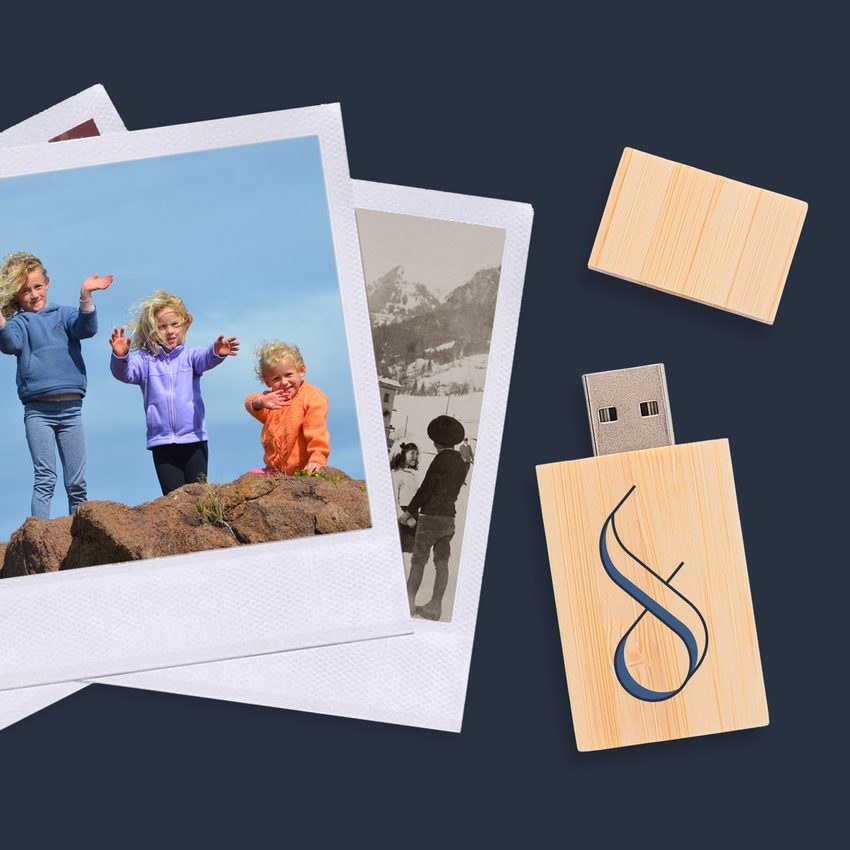
From $0.50 per photo
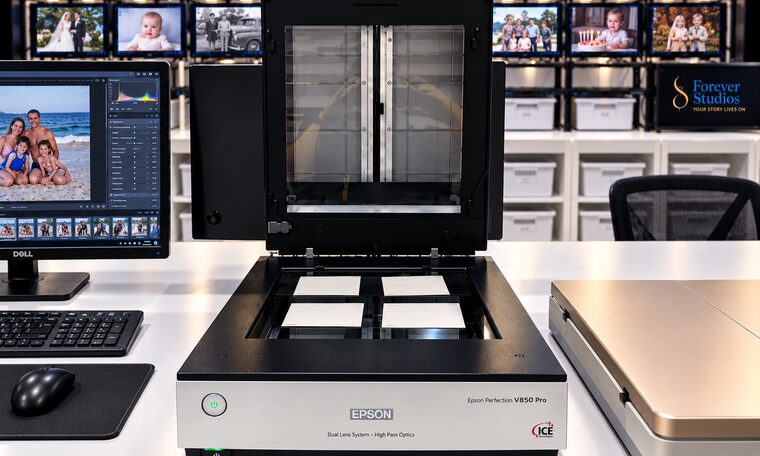
Photo, slide and negative scanning
Whole estates at once. When a parent moves into assisted living or a condo is being cleared, the media surfaces all in one week.
- 600 DPI archival scanning, prints, albums and negatives
- Carousels, trays and loose 35mm, 110 and 126 slides
- Color-shift correction on faded Ektachrome
Published pricing, no estimate games
Ten tapes is $120. That is the whole quote.
No box fee, no bundle you have to fill, no per-order minimum. Call with a rough count and we will price it at your table in Miami before anything goes in the van.
Everything we accept
If it holds a memory, we have seen it.
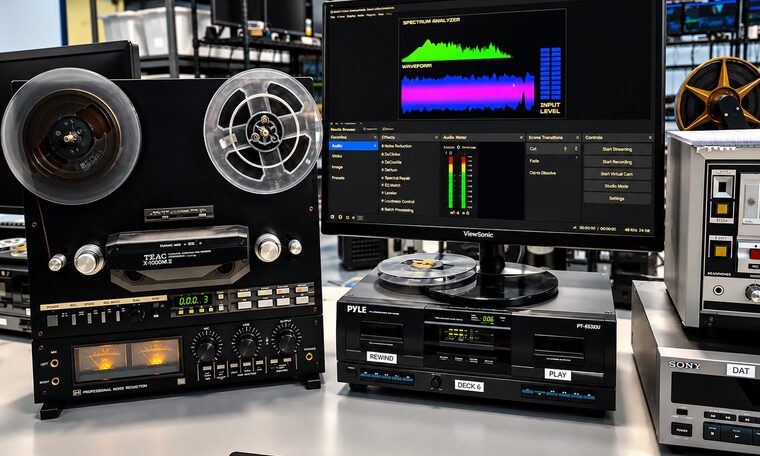
Bring us the formats nobody else will touch. We keep the decks running for machines that stopped being made decades ago.
VHS, VHS-C, S-VHS, S-VHS-C, Betamax, Hi8, Video8, Digital8, MiniDV, MicroMV, and 3/4 inch U-matic
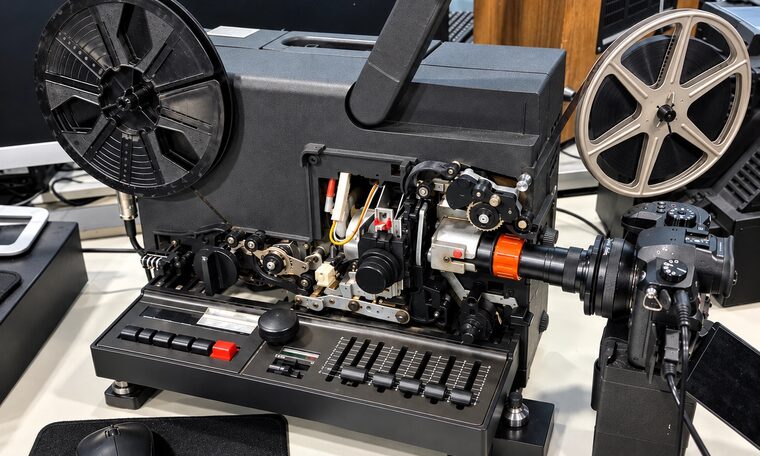
8mm, Super 8 and 16mm reels, sound or silent, up to 400 feet, scanned frame by frame to true 4K
Loose prints from wallet size to 11x14, bound and self-adhesive albums, 35mm slides, Kodachrome, medium format, and color or black and white negatives
Compact cassette, microcassette, reel-to-reel, DAT, vinyl records, and 8-track
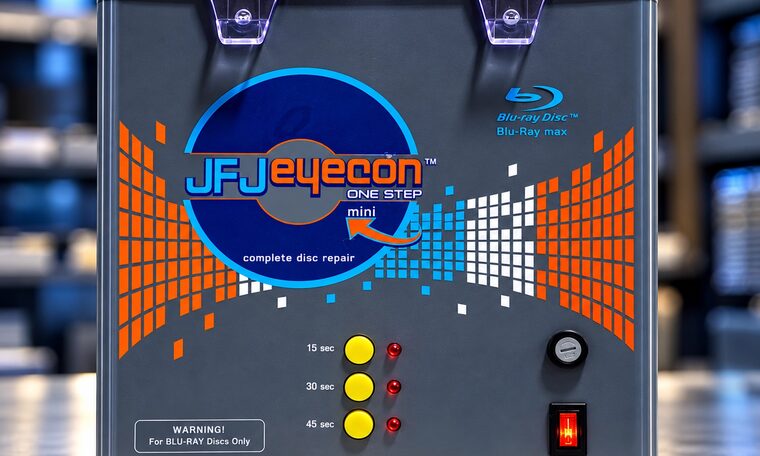
DVD, mini DVD, CD, Blu-ray, and legacy data discs recovered where the surface allows
Not sure what you have? Photograph the pile and call. Most people describing “old home movies” turn out to have two or three different formats in the same box, and each one needs a different machine.
Why Miami collections do not wait well
Seventy-five percent humidity, most of the year.
This is not a scare tactic. It is the reason we tell Miami callers not to leave it another season.
above 70%
Average relative humidity in Miami
80%+
Routine wet season readings
Miami averages relative humidity above 70 percent year round and rarely drops below 60 percent even in the dry season. Closets in Little Havana, the Roads and Allapattah, and storage lockers under Brickell and Edgewater towers, hold collections in air that never really dries out.
Andrew in 1992 and Irma in 2017 put water through thousands of homes, and water damaged tape is not automatically lost. The failure mode is usually mold and binder breakdown rather than destruction of the magnetic layer, which is exactly the kind of job that gets worse every year it waits.
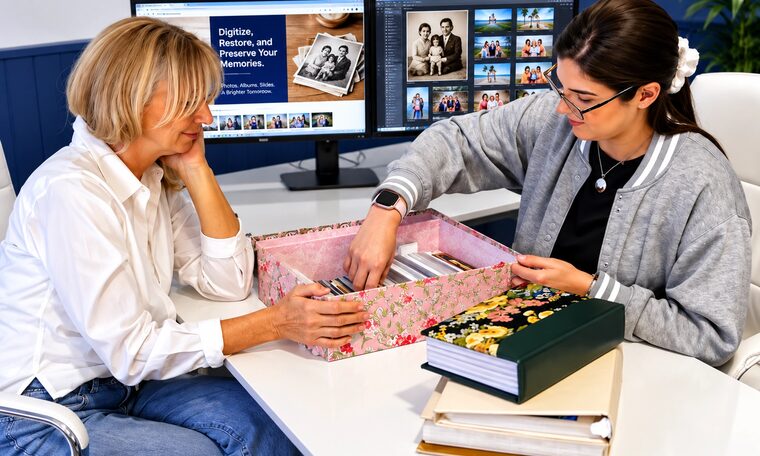
Where they end up instead: a climate-controlled floor, not a garage in August.
Every year a tape waits in a Miami closet is footage you do not get back. We are in Miami on Thursdays.
(561) 235-7808How it works from Miami
Four steps, no guesswork.
Step 1
Call and describe it
Tell us roughly what you have. We will tell you what is worth doing, what is not, and what it costs, before anything moves.
Step 2
We come to you
We are in Miami on Thursdays. We come to the house or the condo, help you sort what is worth doing, and carry it out ourselves.
Step 3
We log it by name
Everything is counted and recorded against your order the day it lands, so you get a real number before any work begins.
Step 4
It comes home
Checked three times by hand, then your originals come back to Miami alongside the finished files. Turnaround is 3 to 4 weeks.
If you are still comparing
The mail-in companies put this in their terms, not their ads.
We are not going to characterize them. These are their own published words.
“YOU RECOGNIZE THAT YOU MAY NOT RECEIVE YOUR MATERIALS BACK … BY PLACING AN ORDER WITH LEGACYBOX, YOU ACCEPT THIS RISK.”
Legacybox Services Terms & Conditions. Capitalization theirs.
“…we may choose to compensate you for loss or damage; or we may decline, entirely, to issue a refund or provide any compensatory monies.”
Southtree Services Terms & Conditions.
“IMEMORIES MAXIMUM LIABILITY … WILL BE LIMITED TO THE AMOUNT OF FEES ACTUALLY PAID BY YOU TO IMEMORIES FOR THE APPLICABLE SERVICE … FOR THE TWELVE (12) MONTHS PERIOD IMMEDIATELY PRIOR TO WHEN ANY CLAIM OR CAUSE OF ACTION AROSE, OR $100, WHICHEVER IS LESS.”
iMemories Terms of Service. Capitalization theirs.
Legacybox, Southtree and Kodak Digitizing are the same company, AMB Media LLC, in the same Chattanooga building. For what it is worth, nobody outside our own staff handles a Miami collection at any point.
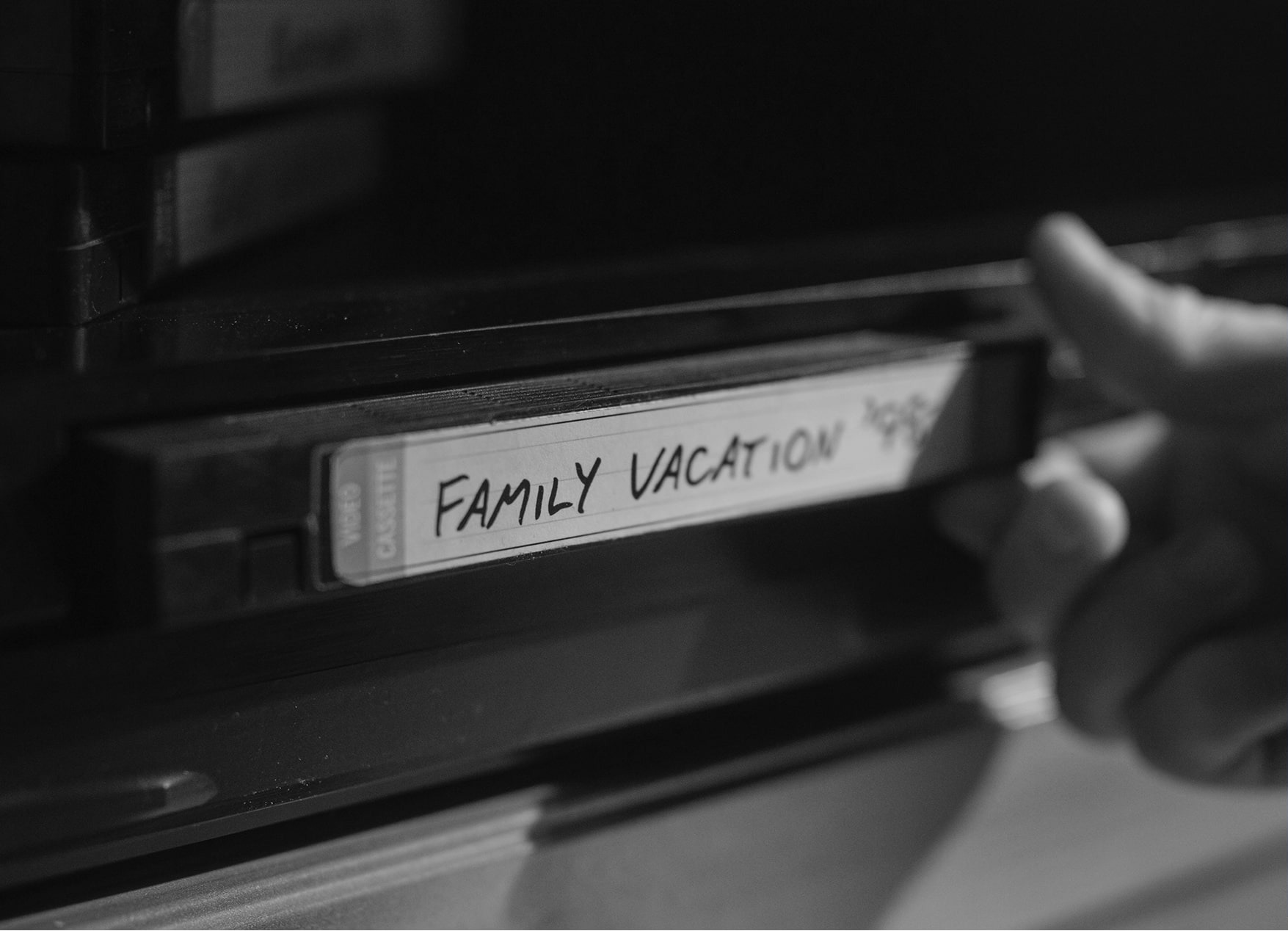
One building
Once it reaches us it stays here.
Never sub-contracted, never sent on.
Zachary Goldberg
Founder and Owner, on site in Boca Raton
We built Forever Studios because every family deserves to have their memories preserved the right way, by real people, with real equipment, under one roof. Miami families trust us because the process is simple: we come to you, we carry it ourselves, and our own team does the work.
Miami, Florida
The city your collection came from.
Miami's family archives came here in suitcases. Photographs carried out of Cuba, Haiti, Nicaragua and Venezuela, then sat through sixty Miami summers in a closet. In few other cities do so many irreplaceable collections cross a border before they reach a shelf.
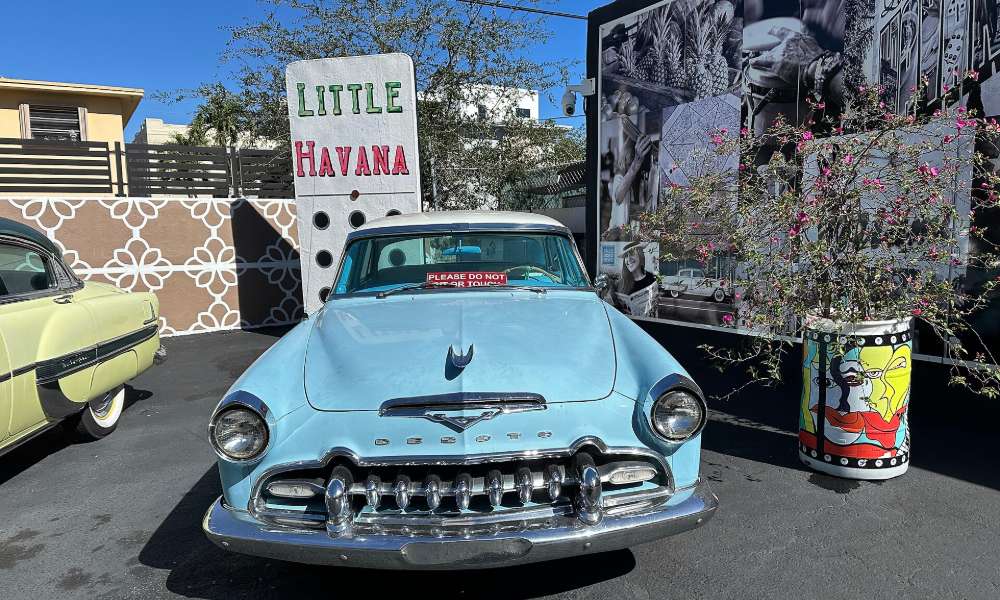
Little Havana
Calle Ocho, Domino Park and the exile-era storefronts. The heart of Cuban Miami since the 1960s and a National Treasure since 2017.
Official site → Photo Phillip Pessar, CC BY 2.0 via Wikimedia Commons
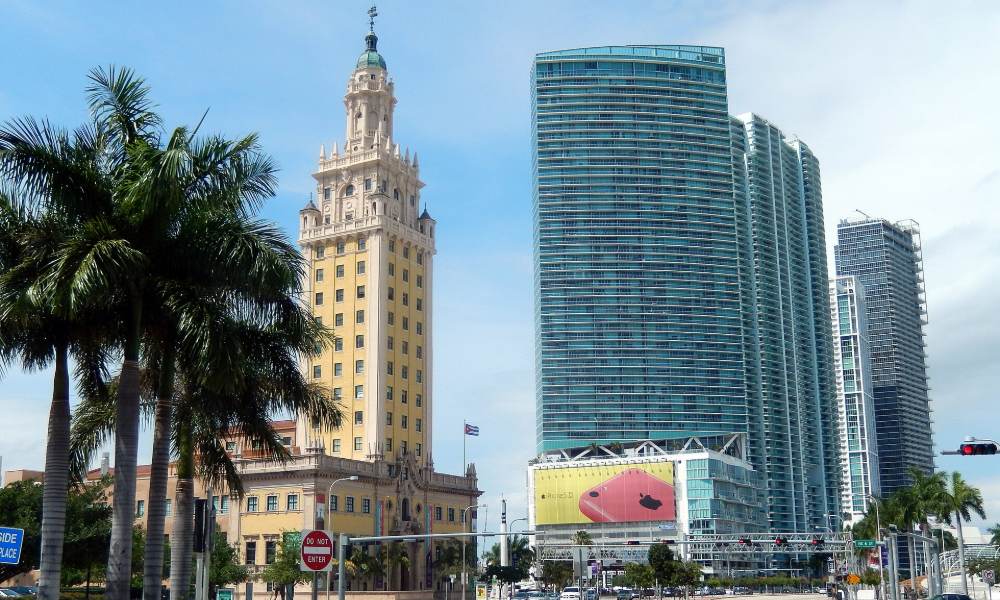
Freedom Tower
The Cuban Refugee Emergency Center from 1962 to 1974, where a generation of arrivals was processed. A National Historic Landmark, and the reason a lot of the photographs we scan in Miami-Dade crossed a border before they reached a shelf.
Official site → Photo Bohao Zhao, CC BY 3.0 via Wikimedia Commons
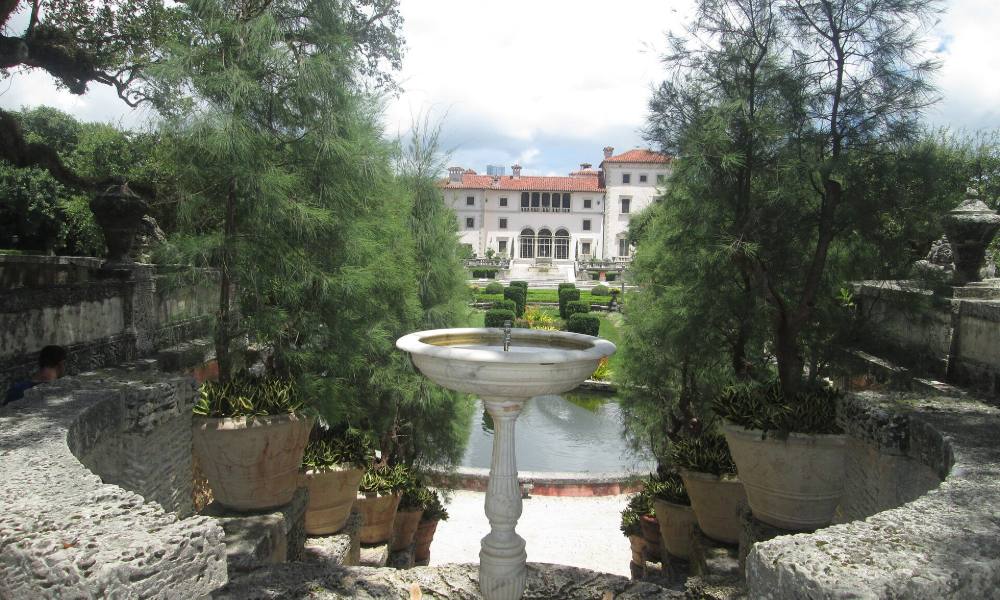
Vizcaya Museum & Gardens
James Deering's 1916 bayfront villa and formal gardens, a National Historic Landmark and the most photographed house in the county.
Official site → Photo Ivan Curra, CC BY-SA 3.0 via Wikimedia Commons
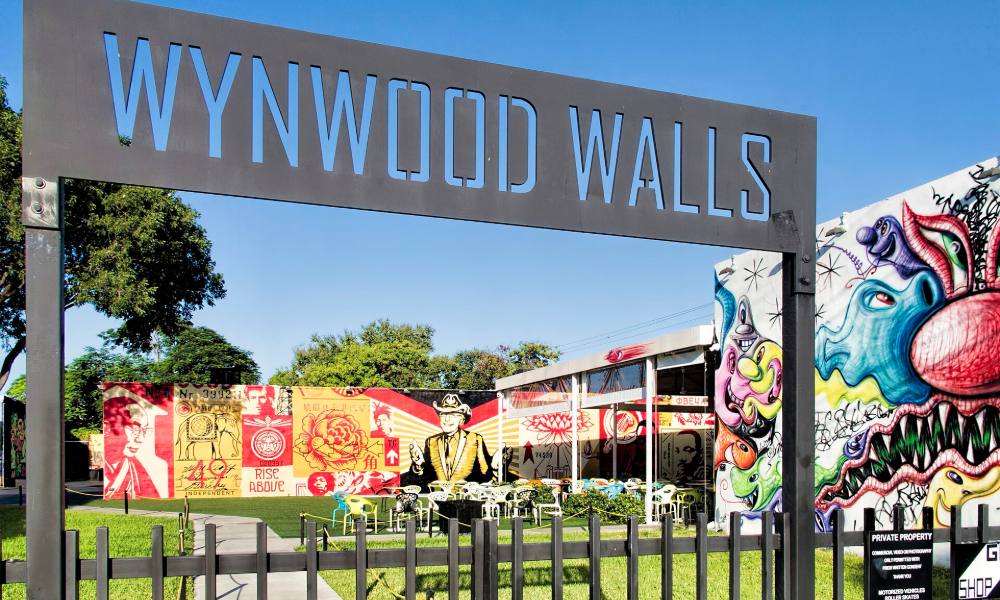
Wynwood Walls
The outdoor mural project that turned a warehouse district into a gallery quarter, and with it the studio and gallery archives we now digitize out of Wynwood and the Design District.
Official site → Photo Dan Lundberg, CC BY-SA 2.0 via Wikimedia Commons
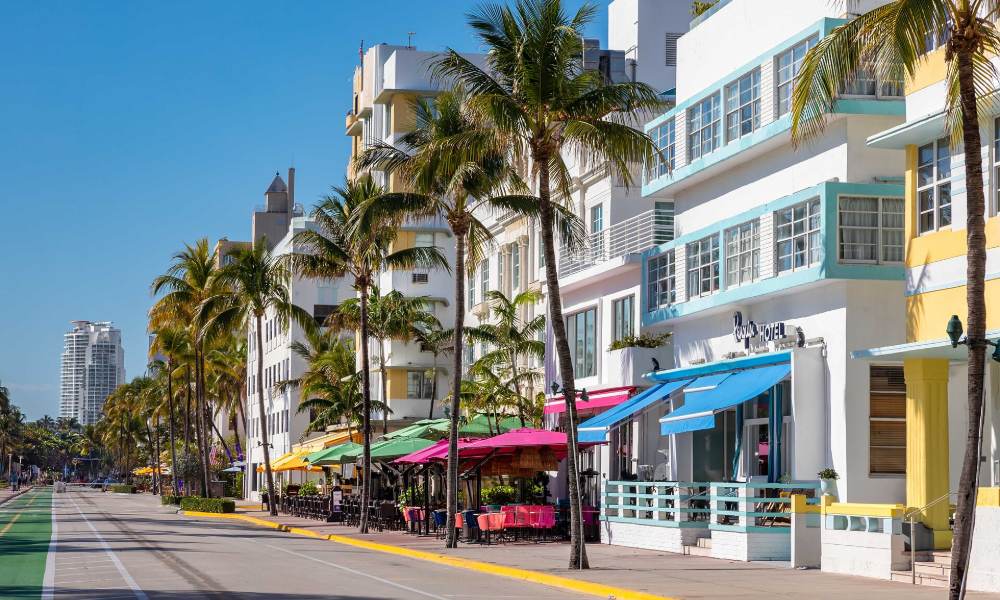
Miami Beach Art Deco District
Roughly eight hundred preserved buildings from the 1920s to 1940s along Ocean Drive and Collins Avenue, the largest concentration of Art Deco architecture anywhere.
Official site → Photo Robbschultz69, CC BY-SA 4.0 via Wikimedia Commons
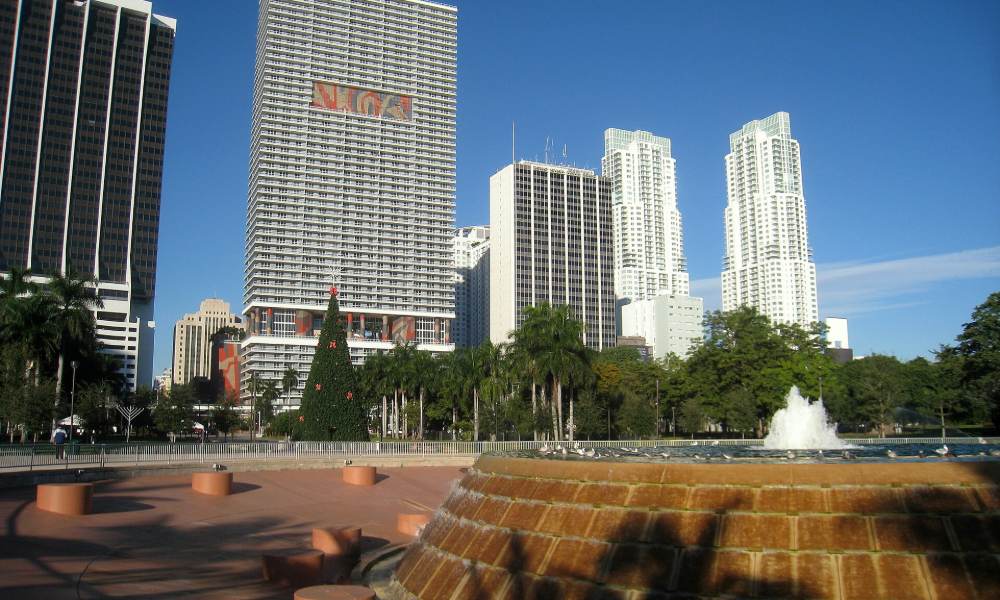
Bayfront Park
Thirty-two acres on Biscayne Bay at the foot of downtown, the city's gathering place for New Year's Eve and most of what Miami does outdoors together.
Official site → Photo Daderot, Public domain via Wikimedia Commons
Where our Miami customers are
489K+
Population
1896
Incorporated
46 mi
To our studio
an hour
Drive time
Or bring it yourself
Rather not wait for the route?
You are welcome to drive it down and hand it to us. Same studio, same people, about an hour from Miami.
1000 Clint Moore Road, Suite 208
Boca Raton, FL 33487
Open Monday to Friday 9 to 6, Saturday 10 to 5
What Miami-area customers say
Rated 4.9 from 3,937 verified reviews.
★★★★★
The films you worked with were 80 years old. I was very impressed with the sections of movies you were able to copy and enhance. My family couldn't believe how good they looked.
★★★★★
Received my link, very easy process. Shipping, status updates, app usage all were terrific. Even came through with a delivery right before Christmas. Was able to re-live memories with all my families over the holidays. Thank you Forever Studios
★★★★★
I've always hesitated to drop my valuable memories in a box and ship it off to parts unknown, but Forever Studios has made converting my old tapes easy. Five stars!
Frequently asked, Miami
The questions South Florida callers actually ask.
Do you have a location in Miami?
No, and we would rather say so plainly. Forever Studios has one studio, at 1000 Clint Moore Road in Boca Raton, about 46 miles up I-95 from downtown Miami. What we do have in Miami-Dade is a pickup route. Call and we will come to the house or the condo on a Thursday, sort the collection with you, and carry it back ourselves.
What does pickup cost in Miami?
Free on orders of $250 or more, anywhere in Miami-Dade. Below that it is $30 plus mileage. If you would rather not wait for the route, you can drive it up yourself, about an hour outside rush hour, or we can send a prepaid insured kit instead.
My family's home movies and tapes are in Spanish. Is that a problem?
Not at all. We transfer audio exactly as recorded. Spanish, Haitian Creole, Portuguese and anything else comes through in your digital files precisely as it sounds on the original. Nothing is dubbed, translated or cleaned up unless you ask.
We brought photographs with us when the family left Cuba. Some are creased and water spotted. Can they be saved?
Yes, and these are some of the most meaningful projects we take on. Prints that travelled in a suitcase and then sat through sixty Miami summers usually show creasing, silvering, humidity spotting and fading. All of that reverses. We scan first, then restore by hand, and you see the work before you approve it.
Hurricane Andrew flooded my parents' house. The tapes were in the water. Is there any point?
Often there is. Water damaged tape is not automatically lost. The failure mode is usually mold and binder deterioration rather than destruction of the magnetic layer underneath. Bring them, or let us collect them, and we will tell you honestly what is recoverable before you spend anything.
Can you digitize an entire estate or a condo clear-out at once?
Yes, and that is a large share of what we do in Miami-Dade. When a parent moves into assisted living or a condo is being cleared, the media usually surfaces all at once and on a deadline. Pickup is free at that size, we sort on site, and you get a real count before any work starts.
Preserving Florida's most important memories since 2007
Why Miami families hand it to us.
One studio
Everything happens at 1000 Clint Moore Road. Never sub-contracted, never sent on to another facility.
Insured
Shipped back at declared value, or collect it from the studio yourself.
A+
BBB rating, with thousands of reviews across Reviews.io, Google, Facebook and Yelp.
3x checked
Every tape, reel and photo reviewed by the technician, the studio leader, and your project manager.
Talk to a real person right now
Tell us what is in the box.
We will tell you what it costs and what is worth doing, before anything moves. One call and we will put you on the route.
Pickup in Miami
We come to you on Thursdays, free on orders of $250 or more and $30 plus mileage below that. Logged the day it lands, digitized in Boca Raton, carried back to you.
Or bring it yourself
1000 Clint Moore Road, Suite 208, Boca Raton, FL 33487. Monday to Friday 9 to 6, Saturday 10 to 5.
Everything we do
Nearby locations
Forever Studios · Owner-operated in Boca Raton · Helping Florida families since 2007
Ready to digitize it right the first time?
Bring your tapes, film, and photos to the team that treats every project as irreplaceable. All work is handled in-house in Boca Raton, never outsourced.