Where to Transfer Home Movies and Photos in South Florida
A practical guide to local vs. mail-in transfer services in South Florida, with pricing, turnaround times, and what to look for when choosing a studio.
Contents
So you have a box of old VHS tapes, film reels, photo albums, or cassettes and you live in South Florida. Should you send them to a national mail-in service or take them to a local studio that handles the actual transfer work itself?
Many preservation studios exist in South Florida where you can have your analog media transferred to digital format. They vary in quality and price, so knowing what to expect before you hand anything over is worth the few minutes it takes to get informed.
What formats can be transferred to digital at a South Florida studio?
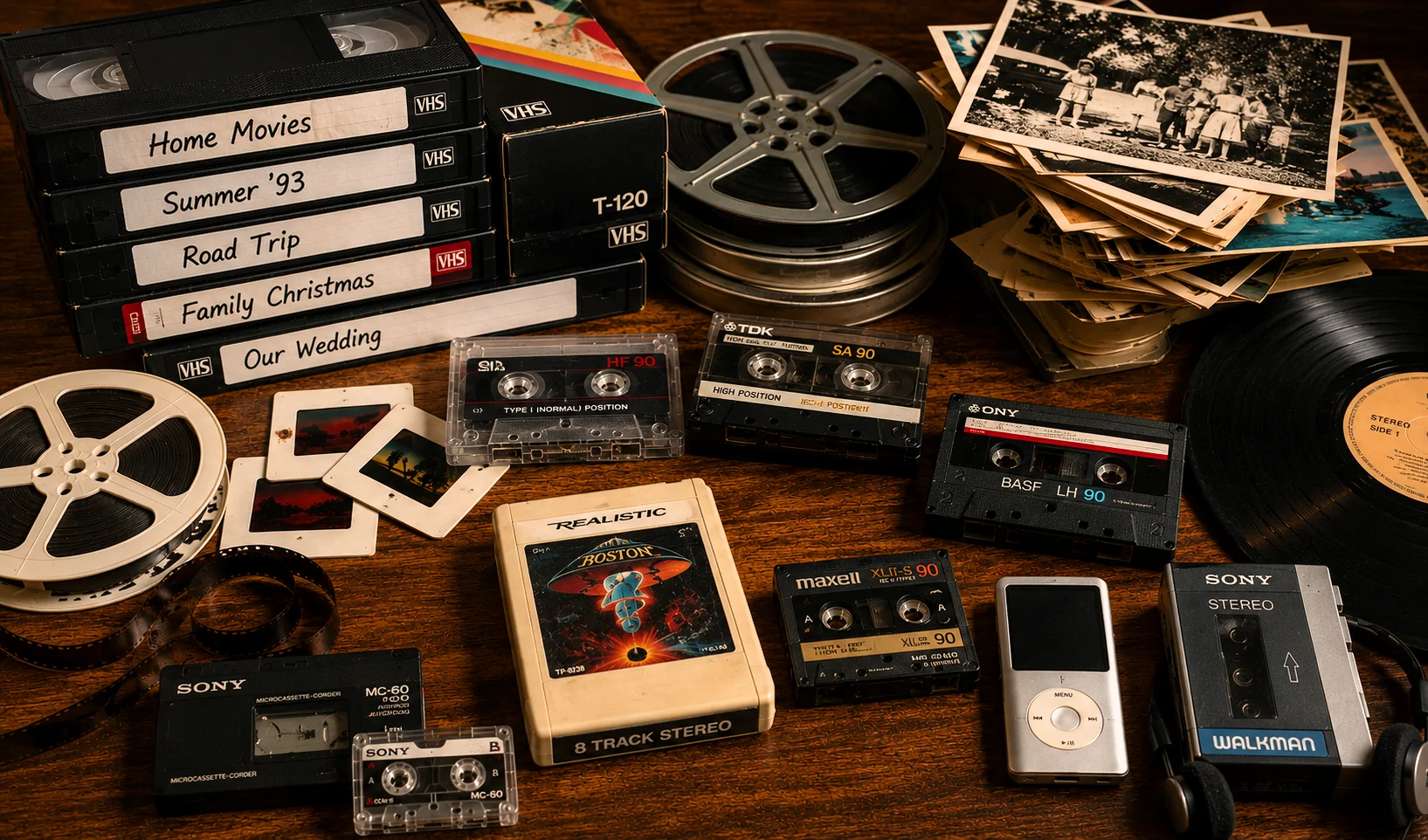
Home collections tend to include more format variety than people expect, and a well-equipped local studio handles the full range of consumer formats from the past 60 years.
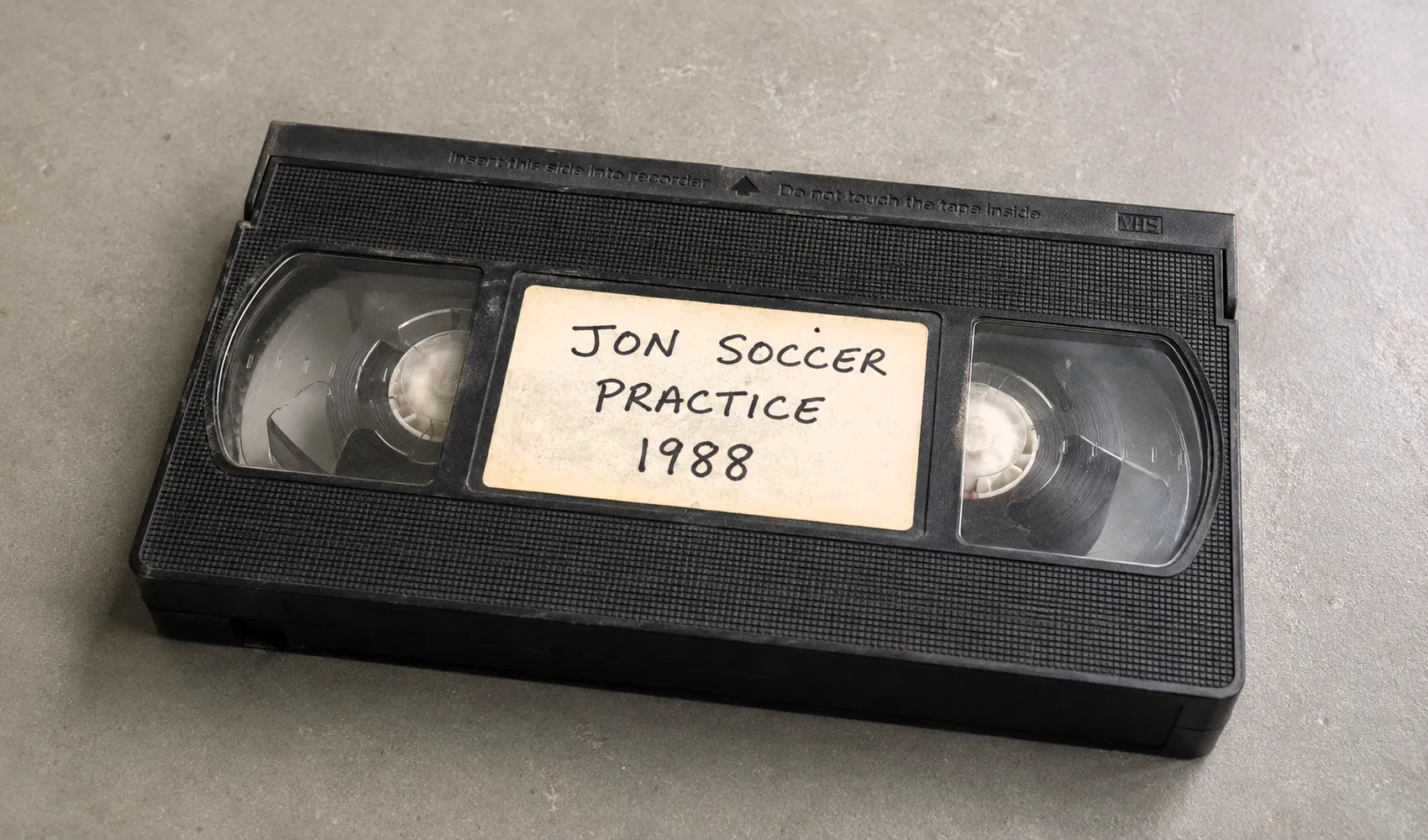
The most common video formats families bring in are VHS, VHS-C, Hi8, Video8 (8mm video), MiniDV, and Betamax. All of these are cassette-based magnetic video formats that recorded family footage from roughly the mid-1970s through the early 2000s. Each format requires a different deck to play back, and working decks for older formats like Betamax are increasingly hard to source. A professional studio maintains or services its playback equipment specifically for this reason.
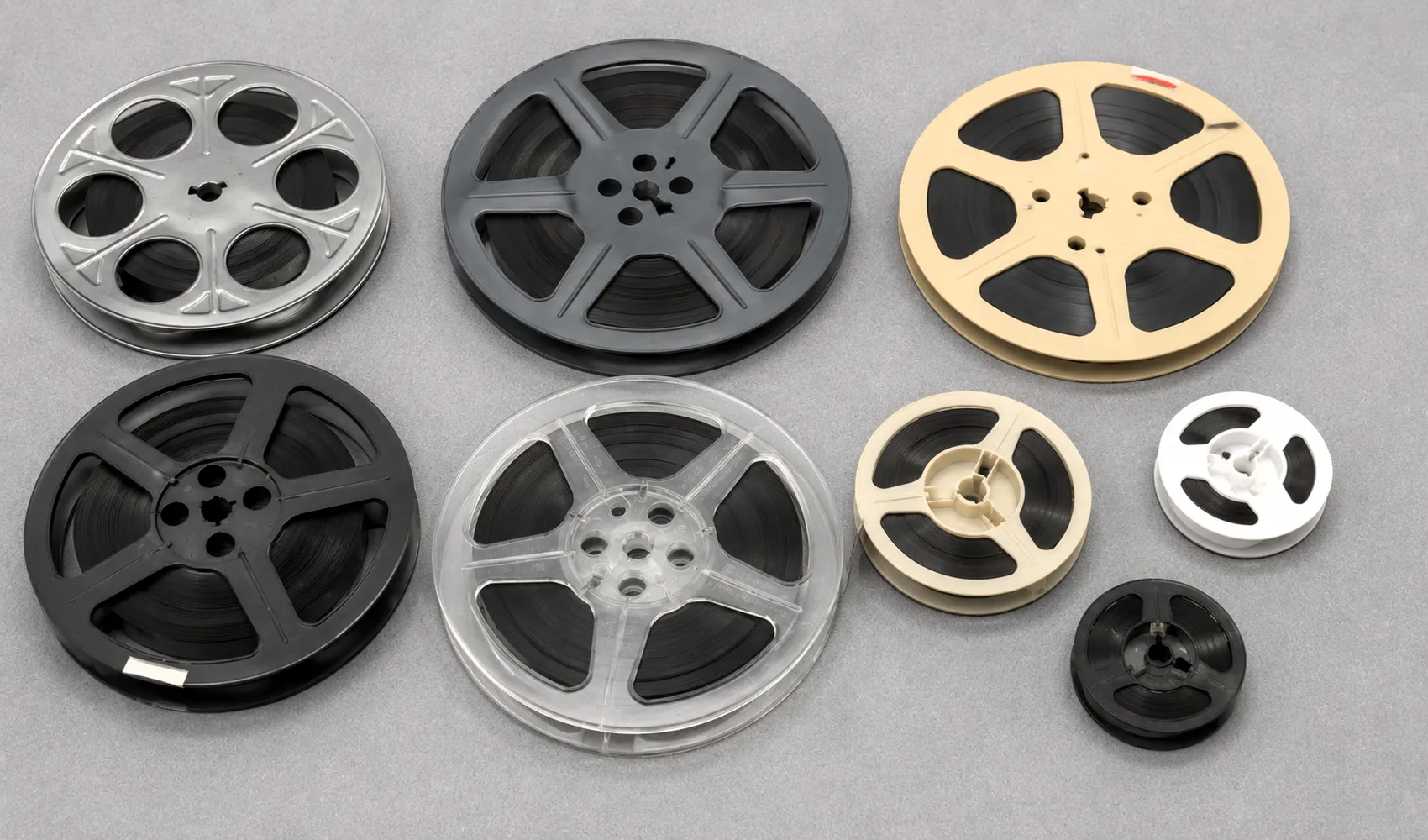
For motion picture film, the common formats are 8mm and Super 8. These were the consumer film formats used most heavily from the 1950s through the 1970s. Film transfer is fundamentally different from tape transfer: each frame is individually illuminated and captured rather than read off a magnetic surface in real time. The final quality of a film transfer depends on the cleanliness of the film path, the resolution of the capture system, and the settings being used.
For still images, most studios handle 35mm slides, 35mm negatives, medium format negatives, and standard printed photographs at resolutions from 300 DPI to 1200 DPI, depending on the intended use.
Rarer formats also show up from time to time. Umatic tapes were a professional broadcast format from the late 1970s. 2-inch quadruplex tape is a reel-to-reel studio format from the earliest days of television. BetacamSP cassettes occasionally surface in collections from people who worked in local TV. LaserDisc is another edge case that some studios can accommodate. A reputable studio is transparent about which formats they work with in-house and which they would send elsewhere.
For a complete breakdown of every consumer and professional analog format, the Complete Guide to Every Analog Format covers each one with full specifications and preservation context.
What does home movie and photo transfer cost in South Florida?
For video tape transfer, the standard rate at a reputable South Florida studio runs $12 per tape regardless of format. This applies to VHS, VHS-C, Hi8, 8mm video, MiniDV, and similar cassette-based video formats. The rate is consistent because the process is similar: each tape is loaded, played back in real time (a two-hour VHS tape takes approximately two hours to transfer), and captured to a digital file. The quality of the transfer depends on the technician and the condition of the equipment being used.
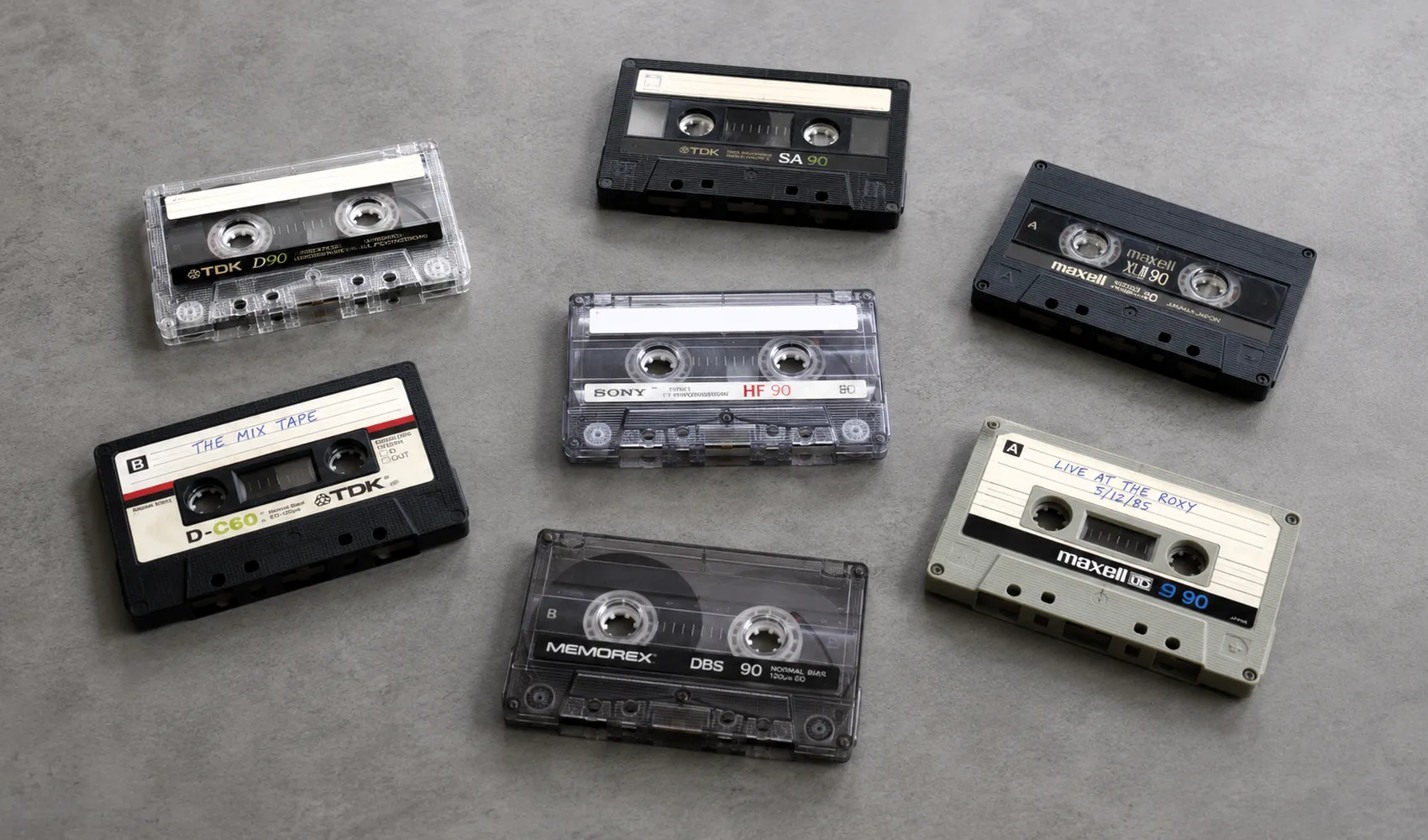
Audio cassettes run $15 per cassette. Photo scanning pricing varies by volume and resolution. For loose 4x6 prints at 600 DPI, typical rates run from $0.10 to $0.30 per photo, with volume discounts available for large collections. 35mm slides and negatives cost a bit more because they require individual handling, cleaning, and placement on a light table.
Film reel pricing differs from tape because reels come in different lengths. Most studios price by the foot or by the reel. A standard 50-foot reel of 8mm film holds roughly 3 to 4 minutes of footage and typically costs around $20 to transfer. Reels with vinegar syndrome, mold, or damaged splices may require additional treatment time that affects the price.
One question worth asking at intake: is digital delivery included in the base price? Some services quote a transfer price and then charge extra for a USB drive, cloud download link, or DVD. Find out upfront what format your digital files come back in as well. MP4 is the most broadly compatible format for video. For standard definition source video, bitrate matters more than resolution: a 480p file captured at a high bitrate looks meaningfully better than a compressed 480p file.
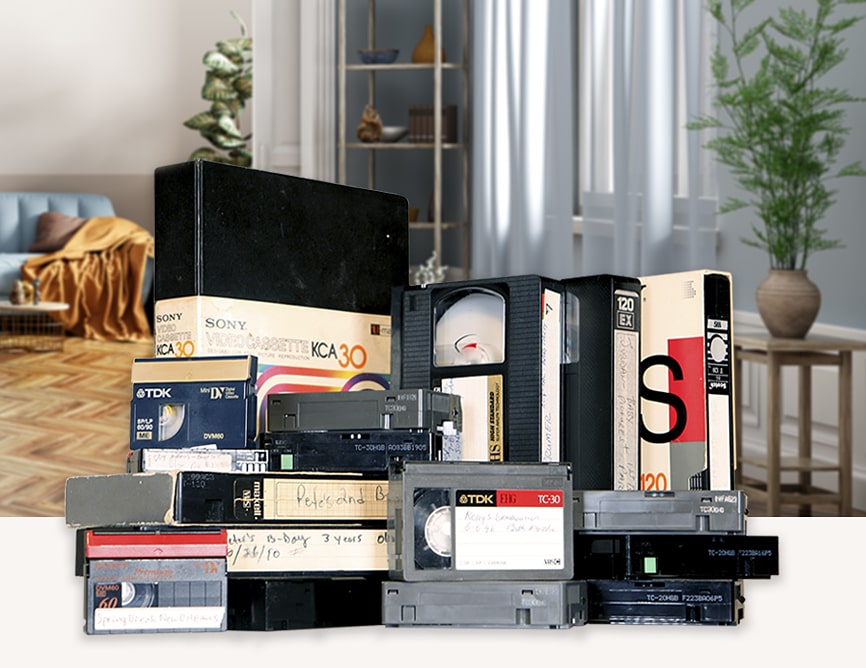
VHS to Digital Conversion
Professional VHS to digital transfer at $12 per tape. Your home movie footage preserved in MP4, delivered on USB or cloud.
Get StartedLocal studio vs. national mail-in service: what's the actual difference?
The national mail-in services are real companies doing real transfer work. The question is not whether they produce acceptable results on average, but whether the specific tradeoffs make sense for your collection and your situation.
The differences come down to four things: access, speed, quality control, and risk.
Access
When you drop off at a local studio, you can speak with the person handling your media. You can describe a tape that jammed once five years ago, a reel with a splice in the middle, or a cassette that sounds like there is debris inside it. You can watch the intake process, ask questions, and leave with a realistic sense of what to expect. With a national mail-in service, you fill out a web form, print labels, and ship. If something goes wrong mid-job, you call a customer service line, not the technician.
Speed
Mail-in services typically quote four to eight weeks, sometimes longer during the holidays. A local South Florida studio can turn most jobs in one to three weeks. For smaller collections, sometimes faster. If there is a reunion, a memorial service, or a birthday where you need the footage, turnaround matters.
Quality control
High-volume mail-in operations use industrial equipment designed for throughput. Local studios typically run each tape individually with a technician monitoring the playback. For tapes in good condition, the results may be comparable. For tapes with dropout, mold, or oxide shedding, individual attention produces meaningfully better output. A technician watching a live playback can catch problems, adjust levels, and flag a tape for re-transfer in a way that an automated system cannot.
Risk
Shipping originals carries real risk. Packages get lost, delayed, and damaged. Major carriers offer insurance, but no amount of insurance restores footage that exists nowhere else. The Library of Congress guidance on personal media preservation recommends minimizing the handling and transport of original magnetic media, particularly for materials already showing age. Putting a 35-year-old tape through a shipping and distribution network adds mechanical stress and temperature exposure the tape was not designed for.
None of this means mail-in is wrong for every situation. For very large collections where local studio capacity is a constraint, or for specialized formats a local studio does not handle in-house, shipping may be the only practical option. But for most South Florida families with a manageable collection of home movies and photos, the local option removes a layer of risk that simply is not necessary.
How long does transfer take when you use a South Florida studio?
Turnaround time depends on three variables: the size of your collection, the mix of formats, and the studio's current workload.
For a typical family collection of 10 to 20 video tapes in common formats, most South Florida studios can complete the work in one to two weeks under normal conditions. Collections of 50 or more tapes, or collections with a significant number of film reels, may take three to four weeks.
Photo scanning generally completes faster. A collection of 200 to 300 loose prints at standard resolution typically takes five to seven business days. Larger collections, or collections with restoration work, take longer.
Before agreeing to drop off your media, ask the studio directly: given their current workload, when would they realistically complete the project? A studio that commits to a specific window and contacts you if that changes is more trustworthy than one that quotes a vague estimate and expects you to follow up.
Film reel transfer takes longer per unit than tape because each reel requires more careful handling, frame-by-frame cleaning, and individual setup. A collection that includes both tapes and film will have a longer overall timeline than tapes alone. If timing is a constraint, ask about rush options at intake rather than after you have already dropped off.
Is it safe to mail your originals, or should you use someone local?
The concern about mailing originals is legitimate. Magnetic tape degrades with age regardless of how it is stored, and it responds to environmental stress in ways that can compromise playback quality.
The Smithsonian Institution guidelines on the preservation of personal collections recommend storing magnetic media in stable conditions: temperature between 60 and 70 degrees Fahrenheit, relative humidity between 30 and 50 percent. A package moving through a shipping and distribution network in Florida summer does not come close to those conditions. Every handling point introduces vibration, temperature swings, and humidity exposure.
A single overheating event can cause irreversible playback degradation. Oxide shedding, where the magnetic layer separates from the tape base, can be triggered or accelerated by temperature and humidity exposure. Once oxide has shed, the signal it carried is unrecoverable.
Package loss is another risk that most people underestimate. It is not a daily occurrence, but it happens at a measurable rate across all major carriers. If a box containing your only copy of footage of a family member who has since passed were lost in transit, there is no path to recovery. The question to ask before shipping is not "what is the probability something goes wrong?" but "if something goes wrong, can I recover from it?"
For South Florida residents who have a competent local studio within driving distance, the cost of that drive is not worth comparing to the risk profile of shipping irreplaceable originals.
Photo Scanning Service
Professional scanning at 600 DPI for loose prints, albums, slides, and negatives. Delivered digitally or on USB.
Learn MoreWhat to look for when choosing a transfer service in South Florida
Not every transfer service operates at the same level of care. Several markers separate a professional preservation operation from a high-volume throughput business.
Specificity about equipment and process
A studio that can describe the capture equipment they use, the resolution they capture at, and the output format they deliver is a studio where someone is actively paying attention to quality. "Professional equipment" is not an answer. Ask what deck they use for the specific format you are bringing in, and notice how they respond.
Honesty about format limitations
A reputable studio tells you clearly which formats they handle in-house and which they outsource. Ask about every format in your collection before dropping off. A studio that accepts formats they do not actually work with in-house without telling you means your originals may travel further than you intended.
Original media handling policy
Ask how your originals are stored while work is in progress. Climate-controlled storage is a meaningful differentiator. Also ask whether they track individual tapes through the workflow or handle collections as an undifferentiated batch. If a tape is flagged as problematic mid-transfer, you want it identifiable by your label, not just a number in a pile.
Output options
Find out what digital deliverables you receive: file format, resolution, and delivery method (USB, cloud download, DVD). MP4 at a reasonable bitrate is the standard for VHS-derived content. Higher resolution capture from film is worth asking about specifically.
Local reviews with specific project details
Reviews that describe the format of the media, mention a specific challenge, and explain how the studio handled it are far more useful than generic five-star ratings. Look for reviews that describe what the studio did when something was difficult.
A real intake process
A studio that physically examines your tapes at drop-off, asks about the condition of the media, and identifies potential problems before work begins is more trustworthy than one that accepts your collection and hands you a receipt. The intake conversation is where a professional catches problems that would otherwise result in a failed or substandard transfer.
What cities and areas does Forever Studios serve?
Forever Studios is based in Boca Raton, Florida, and serves customers across the South Florida region. The studio provides in-person drop-off and pickup at its Boca Raton location.
Customers come regularly from throughout Palm Beach County, including Delray Beach, Boynton Beach, Lake Worth, West Palm Beach, Greenacres, Wellington, and Loxahatchee. From Broward County, the studio serves Fort Lauderdale, Pompano Beach, Coral Springs, Deerfield Beach, Hollywood, Hallandale Beach, and Miramar. Customers from Miami-Dade County, including Miami, Coral Gables, Hialeah, and Aventura, make the trip as well.
Services at the Boca Raton studio include VHS to digital conversion, 8mm and Super 8 film transfer, photo scanning, and old photo restoration and enhancement. Customers with mixed collections covering multiple format types can complete the full intake in a single visit.
Pricing: $12 per tape for all video formats, $15 per audio cassette. Photo scanning and film transfer are priced at intake based on collection specifics. Turnaround estimates are given at drop-off based on current workload.
To reach Forever Studios, visit foreverstudios.com or call to speak with someone directly about your collection.
Ready to digitize it right the first time?
Bring your tapes, film, and photos to the team that treats every project as irreplaceable. All work is handled in-house in Boca Raton, never outsourced.