Why Do Your Old Photos Fade Over Time?
Find out why your photos fade over time and how you can restore your photo to a perfect photo print again.
Contents
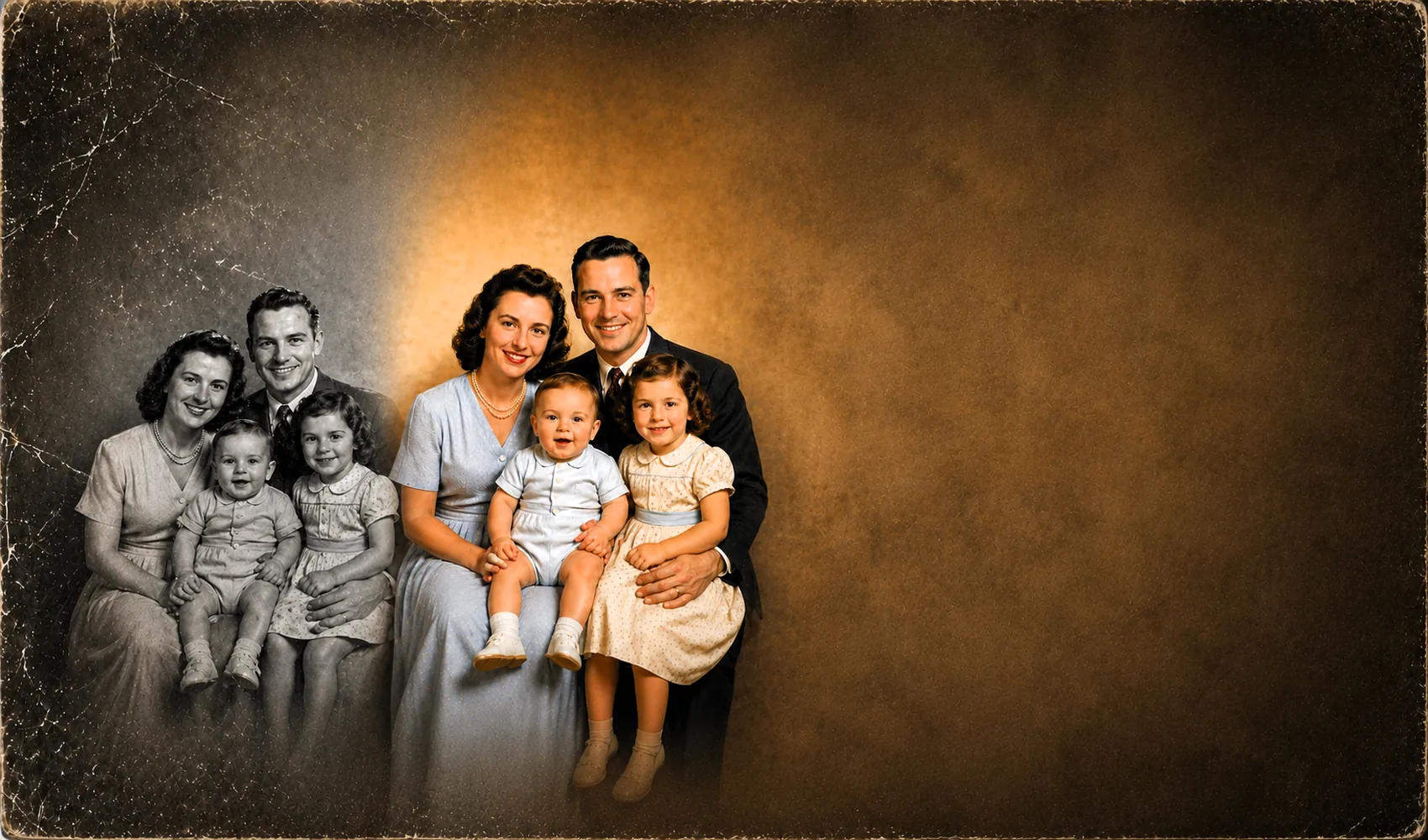
Pictures may remain perfect, uncorrupted snapshots of life and precious moments for a long while. But ultimately, time will do a number on your photos as they fade, tear, and suffer discoloration. But fear not! There is a solution! Photo restoration (and digitalization) will breathe new life into your vintage photos for generations to come.
Why Do Photos Fade?

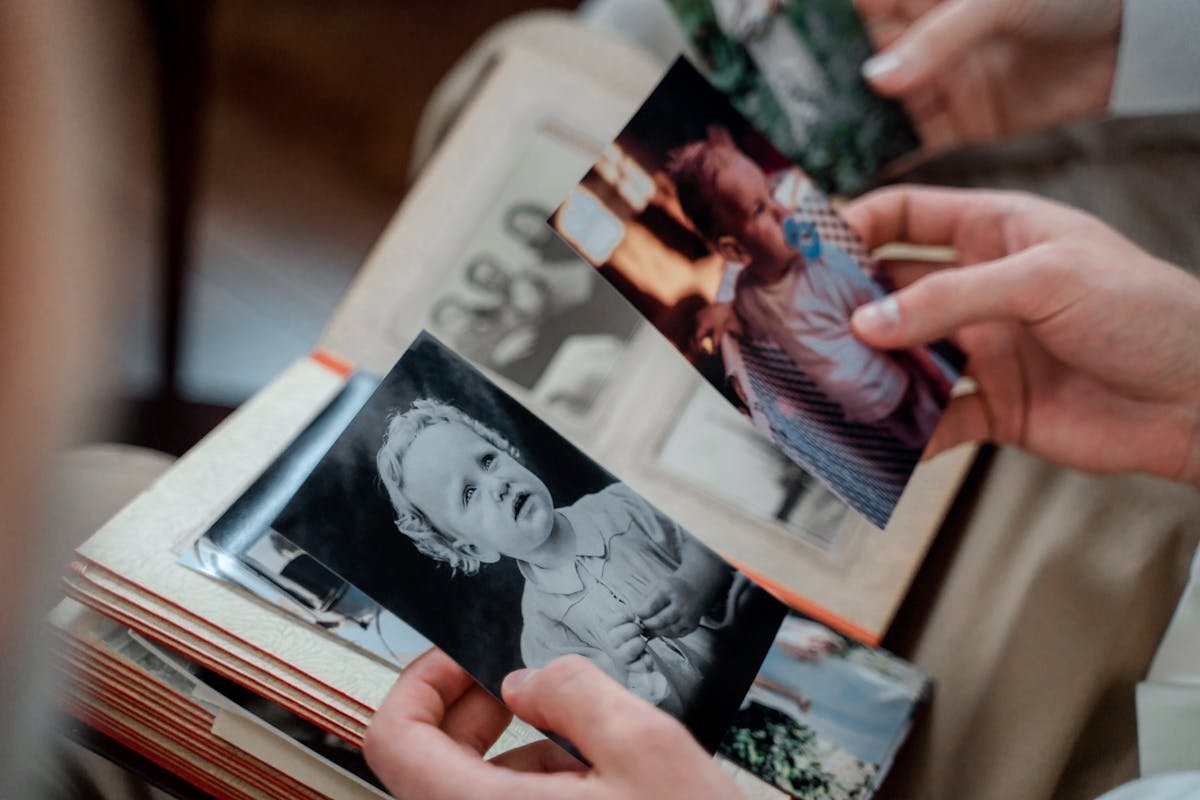
Photo inception: A vintage photo of a man with vintage photos.
Now, you might be asking yourself, “what happened to my photos? I take care of them. They're in frames, or (my personal favorite) they've been in storage for years; how could they possibly fade so much?”
Well, the answer to that question isn't very simple because there are a lot of factors that many people don't take into account. Light, heat, humidity, water (yes, that damage is different than humidity), household chemicals, dust, and even insects can destroy your pictures without you even knowing until it's too late.
What is the Science Behind Photos Fading?
WHAT ARE PHOTOS MADE OF?
So, let's talk about what a photographic print is made of – inks, dyes, and paper. Many earlier color prints were created using reactive chemical processes that are sensitive to light exposure and external factors.
IS IT NATURAL FOR PHOTOS TO ERODE AND FADE?
Over a period of time, even in the most ideal circumstances, photos erode naturally like any other man-made object. All materials degrade. The photo's chemical composition will break down and oxidize, changing the image.

Fading photos due to oxidation.
WHY ARE MY BLACK-AND-WHITE PRINTS TURNING SILVER?
Silver-based color photographic prints fade, or more accurately, start "silvering," more easily than the typical photo and are very susceptible to the same issues. Unfortunately, once a silver image starts to dissolve, it won't stop, but it can last longer with proper storage and care. Word of advice: do not scan your silver photos; that will increase the rapid deterioration.
WHY DO OLDER PHOTOS FADE FASTER THAN NEWER ONES?
Modern prints have a bit more protection, but vintage shots from the 60s and earlier? They're in a really rough spot. Archival-quality photo materials can withstand more than the average photograph, but it's not perfect. A modern photo's longevity depends on a variety of different material factors, such as the kind of polyester and lamination used to create and protect the image. I'll be honest: I do not have a degree in chemistry. So, if you want more information, I'm afraid you'll have to go to someone much smarter than me.

A good example of over-exposed photos that have faded.
HOW DOES INK AFFECT THE LONGEVITY OF PHOTOS?
Pigment-based inks may stand a bit stronger in the face of environmental factors, but traditional dye-based inks? They don't hold up great. Neither is 100% impenetrable; they will bleed, fade, and change colors. Color photos from before the 80s were unstable. Even black-and-white photos are subject to this issue. Fuji and Kodak were the first companies to introduce stable photography to the public sector.
How Does Light Affect Photos?
Getting the right lighting is essential for a great picture, but UV light on a traditional photograph is like direct sunlight on a vampire (and no, I'm not talking about the sparkly ones). Scientifically speaking, it's a toxic relationship. Even light bulbs can make photos fade and destroy the chemical bonds in the photo paper, causing them to lose their original colors. That's why you'll notice that photos left in direct sunlight tend to fade faster than those kept in a dark storage room.

Photos should not be exposed to direct light. So, this is a bad example lol.
What Environmental Factors Damage Photos?
Water and paper,that's never a good combo, even if you "waterproof" your photos. The materials and residual chemicals on the photographs can absorb moisture, leading to a warping, discolored mess. The results tend to be even worse if that moisture is trapped in a picture frame with nowhere to escape.

An old, damaged photo covered in dirt. It's still very beautiful, though.
Photos react to almost all environmental elements: dust, smoke, fungal growth, and cleaning chemicals. Without proper care and cleaning, layers of grime can break down and destroy an image.
Common Mistakes in Storing Photos:
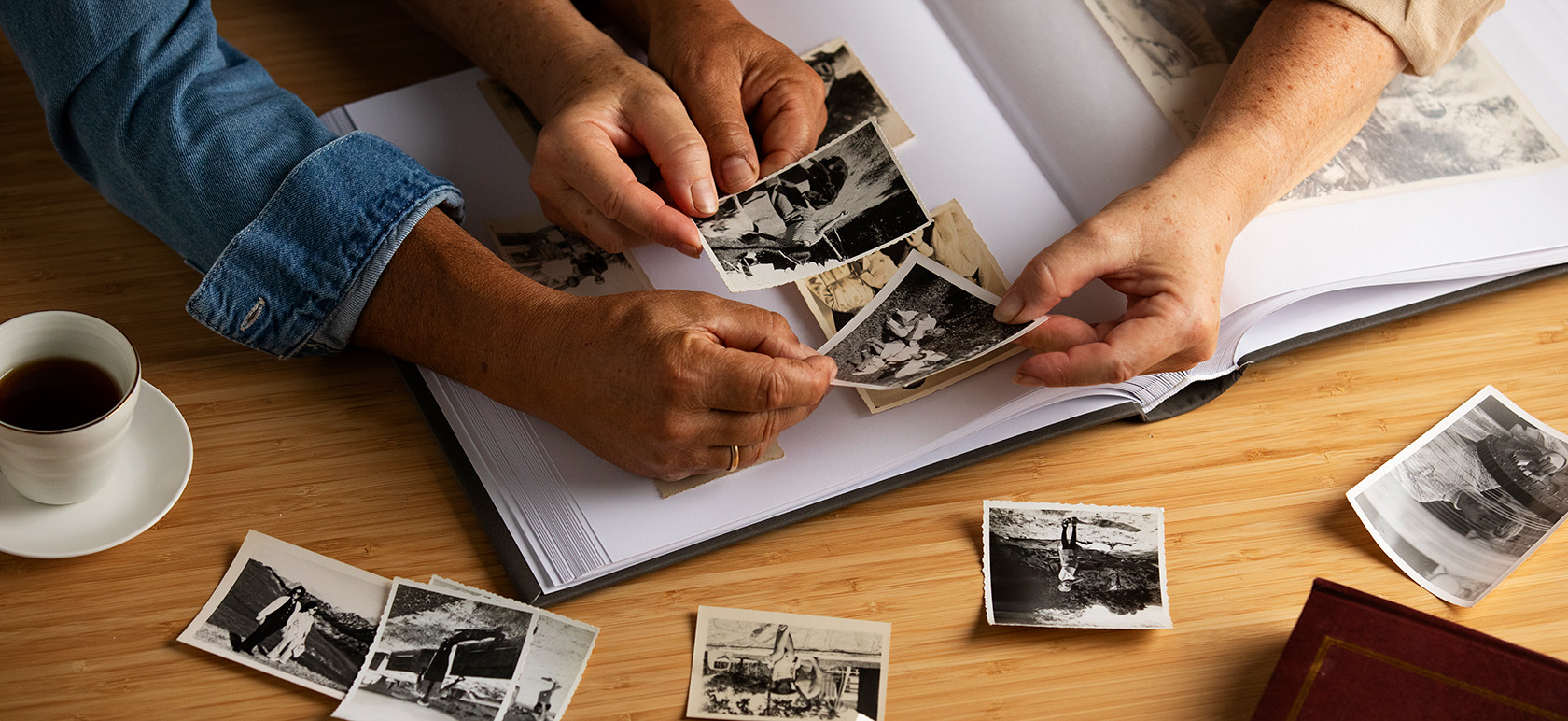
Many people collect hundreds or thousands of photos throughout their lives (not including family photos that have been passed down). Sometimes, figuring out what to do with them can be difficult, so they go into storage. Poor storage conditions are one of the biggest issues that harm vintage photographs.

Photos have to be stored in a controlled environment.
Think about it this way: if you have dozens of photo albums, where would you put them? The attic? A storage unit? The garage? They aren't stable environments with ideal temperatures and protection from humid conditions. We've talked about water damage, but consistent temperature is just as important. Exposure to extreme temperatures causes oxidation, discoloring the varnish layer.
WHY IS GLUE AND PHOTO ALBUMS A BAD IDEA?
Acidic materials like adhesive tape, glue, etc., wreak havoc on photographs over time. So the next time you put glue in your photo albums (ask yourself why you're still using photo albums), be aware that it won't just leave a sticky residue; it'll eat at your photos, making them turn yellow and fade. Those acids will gradually make your once-vibrant shots look like they got a bad fake tan.

These beautiful photos will faster because of adhesives.
What Can You Do to Protect Your Photos From Fading?
Proper storage,cool, dark, and dry environments are perfect for protecting your family photos.
Picture frames,If you're going to display photos, put them in frames with UV-protective glass. These glasses are like sunscreen for your shots, blocking out ultraviolet light that can make the image dull and lifeless.
Alternative Options to Have Perfect Photos:
DIGITIZING PHOTOS IS A GREAT OPTION
Another option, of course, is creating digital photos from a photo scanning service that can be backed up (thank you, technological advancements). Put a copy on the wall, and protect the original photo in a safe (environmentally protective) location. If the copy fades or gets damaged in any way, you can just print out additional photos.
PHOTO RESTORATION SERVICES AT FOREVER STUDIOS
If you already have damaged images, it might be time to consider a photo restoration service like Forever Studios. With modern, proper photo editing software, highly trained professionals can recreate the beauty of original photographs that have faded over time. Even better, you'll have an easily accessible and shareable digital photo for your entire family.
Fading photos are a natural aspect of having such a fragile medium. Photos can mean so much to us, reflecting times that we look back to with positive fondness. Unless you’re like me… I look back on my childhood with embarrassment because of a rather unfortunate haircut. But I digress.
If you want to delay the progression of fading, remember to always keep your photos out of sunlight and keep them in a dry, dark, and temperature controlled environment. When the inevitable happens and your photos fade significantly, and more than you can bear to witness, there are options to give that photo life again.
You can utilize old photo restoration services like ours, and showcase fresh reprints instead of the original. If you follow all of these basic guidelines, your photos will last a lot longer and they will be around for generations to come.

Ready to digitize it right the first time?
Bring your tapes, film, and photos to the team that treats every project as irreplaceable — handled in-house in Boca Raton, never outsourced.