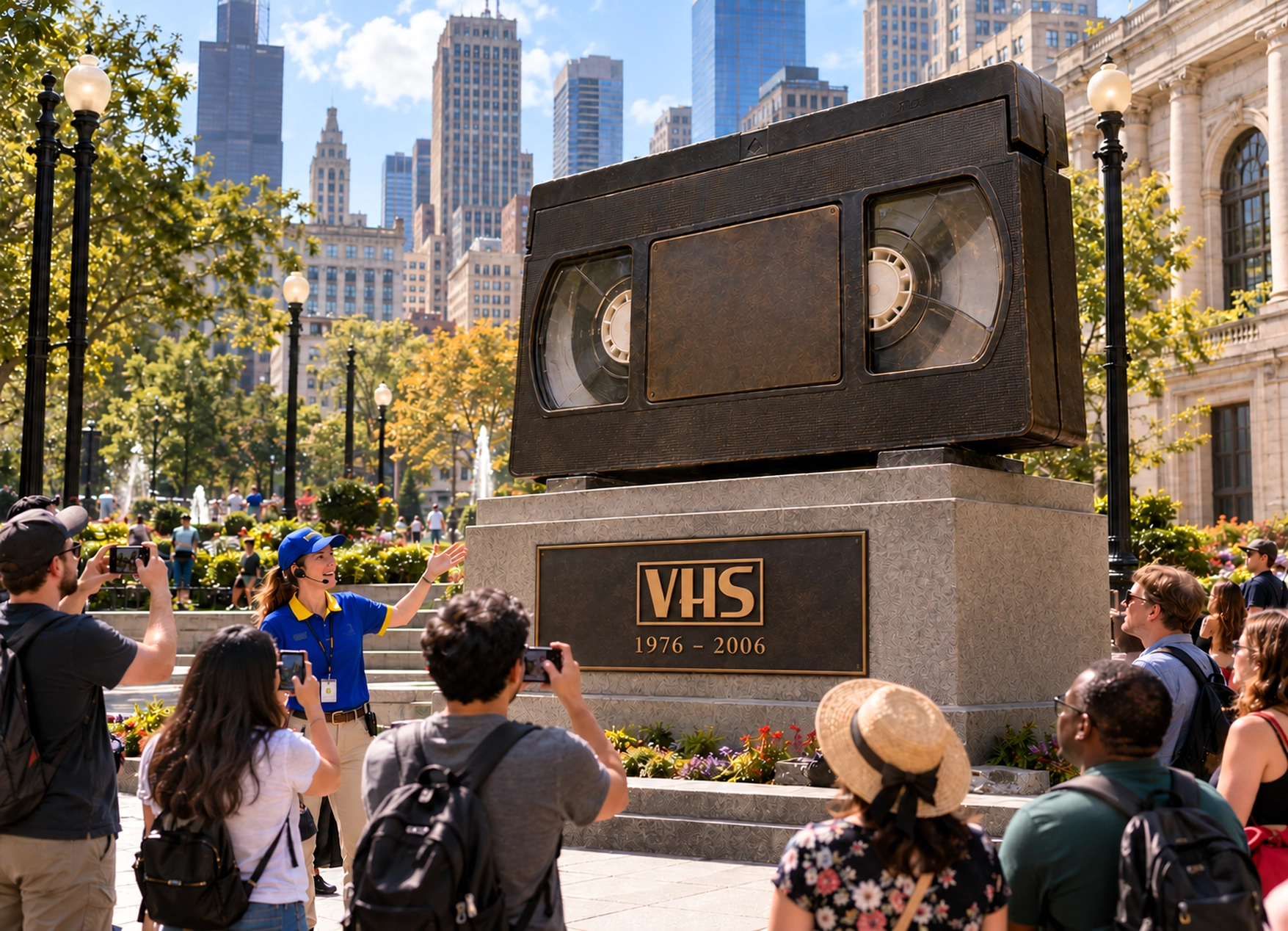
Harvard Is Baking Its VHS Tapes to Save Them
Why the same chemistry destroying Harvard's archive is destroying your family videos — and what to do about it before the window closes.
Contents
Last updated: April 2026
By Zachary Goldberg, Founder & Owner, Forever Studios
If Harvard University cannot outrun the chemistry destroying its VHS archive, your home tapes cannot either. The average consumer VHS tape is now 30 to 40 years old and entering the window where signal loss becomes permanent. The decision you make in the next year or two will determine whether those recordings survive.
Harvard University is panicking about its VHS tapes.
Despite excellent funding, facilities, staff and storage, the people responsible for preserving brittle media at Harvard's Media Preservation Lab are racing against time. According to the Harvard Gazette, the lab's curators, archivists and conservators are filling climate-controlled trucks with stacks of VHS cassettes and using ovens at 130 degrees Fahrenheit to bake tapes to restore their binder layers. They are scrambling to digitize tens of thousands of threatened recordings before they disappear entirely.
Harvard has nearly unlimited funds, trained media specialists, and purpose-built preservation labs, and they can't even manage to preserve all their VHS tapes in time. What makes you think the rest of us will have any chance at all? VHS preservation is no longer "someday". It is now or never.

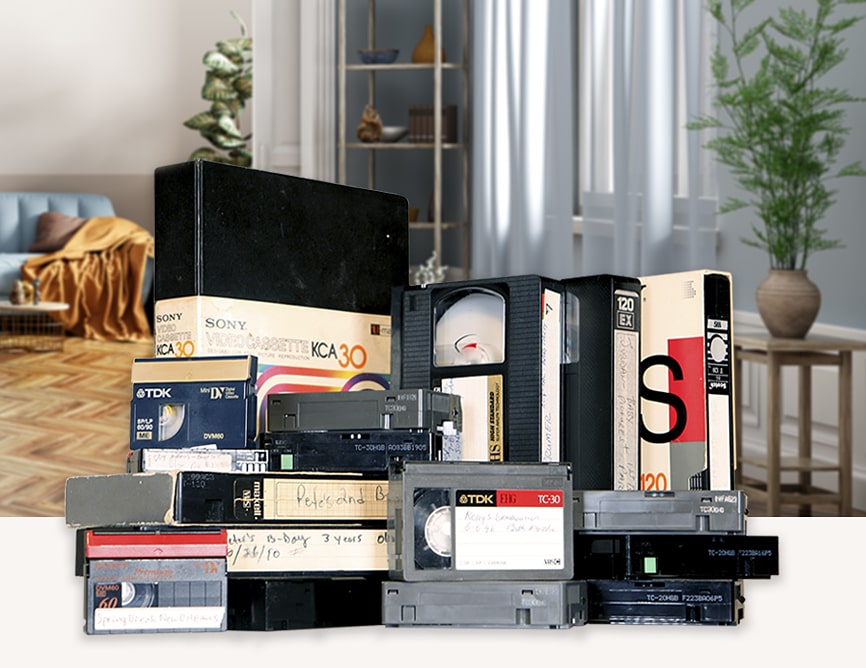
Boxes of family VHS tapes sitting in closets across America, each one containing irreplaceable recordings that degrade a little more every day.
So what happens to all those tapes? One of the things I most heard from customers during my 15 years at the preservation studio was some variation of: "Finally getting to these." Customers often say this with relief if we get to them in time, and with a kind of mourning if we don't.
The Position: "I'll Get to It Eventually" Is the Most Dangerous Thing You Can Say About Your Tapes
The following article is not a treatise on the many different chemical compositions of recording tape. Rather, it is an argument.
What is the greatest threat to your family's VHS tapes? Could it be natural disasters like fire, flood, or lightning? Or is it something more innocuous: heat, humidity, mold, or magnetic decay? As the VHS preservation community faces a number of crises as VHS degrades at a pace that is shocking to many, it is worthwhile to recognize the greatest threat of all: the misconception that there is plenty of time to rip your VHS collection before it becomes too damaged. Harvard's VHS collection now serves as an example of why there isn't.
Why This Matters Beyond a University Archive

Careful handling is critical, the magnetic tape inside a VHS cassette is fragile and shows early signs of deterioration along its edges.
This is an institutional problem - the archive at Harvard has tens of thousands of tapes dating back decades, and they've been sitting in the basement, used or unused, including all sorts of things like lectures and programs and interviews with big figures and documentaries.
But the physics do not care about scale.
The same polyurethane-based binder that held together magnetic tapes that comprised the entire course catalog of Harvard University is likely holding together the magnetic tapes that contain the holiday gatherings and special family moments that readers have in their closets, attics, and garages. The same slow process of hydrolysis that was slowly deteriorating the Harvard course catalog was going on for decades, unknown to archivists and conservators who monitor the condition of the university's collections for the faculty and staff who use them. By the time Harvard conservators knew the date of the course catalog's potential doom, it was too late; the tape had gone dead, producing nothing but white noise.
The Science of Shelf Life
VHS tapes can deteriorate over time, and storage conditions affect whether a particular tape remains playable. The Library of Congress’ care guidance recommends clean, stable storage and careful handling of video cassettes. If a recording matters to your family, consider transferring it while the tape still plays reliably.
Heat, humidity and repeated handling can make preservation more difficult. There is no reliable expiration date for every VHS tape, so inspect each one and avoid assuming that its age alone tells you whether it can be transferred.
If your collection has spent years in an attic, garage or basement, have the tapes assessed before repeated playback.
What Harvard Is Actually Doing, and Why It Should Alarm You

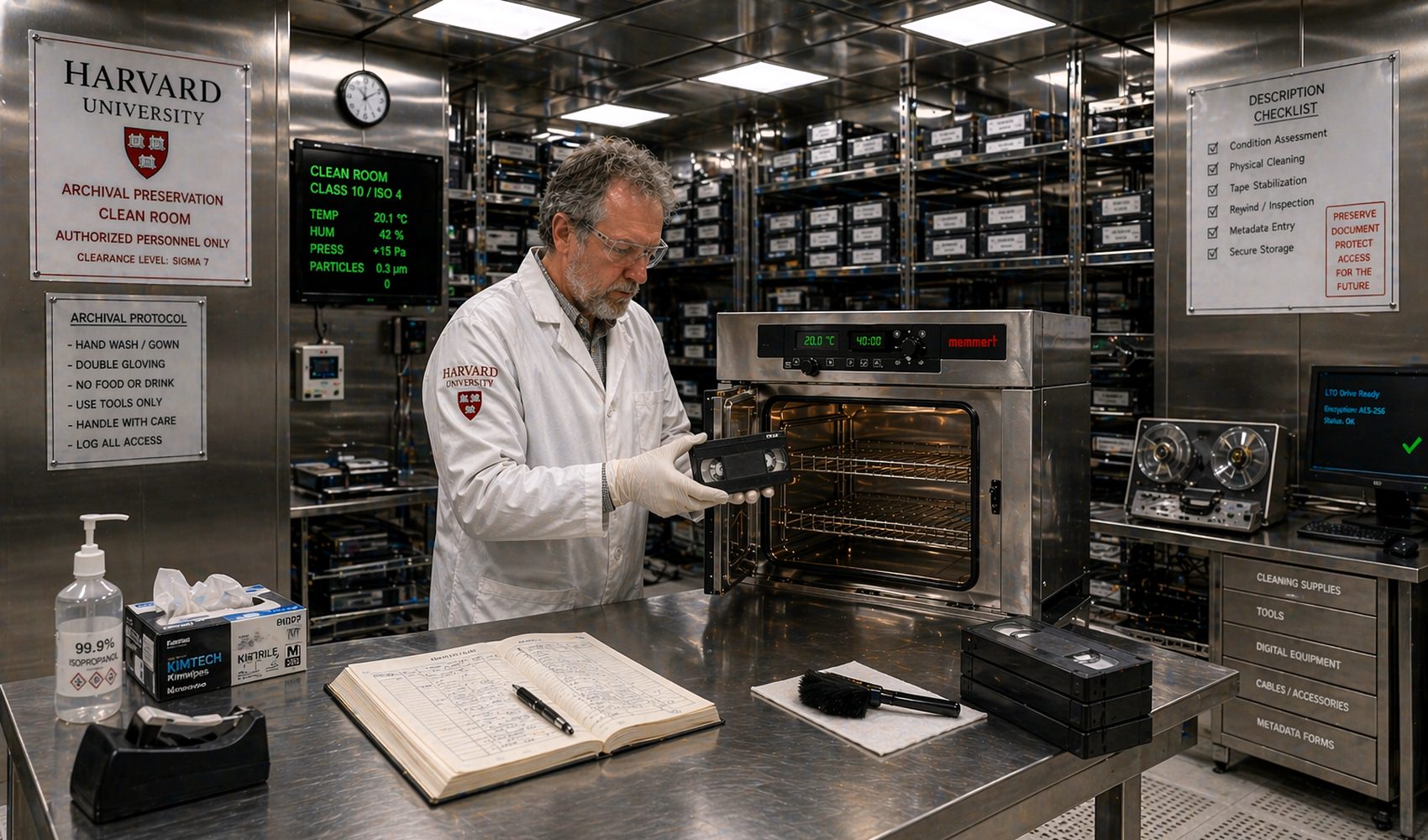
A laboratory oven used for tape baking, the same low-tech, high-stakes technique Harvard uses to temporarily stabilize deteriorating VHS tapes.
Sticky Shed Syndrome: The Disease Inside the Cassette
It's not just you, there are people all over the country right now struggling with the same problem of tape baking. It seems that many of the tapes available to hobbyists and archivists have contracted a terrible disease known as sticky shed syndrome, in which the binder layer of the tape breaks down and bonds itself to the oxide support layer, resulting in the degeneration of the magnetic coating and a terrible flaking or shedding of the tape during playback.
To make use of the old video tapes, the content has to be transferred off the outdated media first. Harvard's preservation team does this by baking the tapes in a laboratory oven for several hours before quickly transferring the content before the warmed up adhesive on the tape's back re-cures completely and the tape disintegrates completely. They have a lot of trouble preserving the old VHS tapes; Harvard's head of media preservation, Kaylie Ackerman, says that they have lost about half the tapes they have tried to preserve.
A 50% Loss Rate, Even With Professional Equipment
Harvard is baking its most delicate tapes in ovens in its labs in order to play them long enough to digitize them as they disintegrate before our eyes. But many of the resulting files are "snowy" and deteriorating badly.
This is not hypothetical: this is currently happening to video tapes stored in a cool climate, in a professional archive in 2026.

The difference between a well-preserved VHS tape (left) and a degraded one (right). Once the signal deteriorates this far, no amount of professional work can fully recover it.
The tapes have not been kept in a professional archival environment. They arrived in the office packaged in a cardboard box.
The Physics Are Not Negotiable
For anyone looking to preserve and play back their VHS collection, it may be enlightening to see what's really hiding inside the VHS casing.
Our birth year tapes are made from VHS tape – thin plastic tapes coated with millions of magnetic particles held together with a strong binder, typically polyurethane. When you recorded your child blowing out the candles at their last birthday, in 1993, 1994, or some other year, the magnetic pattern was written onto the tape by the VCR head. Without the binder holding those magnetic particles in place, they can deteriorate and fall apart over time. Unlike fading photographs, VHS recordings aren't just going to get worse looking as they age – they're likely to disintegrate.
Hydrolysis and Remanence Decay
This binder breaks down over time through a process called hydrolysis. The binder absorbs moisture from the atmosphere and once broken down the magnetic particles flake off from the tape base. This degradation over time is referred to as remanence decay and is irreversible. The tape itself cannot be re-magnetized. Particles that have fallen off cannot be reattached and once the signal is lost it is lost forever.
The Invisible Threat
However worse than this is that you are unlikely to ever realize you have a problem. Years of home recordings stored carefully in a closet, all seemingly fine. Last week I pulled out a couple of family tapes from the 1980s to transfer. The cases looked good, the labels looked good. It wasn't until I started playing the tapes that I realized that the tapes themselves were deteriorating at a molecular level.

Magnetic tape surface under magnification, intact oxide coating on the left versus flaking, deteriorating surface on the right where the binder has broken down.
What I See in Our Lab Every Week
I'm clearly biased on this topic, since I run a media preservation studio. But as the owner of Forever Studios, I see day in and day out the sad experience of people sending in their VHS tapes to transfer out to newer formats, only to discover that some of their most cherished recordings are already too far gone.
Here is what that looks like in practice:
30 Tapes, 30 Different Outcomes
We received 30 tapes in a box from a family that needed them all transferred. The family had the tapes organized, labeled and packaged well which was great on our end. We have completed the transfer of the first 10 tapes and the transfer went well with great quality video and signal strength and very little dropout. On the 11th tape we got pure snow. On the 12th tape we got rolling bands of static that affect the bottom third of the tape. Tape 14 started to squeal the moment it made contact with the playback head. Unfortunately, a few feet of it had to play before I realized what was occurring, and I had to stop playback very quickly to hopefully not damage the tape. Now the binder is cracking and is about to shed its valuable payload of magnetic oxide unless it can be transferred to digital soon.
We're talking about the same shelf in the same room, stored under the same conditions, replayed through the same machines, calibrated the same way. Decades old tapes from the same box, different manufacturers, wildly different playback quality. Why? Because different manufacturers used different tape formulations. And because, even stored under perfect conditions, as tapes age they can absorb a different amount of moisture over time. As a result, playing the same collection from the same box after thirty transfers can yield thirty different results.
What Our Customers Say
We love hearing from our customers in their own words. One customer told us: "I can't recommend Forever Studios enough. The professionalism and care they put into my request was beyond my imagination." Another customer described sending us an old box of 8mm film reels and being "really surprised by the quality" of the transfers. These transfers exist today because they were made before the customers lost their chance forever.
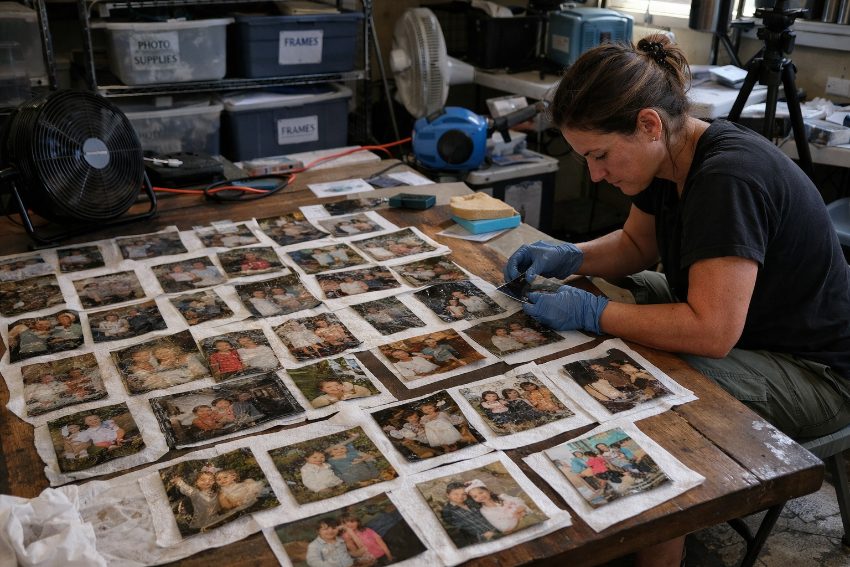
I get asked to recover analog video from old tapes all the time. Often people come to me after someone has found the parents' collection in a closet of the house they are selling, and by the time they get in touch half the collection has already disappeared irretrievably. That was painstakingly gathered over 25 years and gently stored in a house - it doesn't take much more than that to destroy it irreparably.

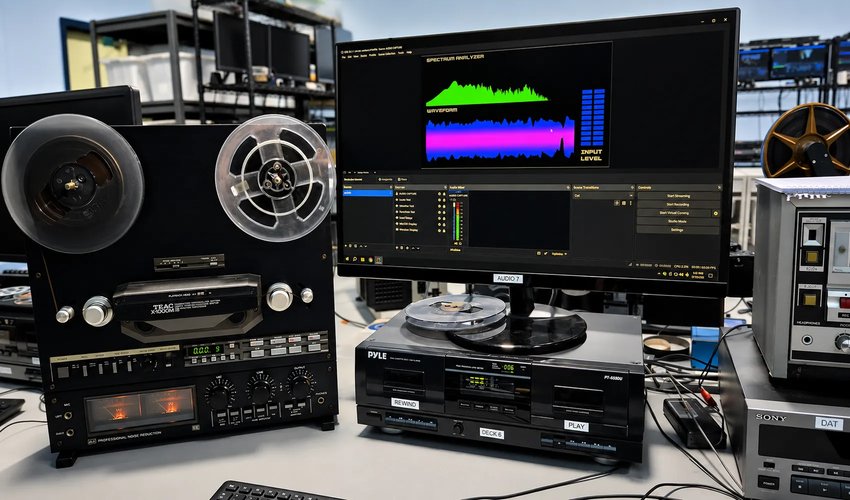
A Forever Studios technician monitoring a VHS transfer in real time, calibrated playback decks and waveform monitors ensure the best possible capture from aging tape.
"But My Tapes Still Play Fine"
However, most people have had old tapes play their holiday home movies in the past, and couldn't care less about having them professionally transferred.
Not necessarily.
What Consumer Playback Actually Hides
What you see on a consumer television is not what is on the tape. While professional capture devices can still yield results only marginally better than what you can see on a consumer television, what you can see on a consumer television or with a basic capture device has already had significant error correction and automatic gain control performed in real time on the signal. This means that as much as 15 to 20% of the actual signal may be missing from the data that you can see on a television, and what you do see is the VCR's best guess at recovering the missing information.
A professional transfer picks up the video almost at the raw signal level and, in addition to using properly calibrated playback machines, a time base corrector and high quality signal monitoring equipment, can often look better than people remember.
Why Tomorrow Matters More Than Today
So what difference does it make that something plays today as opposed to tomorrow? The issue at hand is what difference it makes tomorrow, and that is what is important. What most people don't understand is that a high quality tape that looks good enough to play at Thanksgiving can degrade noticeably by summer. Tape degradation is not linear, it accelerates. Binder hydrolysis is a chemical process. Unlike most things with which we are familiar, there is no scheduled time for binder hydrolysis to occur. The process begins immediately and continues without let up until the final degradation of the tape.
The Counterargument: "Tapes Have Lasted 40 Years, What's the Rush?"
This is a decent question so I'll treat it with the respect it deserves.
For those who thought they had seen the back of their vintage tape collections, there is now hope that many of the tapes will still play well. Those that were originally well made, particularly those from the early 1980s, have stood the test of time. Provided they have been stored in a cool, dry place and only played occasionally, many are likely to have survived with stunning audio quality, showing only slight wear. The same factors that originally ensured the excellent manufacture of the tape have helped its longevity. In addition, minimal contact of the tape on the heads during playback has helped to prevent excessive wear.
The Survival Bias Problem
And you might notice that we tend to use survival bias as a very poor reference group. All we can see are the tapes that made it to 40 years. The tapes that broke at 20 years are lost to memory.
The Council on Library and Information Resources estimates that magnetic tapes in typical home storage lose 10 to 20 percent of their signal within the first 10 to 25 years. The above figure represents an average expected signal loss and should not be taken to represent worst case scenarios. The general trend is that it is becoming increasingly rare to find tapes over 30 years old that still play well.

VHS tape degradation timeline, tapes from the 1990s are now deep in the critical zone where signal loss accelerates.
The VHS tape preservation and personal video digitization market is expanding at a rate of 30% year on year from 2024 to 2026, surprising some in the marketing industry. Those who work with the medium, however, are not surprised. It appears the media's obsolescence has finally been recognized by numbers as well as intuition.

The emotional payoff of preservation done in time, seeing decades-old family footage digitized and watchable again.
What You Should Actually Do
I'm not going to go on a big sales pitch here. I would describe it to my friends like this.
First, find your tapes. Most people can't say for certain where all of their VHS tapes are. Check every closet, the garage, the attic, basement, and storage unit. Don't forget to look at your parents' house. Once you've found all the tapes, pile them up in one spot.
Second, triage each tape. Before even opening the cases look for obvious damage (bent or crushed shells) and check for mold (white or green spots). Even if a tape looks fine give it a sniff test. If it smells musty handle it with care and take it to a professional. Also check for sticky tape and for loose tape that rattles when gently shaken. Those tapes need professional help, do not place them in a consumer VCR.
Third, prioritize ruthlessly. Even though you may have a large stash of tapes and are excited to have them all digitized at once, most people can't afford to have that all done at the same time. Start with the irreplaceable content: weddings, births, funerals, holidays with family members who have since passed. Your mom singing happy birthday to the two year old you once were can't wait. The movie you taped off television in 1988 can.
Fourth, choose your digitization provider based on process, not price. As someone who has worked in audio and video preservation for over fifteen years, there is one crucial question that needs to be asked when considering a provider: "What happens when a tape doesn't play correctly on the first pass?" Also: "What monitoring occurs during the transfer process?" and "Will I be notified if a tape is too damaged to recover?" A serious, professional company will have a very detailed and organized process for handling these issues. A volume-discount service will not.
And someone actually does all that stuff? Forever Studios is that company. We are not running a factory when we process boxes of VHS tapes. We watch each tape carefully to ensure the best possible video quality. The heads are cleaned between tapes, and any problematic tapes are noted, dealt with separately, and returned to you as quickly as possible. Read more about our VHS to Digital process and reviews from happy customers here.

What successful preservation looks like, family memories displayed and enjoyed as part of daily life, not locked away in a deteriorating box.

Consumer VCR playback (left) versus professional transfer equipment (right), the difference in signal capture quality is dramatic.
The Clock Harvard Is Racing Against Is Your Clock Too
I recently learned that Harvard is losing a significant portion of its early video archive. I immediately thought of the VHS tapes stashed away in closets and attics all over the country. But Harvard had a lab, a team, and a budget that are unlikely to be in most families' budgets. Turns out, all most families had was a box and an intention to get to it someday, which isn't enough.
One of these days I'll have to transfer these old tapes, that's what everyone says. And yes, someday has arrived, whether we like it or not and whether the old tapes mind or not. They are ancient now and flaking away.
Many of the hundreds of tapes submitted for Harvard's digitization project had to be returned because they were too old and came back "snowy." I have returned similarly degraded tapes to families who waited a year too long to have their recordings preserved. Once that goes wrong, it's irreversible.
If you have family videos in VHS format, the real question isn't if you should convert them to a digital format – it's when. And the answer is now, before the window closes completely.
That window is closing. And unlike Harvard, you don't have a laboratory oven to buy yourself one more chance.
VHS tape preservation is not a fun hobby or pastime. It is a dirty, time consuming and often heartbreaking task with a strict expiration date. You can't do it on a rainy Sunday when there's nothing else going on. The deadline is not on your calendar. It's inside the tape.
Ready to digitize it right the first time?
Bring your tapes, film, and photos to the team that treats every project as irreplaceable. All work is handled in-house in Boca Raton, never outsourced.