The Definitive Guide to Every Common Analog Format in History
A complete reference covering every video tape, film reel, photographic, and audio format.
Contents
- VHS tapes (1976–2005) dominated home video, with T-120 cassettes storing up to 6 hours of footage.
- Super 8 film (1965–1985) suffers from vinegar syndrome, causing shrinkage and brittleness as the acetate base releases acetic acid.
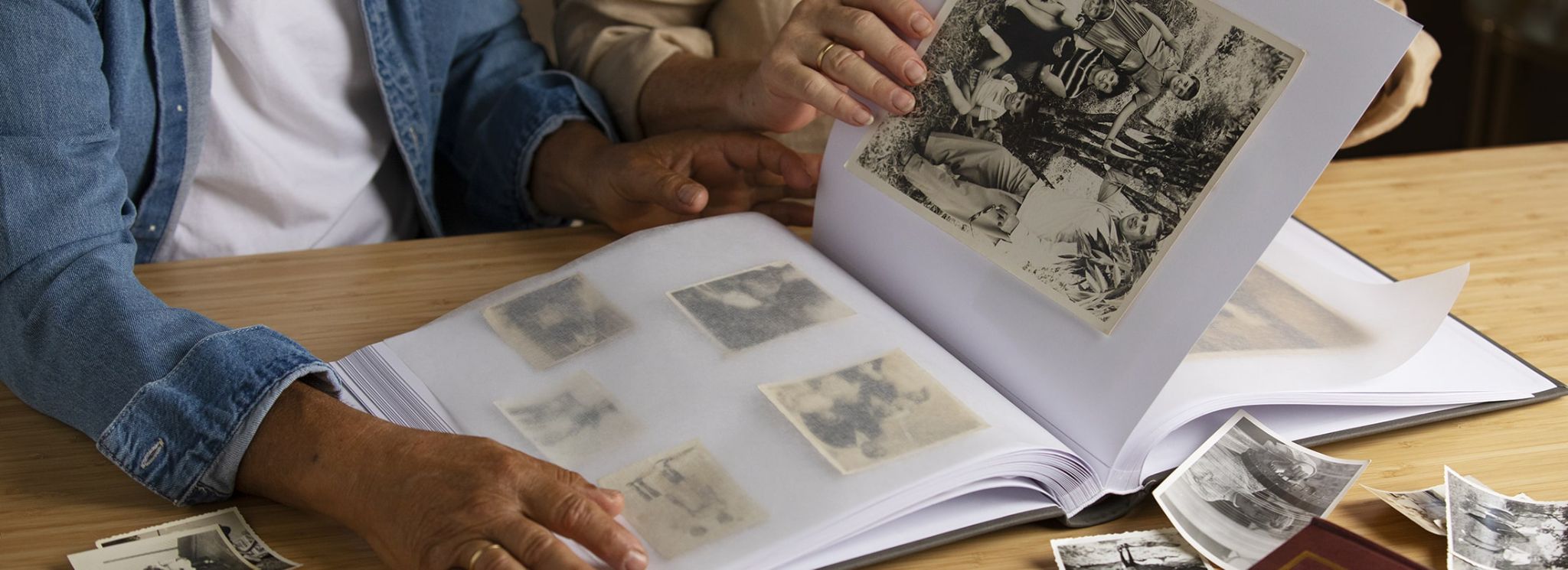
- Color photographic prints from the 1940s–present fade due to dye degradation, with prints stored in acidic albums deteriorating faster.
- Compact cassettes (1963–2000s) experience binder breakdown, oxide shedding, and sticky-shed syndrome, especially in high heat.
- Kodachrome slides are the most archivally stable color material ever made, thanks to inorganic dyes that resist fading for decades.
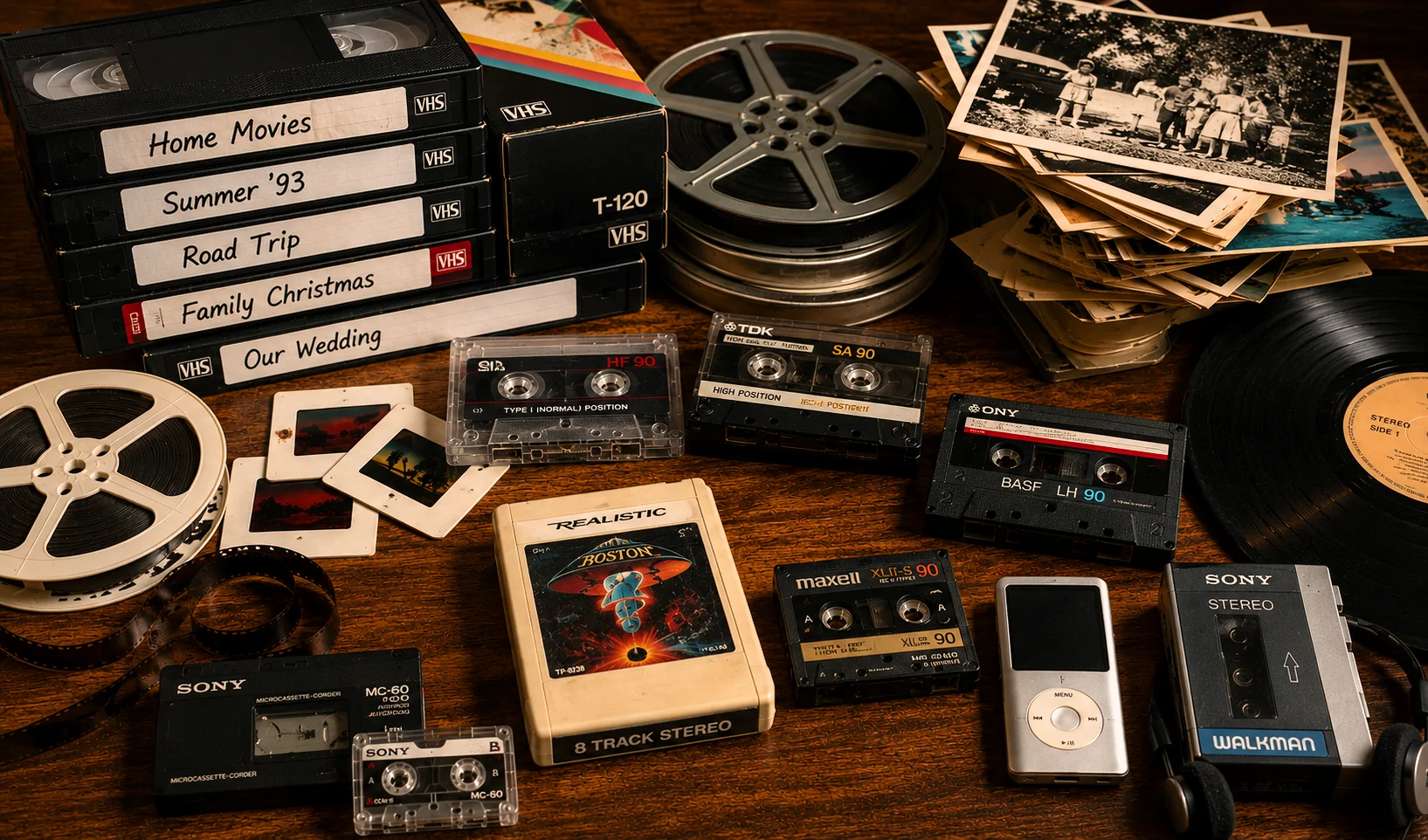
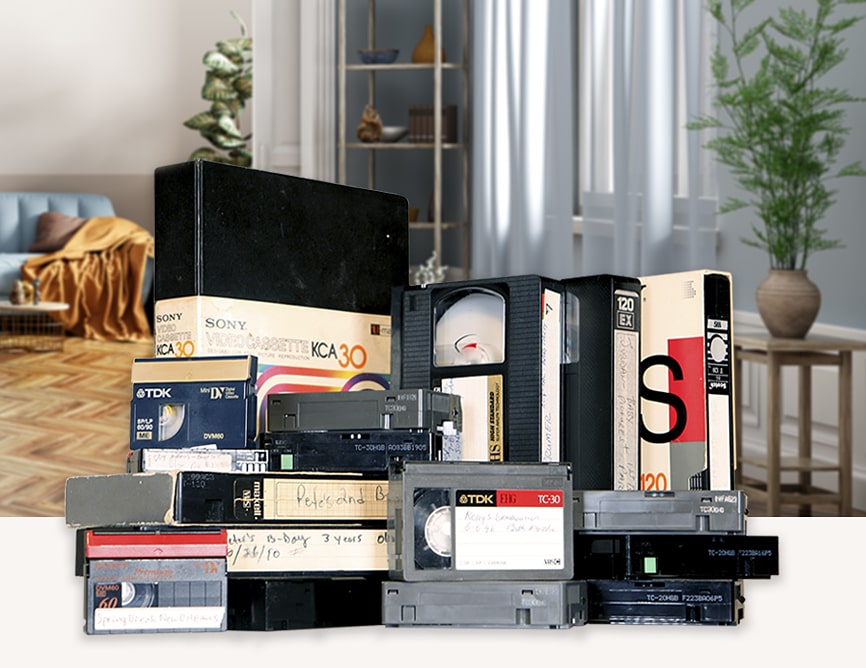
Families often accumulate decades of memories across multiple formats before seeking preservation services.
Discover a box of old tapes, film or photos and have no idea what they are? This guide covers what each format looks like, when it was made, what kind of content is typically on it, how it deteriorates, and what preserving it requires. Forever Studios has digitized analog media since 2007, helping families preserve VHS tapes, film reels, audio cassettes, and photographs before they become unplayable.
"We see deteriorating media every day, VHS tapes with sticky-shed syndrome, Super 8 reels with vinegar syndrome, and faded color prints. The window to preserve these materials is closing. Magnetic tape has a practical lifespan of 10–30 years, meaning recordings from the 1980s and 1990s are already at high risk. Professional digitization stabilizes these memories before the formats become unplayable."
Zachary G., Preservation Specialist, Forever Studios
Storage spaces such as attics are notorious for deteriorating items. Examples of deteriorating analog video and photos include VHS and audio cassette tapes, old Super 8 film, now mostly unrecoverable due to shrinkage of the film base, 35mm color slides which deteriorate from physical stresses as well as from chemical decay, and printed photographs. All of these types of media decay due to heat, humidity, and chemical breakdown of their base materials. For example, all magnetic media (i.e. audio tape and most video tapes) have a “practical lifespan” of 10 to 30 years (Library of Congress’s “Care, Handling and Storage of Audio Visual Materials”). Therefore, old home movies from the 1980s and 1990s on VHS tapes for example, will most likely already have deteriorated to the point where they can no longer be played back from the original tapes.
Which video tape formats were most popular in homes, and how do they deteriorate?
Video tapes record both video and audio onto magnetic tape coated with a layer of metal oxide particles. Over time the magnetic coating can wear off, or the binder that holds the coating to the tape can deteriorate. The tape can also become brittle and prone to cracking or even develop mold and mildew, all of which can cause deterioration of the recorded information. Formats for recording video became widespread in the late 1970s and evolved through several competing standardsfore 2000 are now considered to be at risk of irreversible deterioration.
VHS (Video Home System)
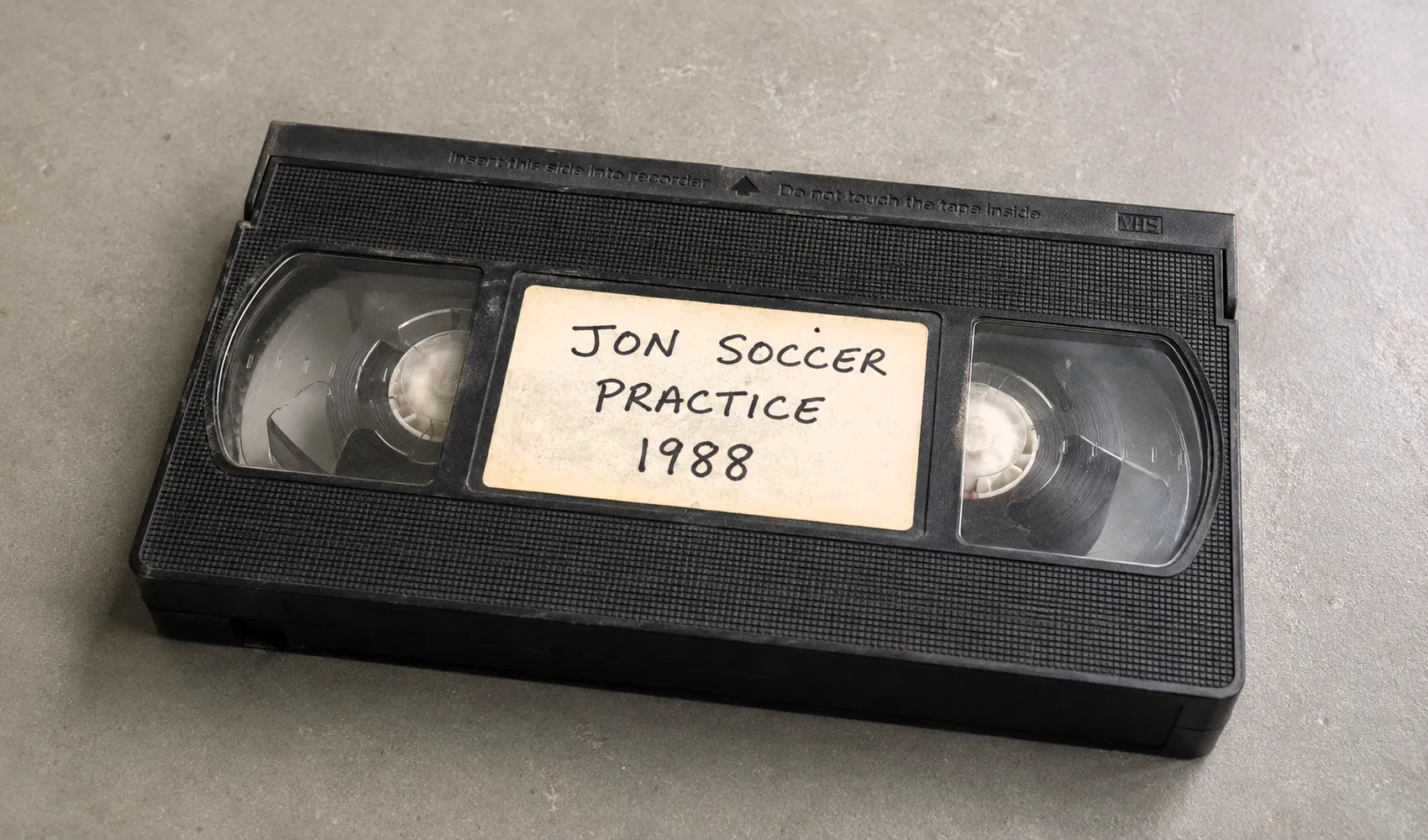
Home recordings on VHS tapes represent countless hours of family memories stored on a format that degrades over time.
Era: 1976-2005
JVC was the primary manufacturer of VHS; however, the JVC license agreement also granted other companies such as RCA, Magnavox, and Panasonic the right to manufacture VHS hardware and tapes
Large black box approximately 7.4 × 4.1 × 1 inches with two large reels of tape visible through a clear window in the front. The opening for the tape is in the bottom and is covered by a small flap. The label runs across the top and front of the box.
The majority of home movies ever made on video have been on VHS tapes. In addition to home movies, people recorded TV programs such as news, education, training, movies, rental store videos, plays, and school events
Length/Times: T-120 (Tape 120 minutes, 6 hour SP, 8 hour EP/SLP) is by far the most common of all the pre-recorded tapes on the market.
Tapes recorded in EP/SLP mode (slower speed, more economical) have lower image quality. In addition to being more prone to the problems of tape oxide shedding, leading to dropouts on the recording, Sticky shed syndrome can occur. This is caused by the polyurethane binder on the tape absorbing moisture and becoming tacky. The tape then sticks to itself and to the playback heads. Once stuck to the heads, the tape can be permanently damaged. In humid environments, mold can grow on the magnetic oxide layer of the tape.
Decaying tapes can produce sounds as well as video problems. The worst decayed tapes are even sticky and develop a black or white “snow” within the images. Finally, the worst cases of decay can even cause the images/video to totally degenerate away.
VHS tapes ruled the roost in home video recording in the US from the early 1980s until the late 1990s. There was a format war with Betamax but VHS ultimately won because of the longer recording time.
Forever Studios · Boca Raton, FL
VHS Tape Transfer
We clean, repair, and digitize VHS and camcorder tapes, including flood-recovery cases.
GET STARTED →VHS-C (VHS Compact)
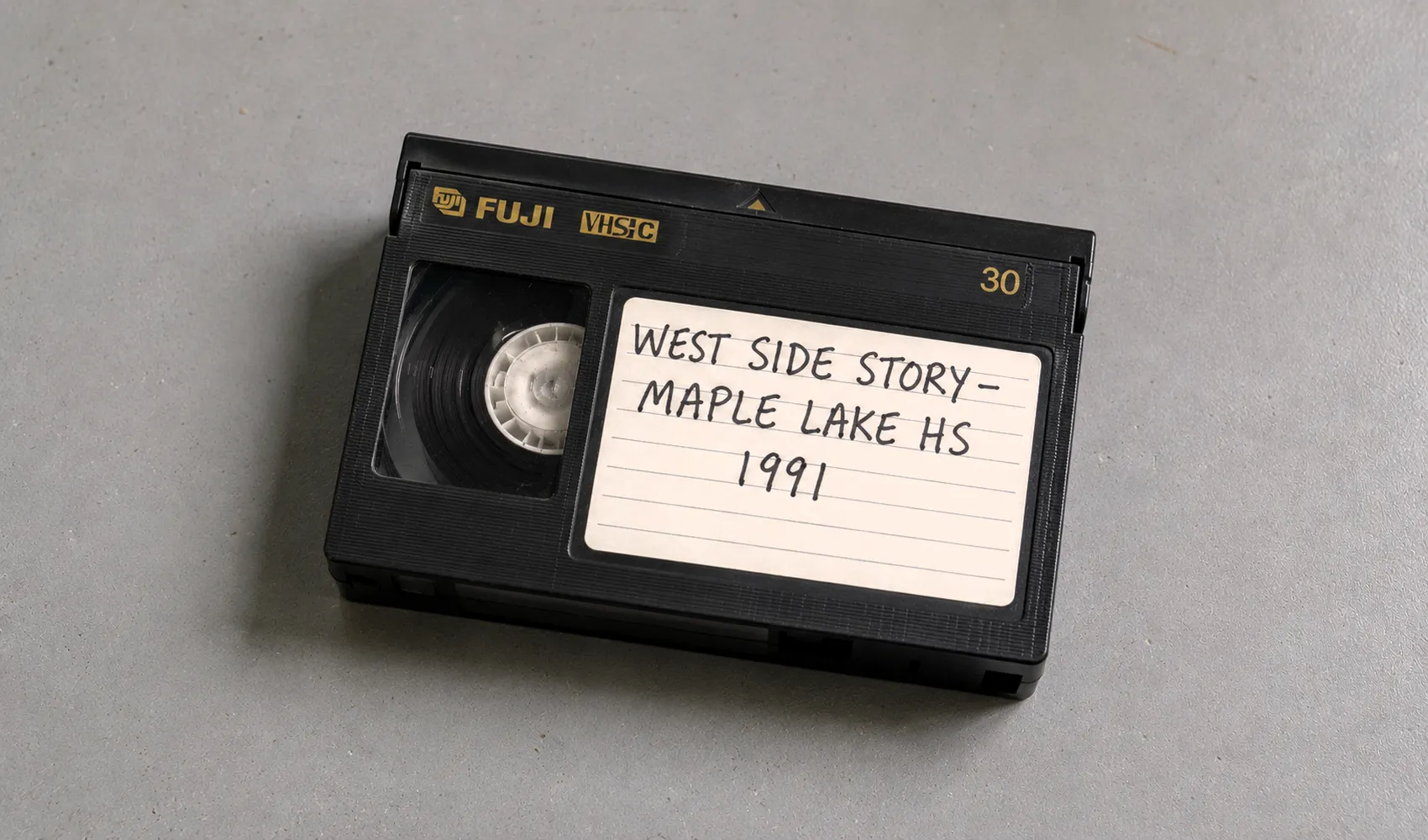
Personal recordings on compact VHS-C tapes like this 1991 theatrical production remain vulnerable to magnetic degradation and format obsolescence.
Era: 1982-2005
Manufacturer: JVC (licensed widely)
The VHS-C cassette is approximately the same width as a standard VHS cassette but half the height. The black cassette body is identical to that of a standard VHS cassette. The little VHS-C cassette fits in the palm of your hand. A special adapter is required to play a VHS-C in a standard VHS deck.
Recordings of content shot with a camcorder: Camcorder footage, home movies, amateur productions of events, etc. Family gatherings, kids’ birthday parties, vacations with family and/or friends, school plays, local community or neighborhood sports games, etc. These would have been shot and recorded on VHS and VHS-C by the vast majority of American camcorder users throughout the 1990s.
SP mode recordings are approximately 30 to 45 minutes long. EP mode recordings can be up to 1.5 hours long.
VHS-C tapes, like VHS tapes, can deteriorate physically. In addition to sticky shed syndrome, mold and mildew can develop on the tapes, and the magnetic oxide can start to shed. These problems are especially pronounced for VHS-C tapes, as they were primarily used in portable camcorders that were carried around in cars. The camcorder, along with the tapes, were typically carried in dusty, humid bags. In some cases, these bags were even stored in hot locations such as sunporches or patios in order to have the camcorder readily available to use. Thus, VHS-C tapes are likely to deteriorate faster than similar tapes that have been stored in a cool, dry pantry.
This special adapter case made of plastic holds the VHS-C tape. The adapter is a special case that is ‘driven’ by the VHS deck. There are many people who do not realize that VHS-C tapes need to be played using an adapter in a VHS deck and therefore assume that the tapes have gone bad.
S-VHS (Super VHS)

Super VHS offered broadcast-quality recording for home users, though its magnetic tape remains vulnerable to degradation over time.
Era: 1987-2000s
Manufacturer: JVC and licensed manufacturers
The S-VHS cassette is physically identical to a VHS cassette, and the only way to determine whether a tape is VHS or S-VHS is by looking at the shell for the words “S-VHS”. Additionally, there is a small round hole in the bottom of the cassette. This hole is used for write-protecting individual tapes as well as for the deck to identify tapes of different formats (e.g. VHS, S-VHS, etc.) that are loaded be played in a VHS deck.
Most Prosumer quality home video, some local news, Corporate video and seminars as well as semi-professional special events video.
An S-VHS tape contains around double the amount of horizontal resolution of a standard VHS tape, totaling 400 horizontal lines of resolution as opposed to the 240 found on VHS. This means that you will receive a sharper image.
The degradation of S-VHS is identical to that of VHS with respect to the binder chemistry used (polyurethane) therefore S-VHS tapes are subject to the same problems of sticky shed, mold, etc. As with VHS however, S-VHS tapes are only playable on an S-VHS VCR, whereas they can be played on a VCR of lower resolution than that which recorded the S-VHS.
Betamax (Beta)
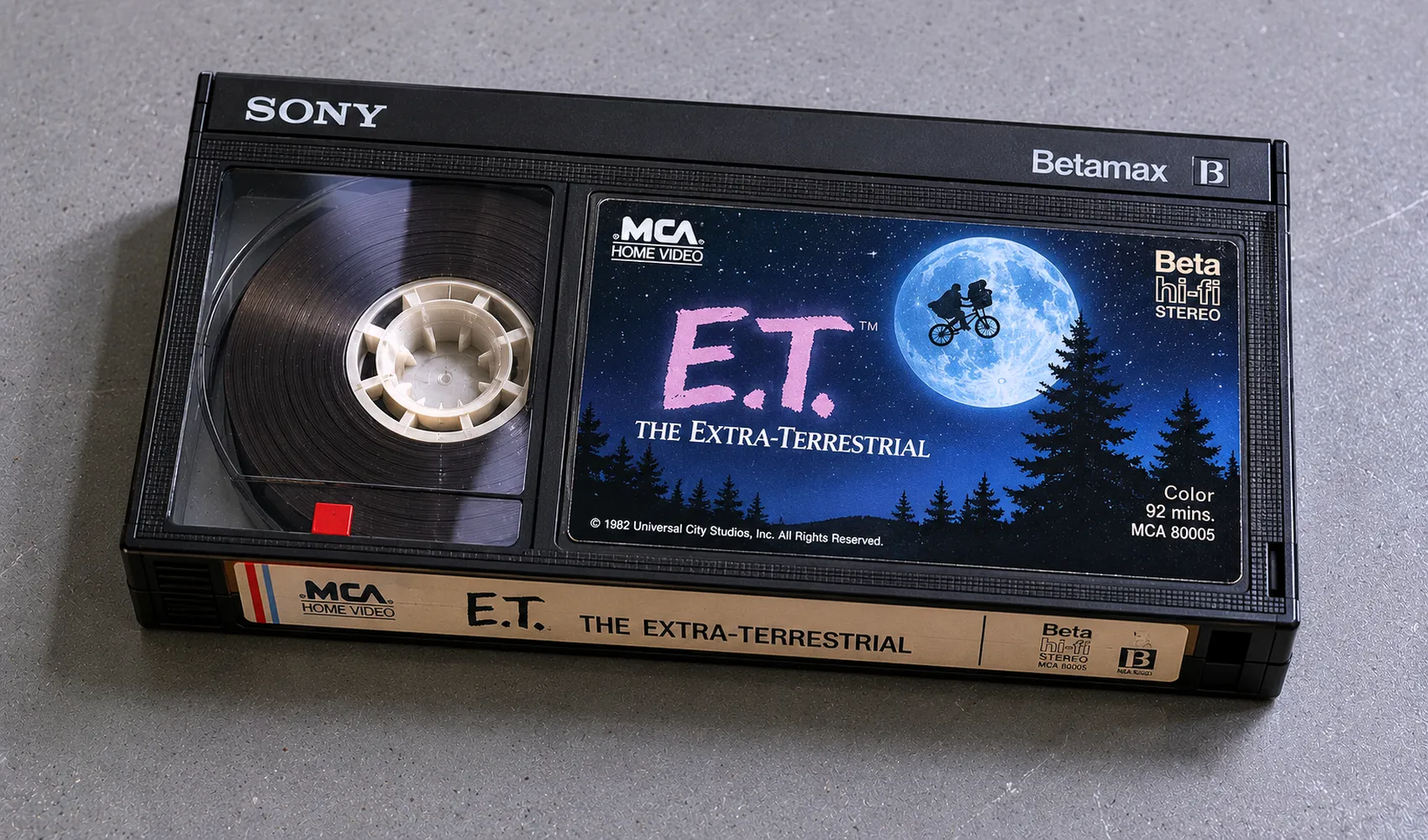
Betamax tapes represented Sony's approach to balancing picture quality with recording time in the format wars of the 1980s.
Era: 1975-2002
Manufacturer: Sony (licensed to others)
There are two forms of Betamax cassettes. The original, by Sony, is about 6.1 x 3.8 x 0.9 inches (including rounded corners) with a two-spool design and includes a half-oval indentation at the end of the cassette. Copies made by licensed manufacturers are slightly larger and lack the rounded corners of the Sony original.
Home movies and TV programs recorded off the air. In the late 1970s and early 1980s Beta was even more popular than VHS but eventually lost the format war. The majority of footage on Beta is unique to this format and will not be found on VHS.
Recording time for an L-750 type cassette 4.5 hours (BII mode).
The video tape itself within a Betamax cassette is wrapped in the same polyurethane binder found in VHS cassettes. As with VHS, this binder is prone to two main problems: sticky shed and mold. These two problems cause similar types of deterioration on Betamax cassettes as they do on VHS cassettes. Also, similar to the VHS format, the hardware to play Betamax cassettes is becoming increasingly rare, making digitization urgent. Although players can be found, good working Betamax players are becoming very difficult to find.
The Betamax format was superior to the VHS format at equal settings. However, Betamax ultimately lost the format war.
Video8
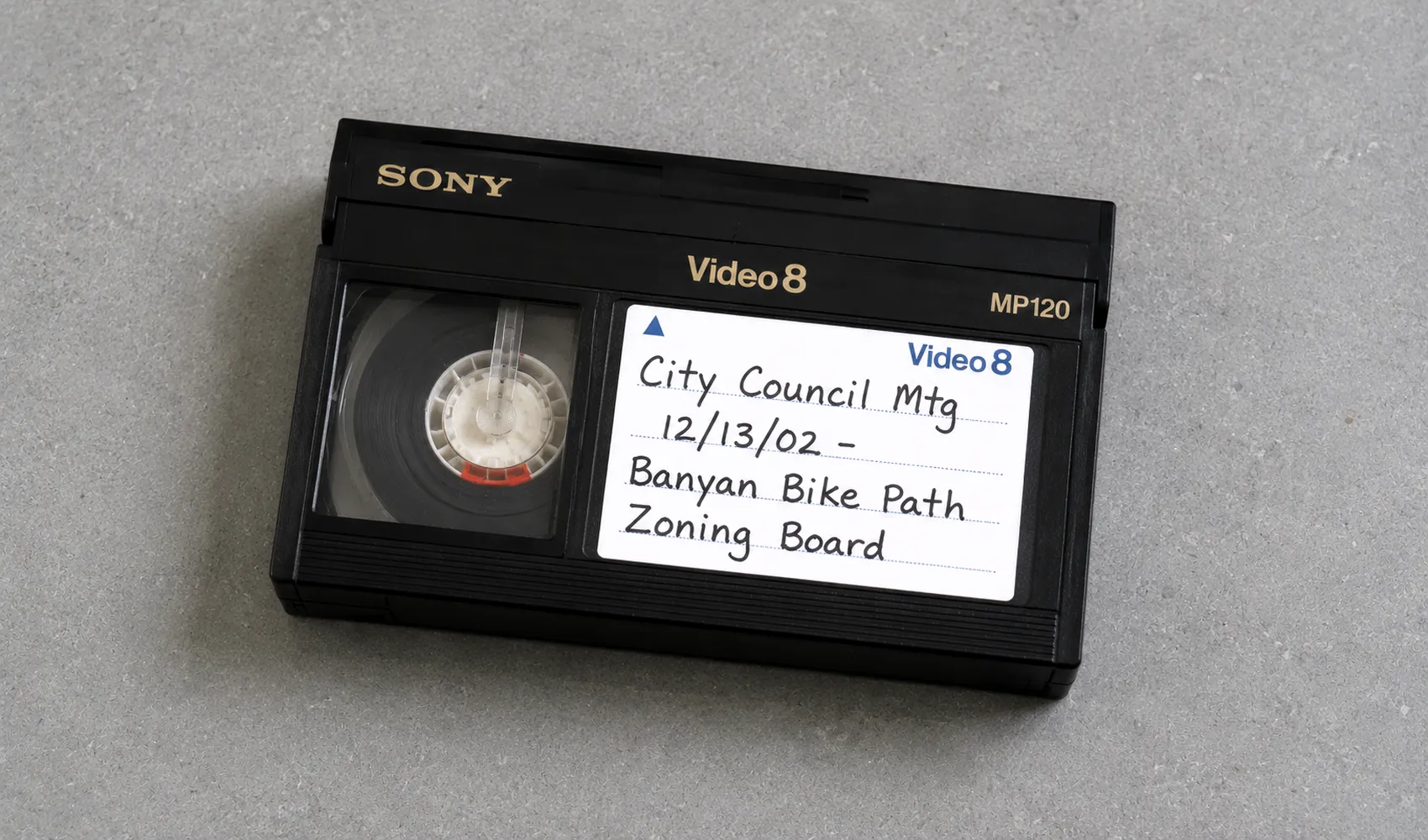
Video8 tapes like this one documented community proceedings before digital formats became standard.
Era: 1985-1999
Manufacturer: Sony (used by multiple manufacturers)
The cassette is 3.7 inches x 2.4 inches x 0.6 inches (9.3 cm x 6.1 cm x 1.5 cm) in size and has an 8mm or Video8 label on the side of the cassette. There is a single window in the rounded cassette body.
The Video8 recordings were shot with late 1980s to early 1990s camcorders. These small and lightweight cameras were easy to take on a trip, to a family event or for a documentary.
Video8 has image quality comparable to VHS, at 240 lines of horizontal resolution.
8mm tape, used in cameras that shot 8mm film, is slightly more stable than the polyurethane binders found in VHS tape. However, because Video8 tape is typically 25-40 years old, it has had time to deteriorate. The biggest threats to collections of Video8 tapes are moisture damage and subsequent growth of mold.
Hi8
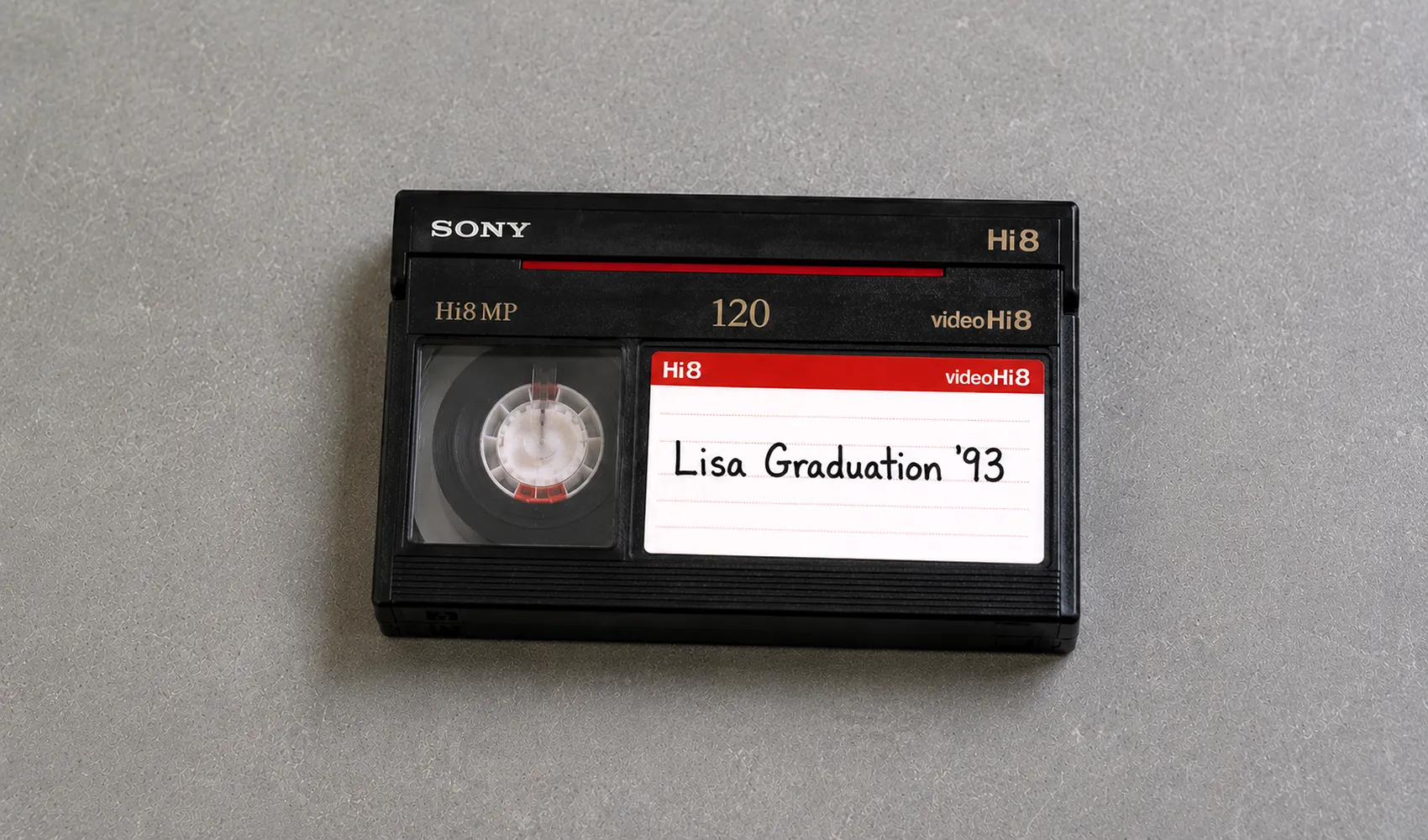
Personal memories recorded on Hi8 tapes require timely digitization as the magnetic coating degrades over time.
Era: 1989-2002
Manufacturer: Sony (licensed)
This cassette is physically identical to the other Video8 cassettes, but is labeled as “Hi8” for Video Hi8 cassettes.
Hi8 cassettes and tapes of similar form factor to the Video8 cassettes of the time contained improved consumer camcorder footage, shot in the early-to-mid 1990s. The format was used for a variety of applications and events, including weddings, news, etc. Hi8 footage was used by many TV news stations for field acquisition. The format provided a much improved quality of video for the consumer market.
The image quality of Hi8 is provided at a horizontal resolution of 400 lines. This is in comparison to the normal Video8 format of 240 lines, and the VHS format of 240 lines. Thus, the Hi8 format offers a higher quality image than normal Video8 and VHS formats. The Hi8 format also has the same amount of resolution as S-VHS.
Note that the 8mm tape formulation of the Hi8 tapes is slightly more stable than the polyurethane binders used in VHS tapes, but as all Video8 tapes are now of approximately 25 to 40 years age, all will be subject to similar risks of degradation. Moisture damage and mold are the most common form of deterioration.
Digital8
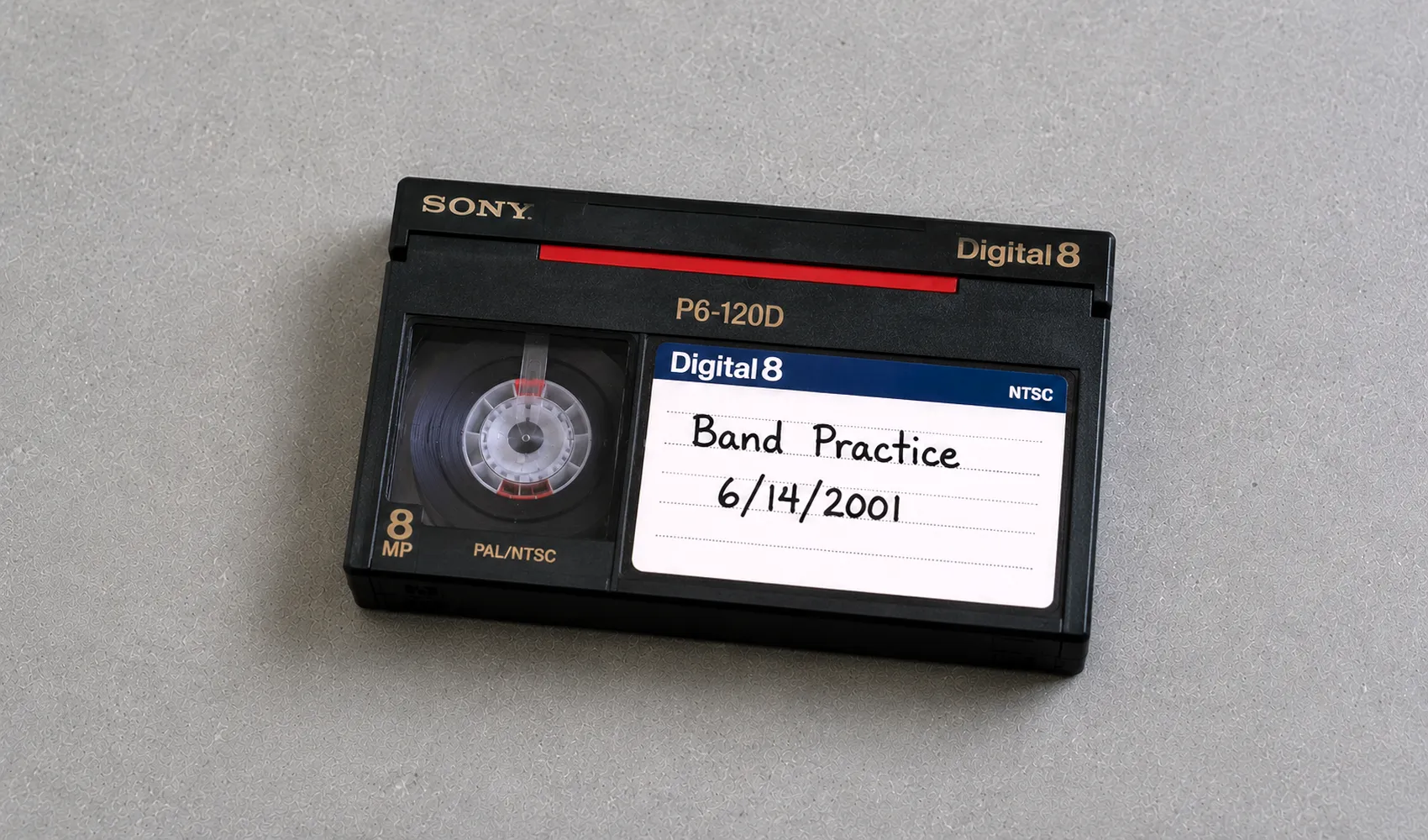
Digital8 tapes bridged the analog and digital eras by recording DV-format video onto cassettes the same size as Hi8.
Era: 1999-2007
Manufacturer: Sony
The Digital8 format is recorded on the same 8mm cassette as the Video8/Hi8 format, but has an entirely different recording format.
Early 2000s family videos were shot on camcorders and then stored on Digital8 cassettes. The Digital8 format was a pioneer in that it enabled the recording of a digital signal onto the analog 8mm tape format which was previously used for storing Video8 and Hi8 cassettes.
The video recorded on Digital8 tapes is of true digital DV quality with 500 lines of horizontal resolution. This is far superior to the video found on Hi8 and VHS tapes.
Note that because Digital8 is a digital format it suffers less from degradation than other 8mm analog formats. The Digital8 information recorded on the tape in the form of a digital DV signal is more error tolerant than an analog signal. However, the physical properties of the tape substrate itself can deteriorate over time. The tape consists of a magnetic disk coated with fine magnetic oxide particles. Playback of the tape in the same machine can cause wear to the tape. As playback machines for Digital8 are no longer being mass produced, they are becoming increasingly difficult to acquire.
MiniDV
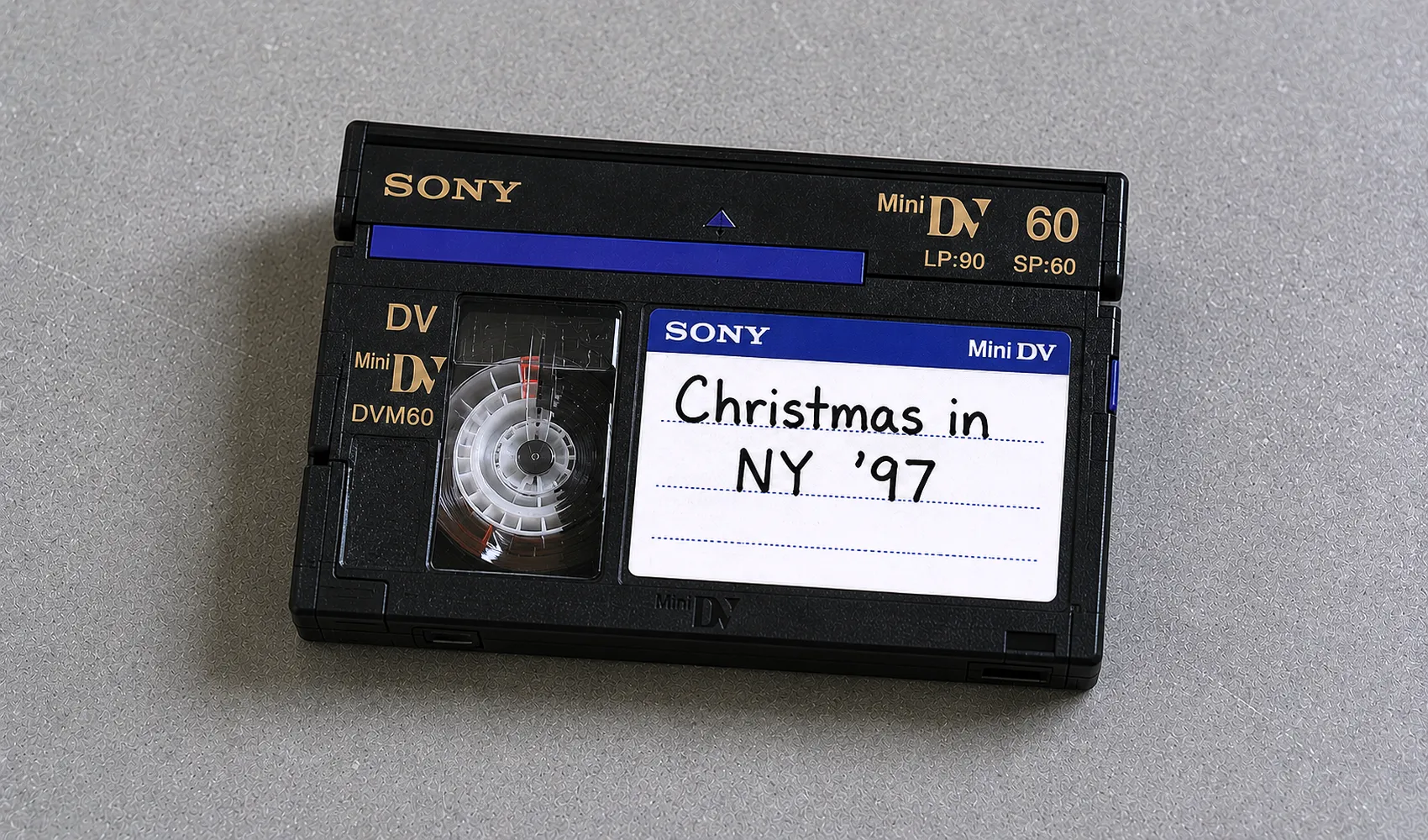
MiniDV tapes offered digital video quality in a compact format that bridged consumer and professional recording for over a decade.
Era: 1995-2010
Manufacturer: Sony, Panasonic, Canon, and others
MiniDV Cassette: Black rectangular box approximately 2.6 x 1.9 x 0.5 inches in size with tape extender of approximately 2.75 inches. The box has a label on the front with the words “MiniDV” printed on it. The cassettes were made by many manufacturers including Sony, Panasonic, and Canon.
For the consumer and prosumer markets MiniDV format camcorders were offered by a variety of manufacturers including Sony, Panasonic and Canon. MiniDV tapes hold a huge amount of family videos, wedding videos and other personal movies. In addition, there are a large amount of professionally shot news, documentary and event movies as well as semi-professional work on MiniDV tapes.
Res: Standard DV: 500 horizontal lines, 4:1:1 color subsampling (NTSC) or 4:2:0 (PAL).
Degradation risks: To some extent also MiniDV is affected by degradation risks. Although the ME (metal evaporated) tape used here is more stable than the oxide-coated tape that is used by most of the analog formats, there is a risk of dropout, mold, etc. when playing back recordings that are stored on old tapes, especially with old playback heads.
When playing back MiniDV tapes digitally via the FireWire (IEEE 1394) interface, the material will be read without any loss of quality. No matter how often the material is to be played back from another medium, it will always be read with the same quality. However, there are very few computers on the market today which are equipped with a FireWire interface.
MicroDV
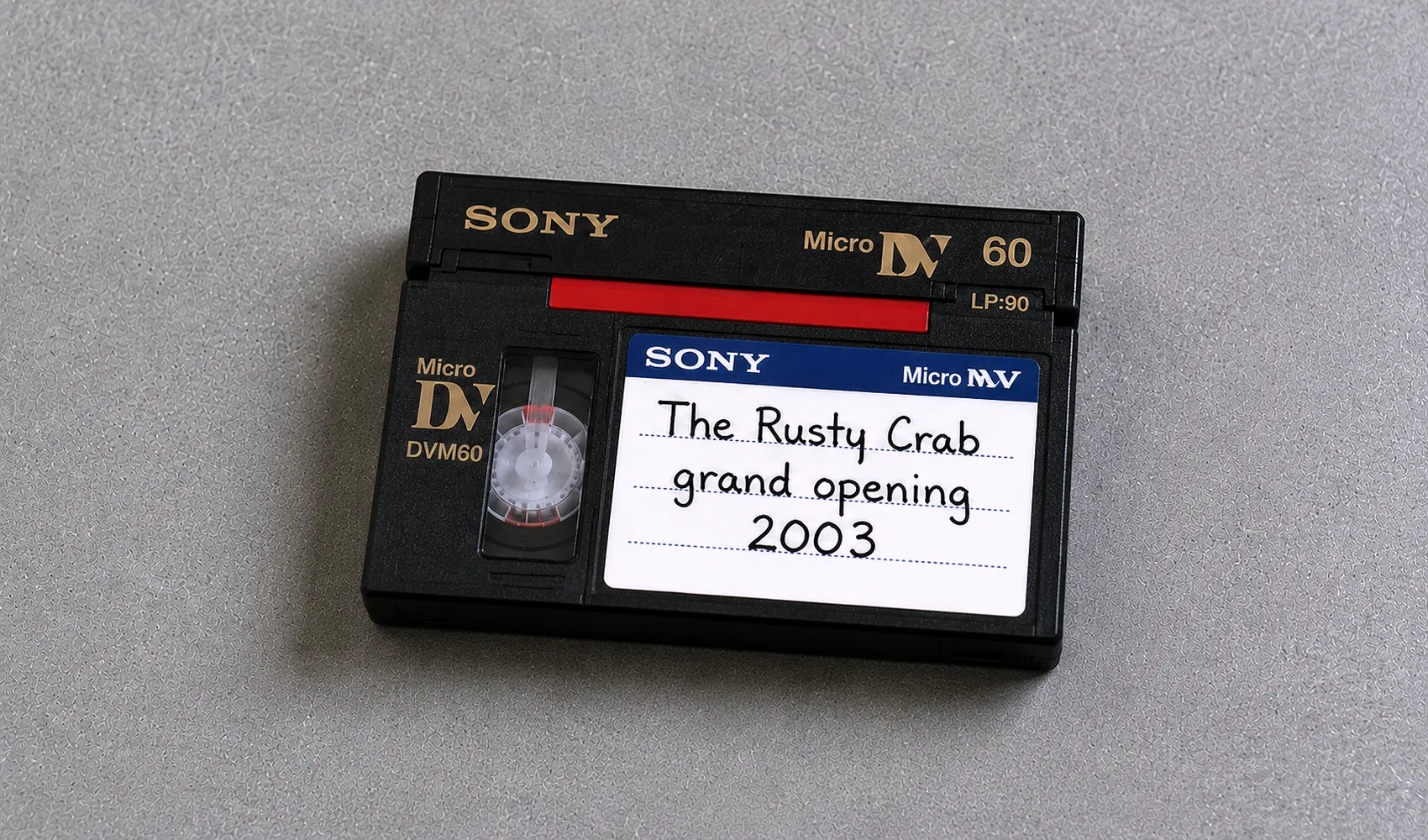
Professional videographers adopted MicroDV tapes for their compact size, though the format remained less common in consumer markets than MiniDV.
Era: ~2000-2007
Manufacturer: Sony, Canon (primarily)
Tapes: They are even smaller than MiniDV and about the size of a large postcard or a small stamp.
It is the same types of content as MiniDV such as personal and family videos but shot with the smallest cameras on the market; these were marketed as ‘palmcorder’ style for extreme portability with the smallest of camcorders that you could fit in your palm, to take with you wherever you go.
Image quality: True DV quality, same as MiniDV.
Similar challenges exist with regards to playback and transfer to MiniDV as there are with this small cassette format. Small cassettes are hard to handle and the process of transferring these can be technically very challenging.
Note that the term “MicroDV” is often confused with “MiniDV” - referring to small cassettes of the same size. But for this format there is far less equipment available for playback of the tapes.
HDV (High Definition Video)
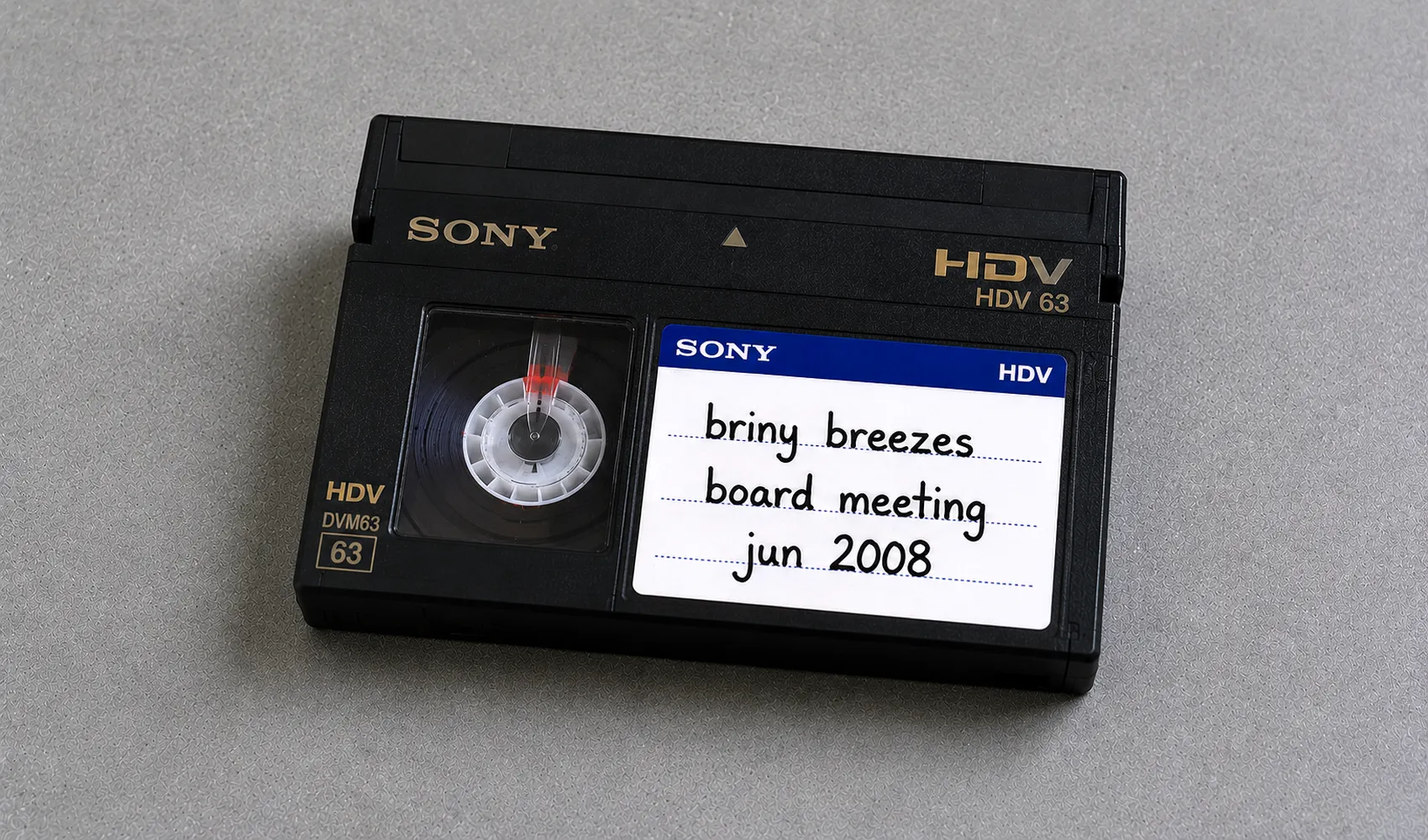
Professional HDV tapes like this 2008 board meeting recording bridged the gap between analog and digital video workflows.
Era: 2003-2010s
Manufacturer: Sony, Canon, JVC, Sharp
They’re labeled “HDV” and then the make and model of the camera that shot it, and then they’re stuck in these large cassettes, kind of like the MiniDV tapes that you’re used to. The tape itself is small, though.
Common content: HDV was a format of video recording that was used to capture and play back High-definition consumer and prosumer video. HDV were used to record and play back of videos of weddings, events, documentaries and independent films. HDV was the first HD format that was made accessible to both the consumers and professionals.
The format captures video in high definition at either 720p or 1080i resolution. That’s a lot higher quality than standard DV video.
The same issues as with MiniDV tapes.
Capture of HDV tapes require playback on an HDV deck or camcorder for true HD quality.
U-matic
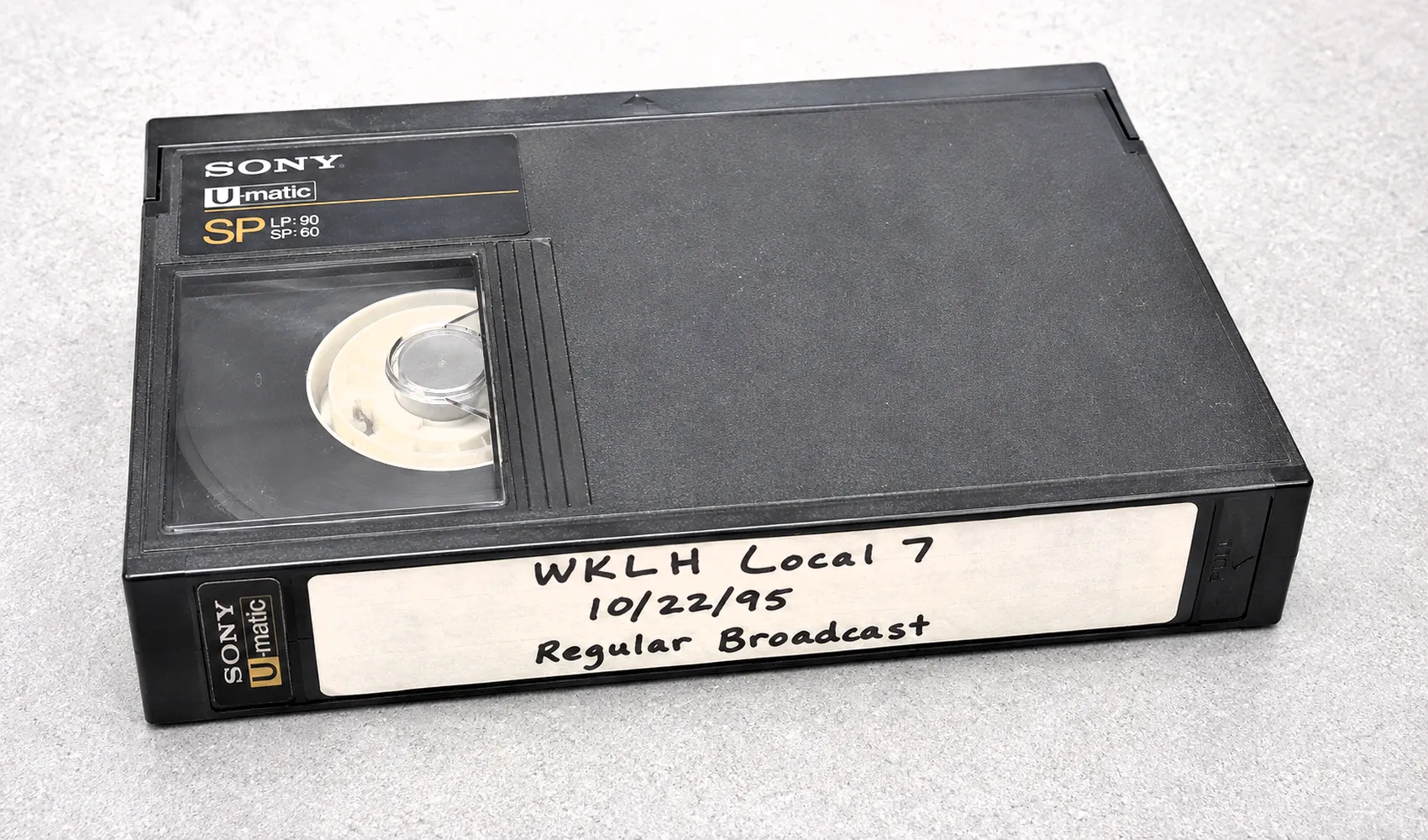
This labeled broadcast tape from 1995 represents the professional video format that predated consumer VHS systems.
Era: 1971-1990s
Manufacturer: Sony (licensed)
The Video2000 is the largest of the common video cassette formats, measuring 8.6 x 5.3 x 1.3 inches and having a large, brown or gray outer casing.
Program Material: Programs which are distributed on U-matic are generally shot for broadcast news, for documentary-style programs for education, for corporate image and for archival use at institutions. The first videocassette, introduced by Sony in 1971, was the preferred medium of professionals for many years. It was eventually superseded by Betacam.
Quality: It had much better quality than VHS, but wasn't as good as Betacam SP.
U-matic: The binder is unstable, causing “sticky shed”, oxide shedding and clogged heads. The play back and transfer equipment is now largely obsolete and is extremely expensive to maintain. Many tapes from the 1970s and 1980s are now in very poor condition.
Betacam and Betacam SP
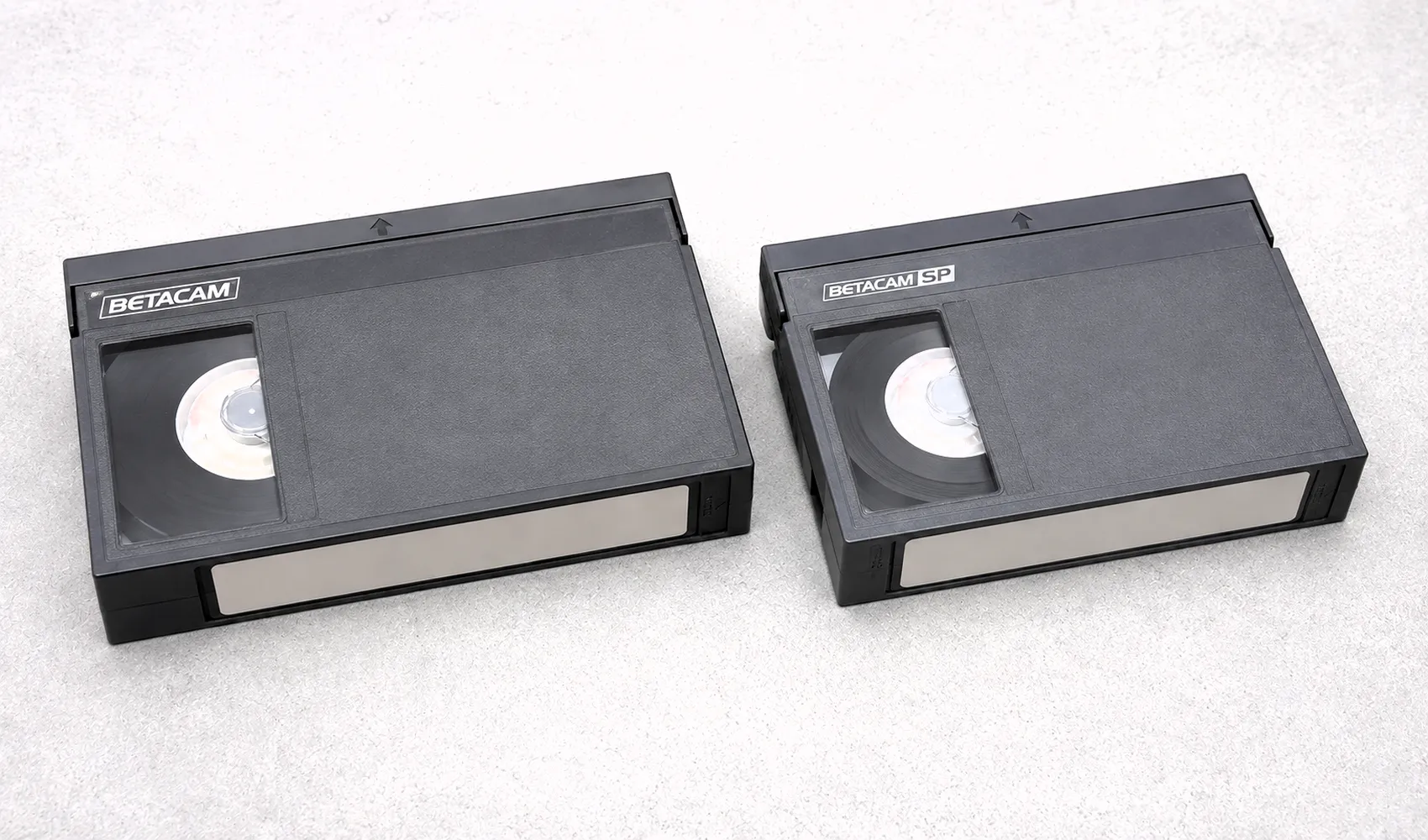
Professional Betacam formats served broadcast studios for decades before digital workflows became standard.
Era: Betacam: 1982-1993 / Betacam SP: 1986-2000s
Manufacturer: Sony (licensed)
The Betacam cassette is of approximately S (S) type 6.1 x 3.8 x .9 inches (L (L) type 9.6 x 5.7 x 1.0 inches). These large cassettes are easily distinguishable from the home video Betamax cassettes.
Professional broadcast video such as television news, commercials, documentaries, corporate video, sports coverage etc. Betacam SP was the medium of choice for broadcast video for around 15 years.
The video recording was of high quality, component video, far superior to any other video recording format of that time.
Similar deterioration can occur to late 1980s Betacam SP tapes as they approach the critical point for binder failure.
DVCAM and DVCPRO
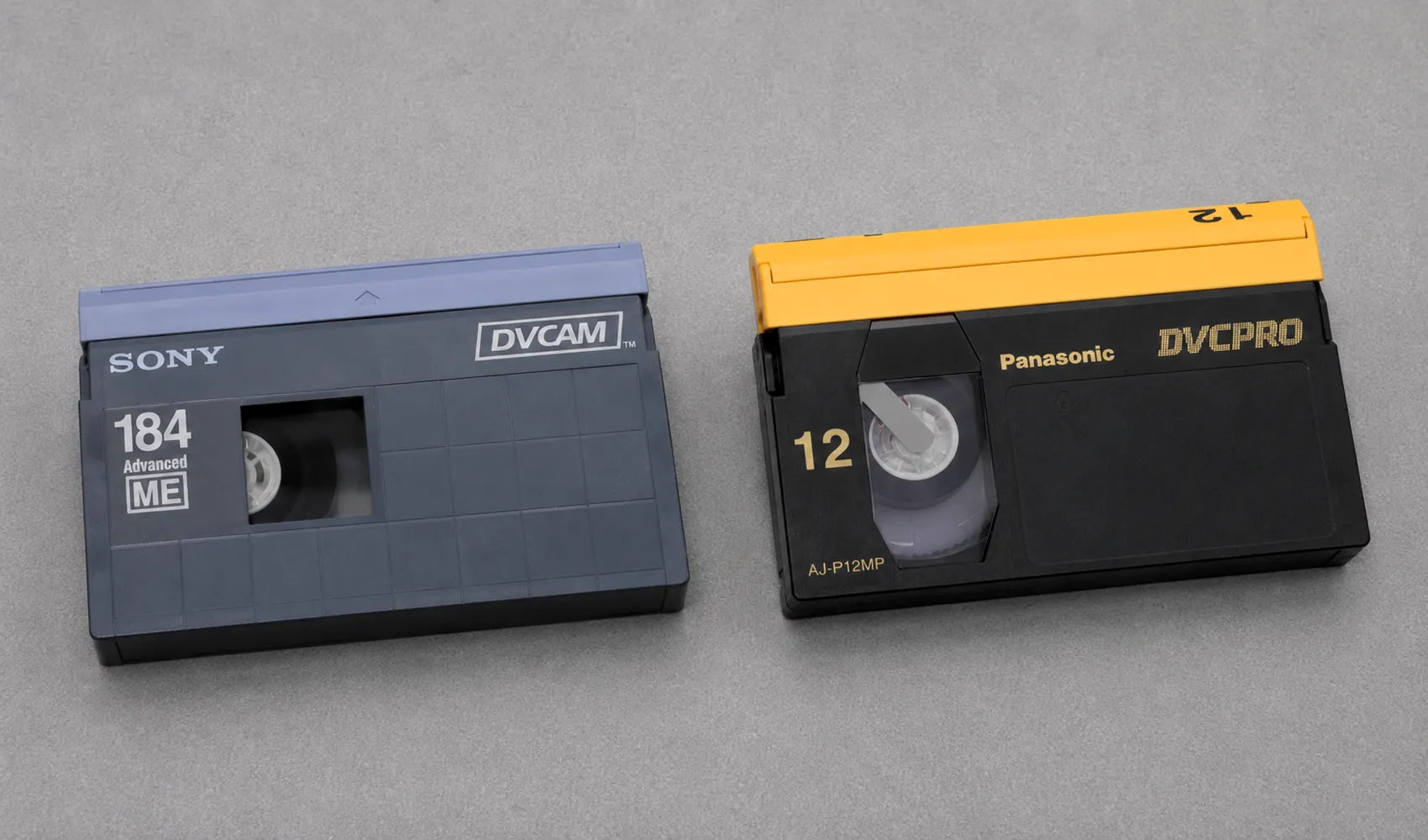
Professional DVCAM and DVCPRO formats brought digital video quality to broadcast production in the late 1990s.
Era: 1996-2000s
Manufacturer: DVCAM: Sony / DVCPRO: Panasonic
DVCAM format: The small cassette is of the MiniDV size. Unlike the majority of MiniDV cassettes that are in circulation (i.e. of a consumer nature as opposed to professional) these are recorded at a different pitch. The professional format cassettes for DVCAM on tape are available in a larger format.
Common content: Professional broadcast and event video - news, corporate productions, institutional archives. Typically stored in television stations, universities, government agencies, and in the media archives of corporate video departments.
Image quality: DV images and above, DVCPRO50 (50 Mbps) for high end TV broadcast, DVCPRO HD for high end HD acquisition.
DVCAM deteriorates not only due to the tape itself deteriorating, but also the coating. However, DVCPRO which is recorded with a completely different formula to the other DV formats, is very stable. DVCPRO is recorded on to a larger format cassette, and so is played back on special equipment.
Which film formats are found in attics, and what causes them to degrade?
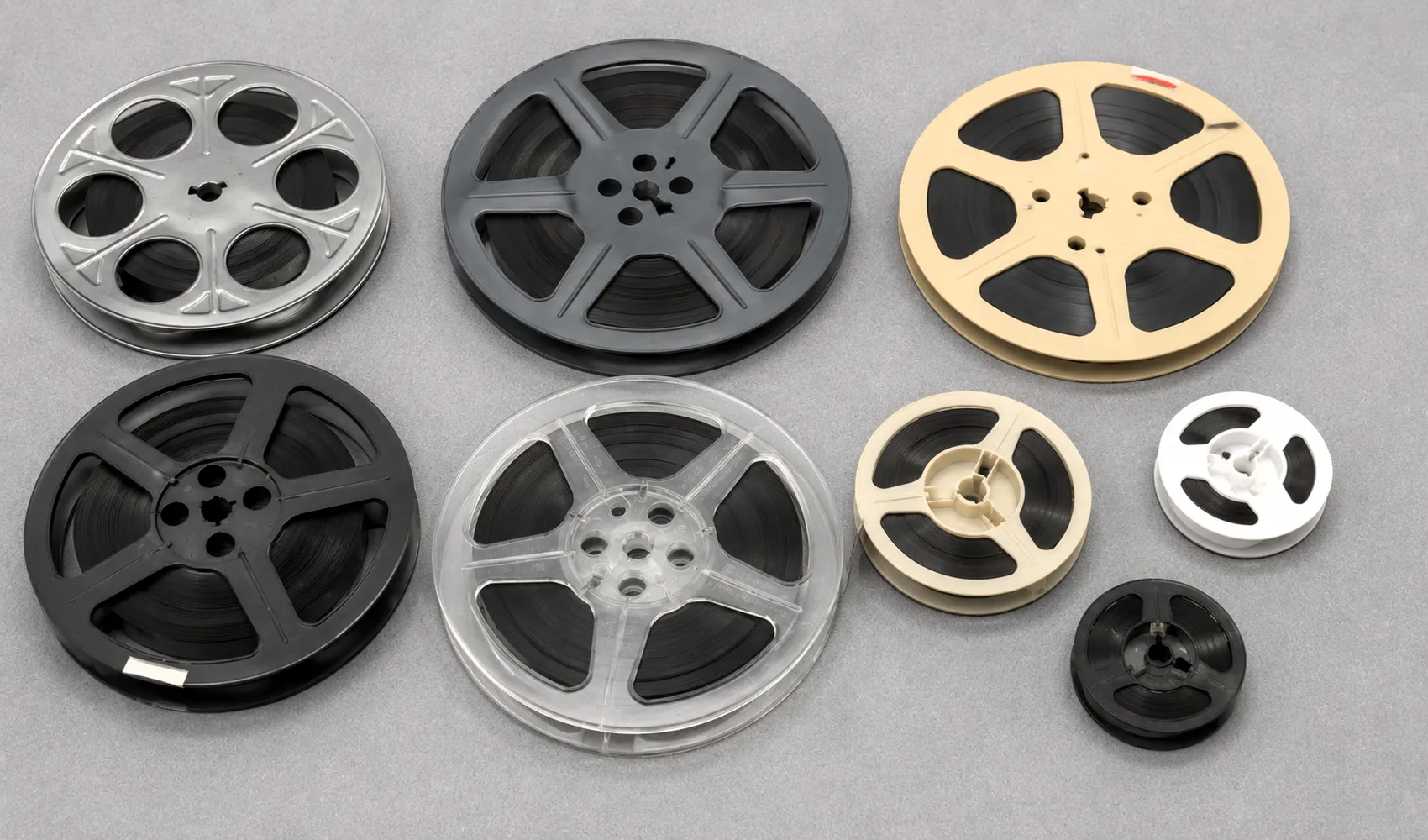
Film formats varied widely in size and material composition, which directly affects their preservation needs and longevity.
Most Film is Degenerating. Film is a chemical medium recorded by light onto silver halide crystals in a gelatin emulsion on film base. It is susceptible to a variety of chemical deterioration. The two biggest problems facing film collections are vinegar syndrome which affects films on cellulose acetate base, and nitrate decomposition which is highly flammable and has caused large fires in film storage areas. The Image Permanence Institute at RIT is the only research organization studying image deterioration. On their web site are two free on-line tools to help assess the life expectancy of your films in storage.
Super 8
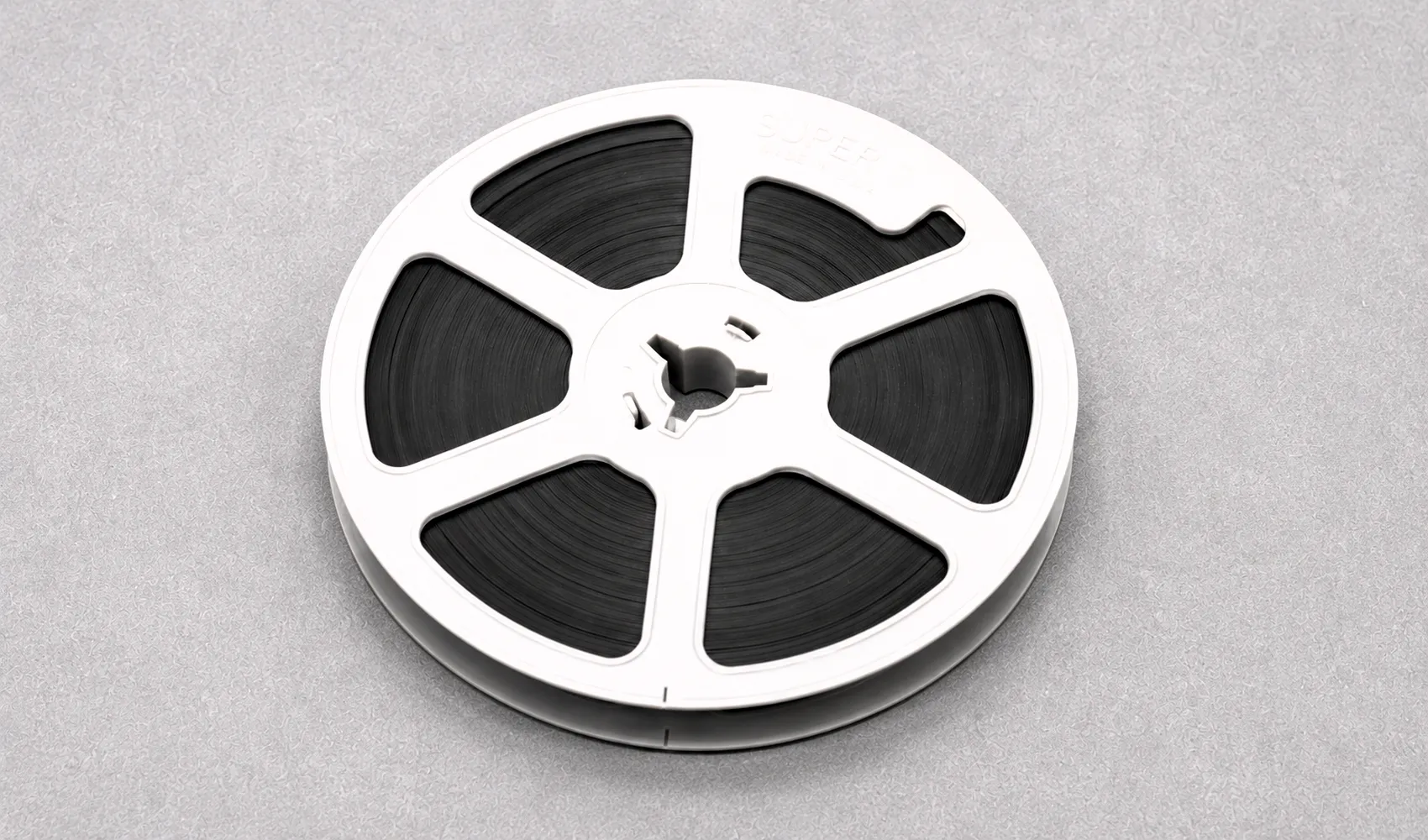
Film reels like this often contain decades of family memories that remain vulnerable to environmental degradation.
Era: 1965-1980s (still sold in small quantities today)
Manufacturer: Initially introduced by and still sold by Kodak; in the meantime the individual film cartridges are being made by Kodak and by Fuji as well as by others.
Cartridge Size: 1.7 x 1.3 x 0.6 inches or 42mm x 33mm x 15mm. Small! This format of film is 8mm wide, and it is on a cartridge that automatically feeds into the camera, no threading needed. Early 8mm film was of a similar width, but it had to be manually placed into the camera, frame by frame. Many early 8mm films suffered from jamming.
Many Home Movies are composed of scenes of family and friends at parties and outings, on vacations, at school, and at sports events. For movies made in America, these were shot on Super 8mm film, the most popular home movie format of the late 1960s through early 1980s. The film from these movies is frequently found in attics in collections.
The cartridges of Super 8 film contain a magnetic audio stripe along the edge of the frames. Thus frames with audio have a brown magnetic stripe along one edge of the frame.
Vinegar syndrome: Vinegar syndrome is a form of deterioration found in many Super 8 films shot on cellulose acetate film base. As the film base deteriorates, it releases acetic acid, a very pungent liquid, which then seeps out of the film causing it to shrink. The film can also warp and become brittle. To test for Vinegar syndrome, a reel can be tested with an A-D Strip test. The A-D Strip test was developed by the Image Permanence Institute at RIT. The test determines the amount of acetic acid in the film and the rate of deterioration. Films affected by Vinegar syndrome are best to be stored separately from other films as the acetic acid from the deteriorating film can transfer to other films in storage causing them to deteriorate at a rapid rate. For information on the preservation of Vinegar syndrome films refer to the preservation resources for the Library of Congress in the references section below.
Frames: Typically shot at 18 frames per second for home movies, or 24 frames per second for commercial use.
Regular 8mm (Double 8 / Standard 8)
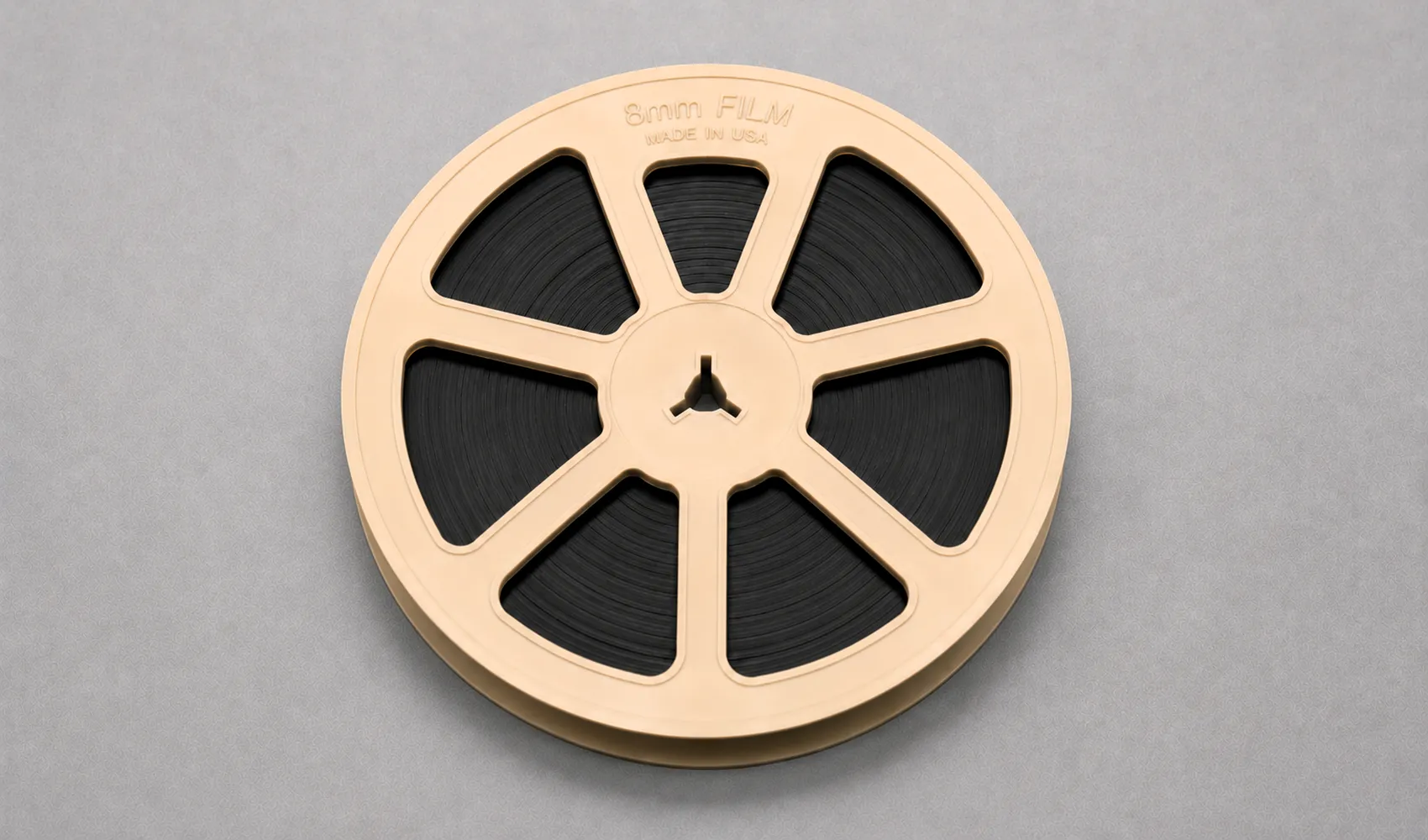
The distinctive seven-spoke design of 8mm reels helped families organize decades of home movies before video tape arrived.
Era: 1932-1965
Manufacturer: Kodak, Agfa, and others
16mm film shot on one half of a film reel the size of a film can (metal or plastic film) and the other half exposed after the reel has been flipped over. The film is then cut down the center of the reel to form a single 8mm wide film strip.
Regular 8mm film contains pre-Super 8 home movies made by their owners before this format came into existence. Many collections of home movies on Regular 8mm film were shot between the 1930s and the early 1960s. There is great hope that these home movies of historical value can be preserved for future generations of family members to enjoy.
8mm silent film - There is no provision for sound on this format of film.
While many problems with Image Permanence are film specific, all films on acetate base, whether they are 8mm or Super 8 movies, are prone to similar problems. Films from the 1930s to 1940s are likely to be on nitrate base and thus only should be stored and handled by professional film preservation facilities. Films that smell of chemicals other than vinegar are okay to store at home as long as they are modern (acetate base) and in good physical shape. Films with a strong chemical smell (other than vinegar), old films that smell of amine, of acetone, etc., as well as sticky films and powdery films must be taken to a film preservation facility immediately. Do not attempt to store them at home.
This film can only be played on a Regular 8mm film projector. Regular 8mm film has different frame size and sprocket holes than Super 8mm film.
16mm
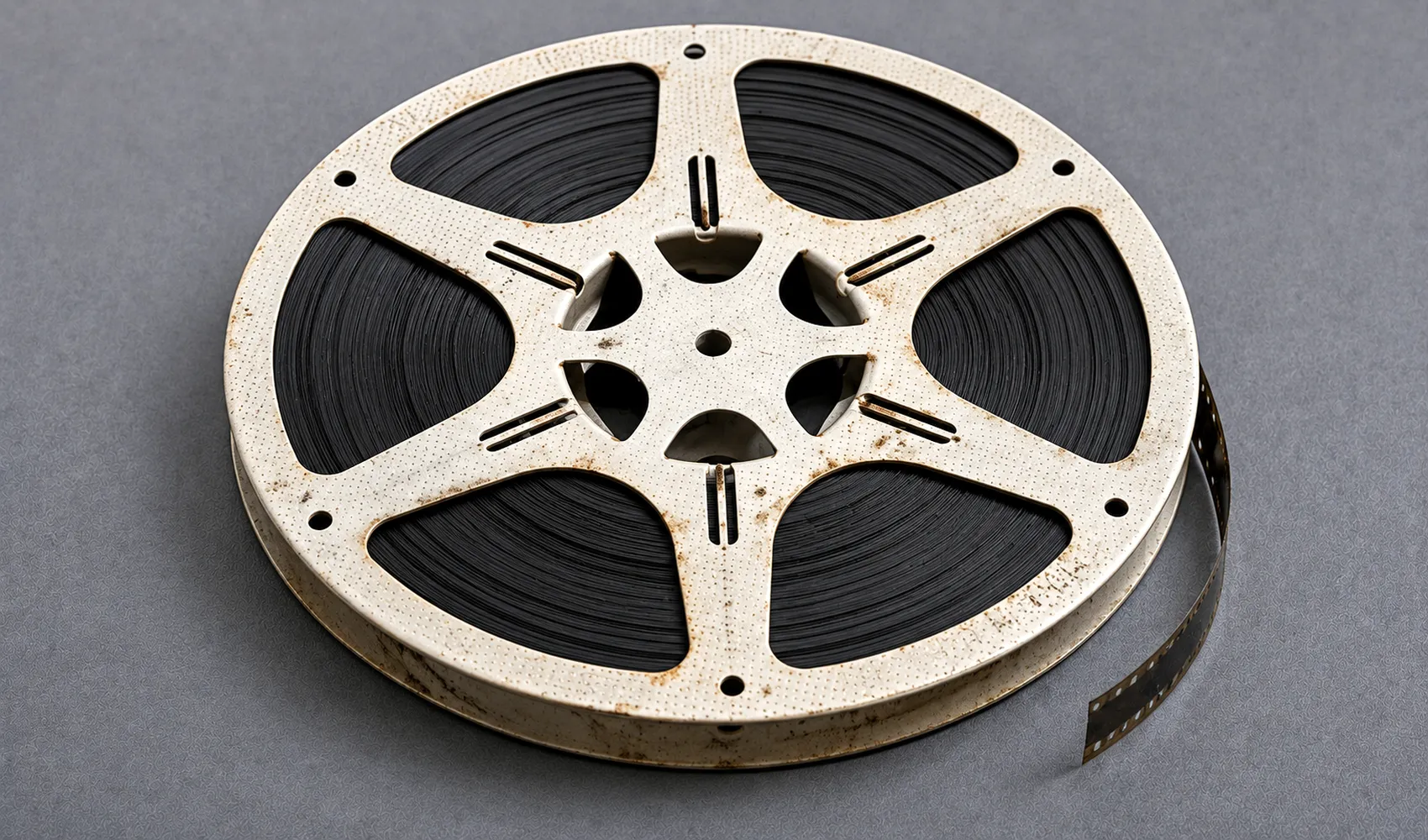
Metal film reels like this one often show surface oxidation while the celluloid inside faces more serious chemical deterioration over time.
Time Period Covered: 1923-present (used by some professionals and artists today).
Manufacturer: Kodak, Fuji, and others
As 8mm film, Regular 8mm film is collected on reels of varying diameters. The film itself is four times as wide and tall as 8mm film, so the reels are quite a bit larger. A typical reel of Regular 8mm film is 3 inches in diameter and contains 50 feet of film. This would play for about 3 1/2 minutes at 24 frames per second. Large reels of Regular 8mm film can be as large as 12 inches in diameter and contain several hundred feet of filmd contain as much as 2,400 feet of film. This would play for about 66 minutes at 24 frames per second.
Most 16mm films are shot as a medium for making Educational films, Documentaries, News coverage of events, Independent films on a low budget, Training films used by institutions, Military footage and Government Archives. So if you have a large 16mm film collection you and your family probably do not recognize the subject matter of the films as being of interest to you; most likely the person who shot the films was a professional filmmaker or worked in an institutional settinghot the films was into film as a hobby, was a Journalist, was a teacher or was working in the field of Education or Media.
Variable-density or variable-area optical sound, commonly found along the film edge of 16mm film, is played back using specific sound reproduction equipment, and then captured during the transfer to video using similar sound reproduction equipment.
Deterioration: Vinegar syndrome can affect films on acetate base. Most 16mm films shot before 1951 were shot on safety stock, some of which were on acetate base stock. Others were shot on even earlier nitrate stocks. Generally films in institutional collections are in better shape than home movies, because they have been kept under better storage circumstances.
35mm (Cinema Film)
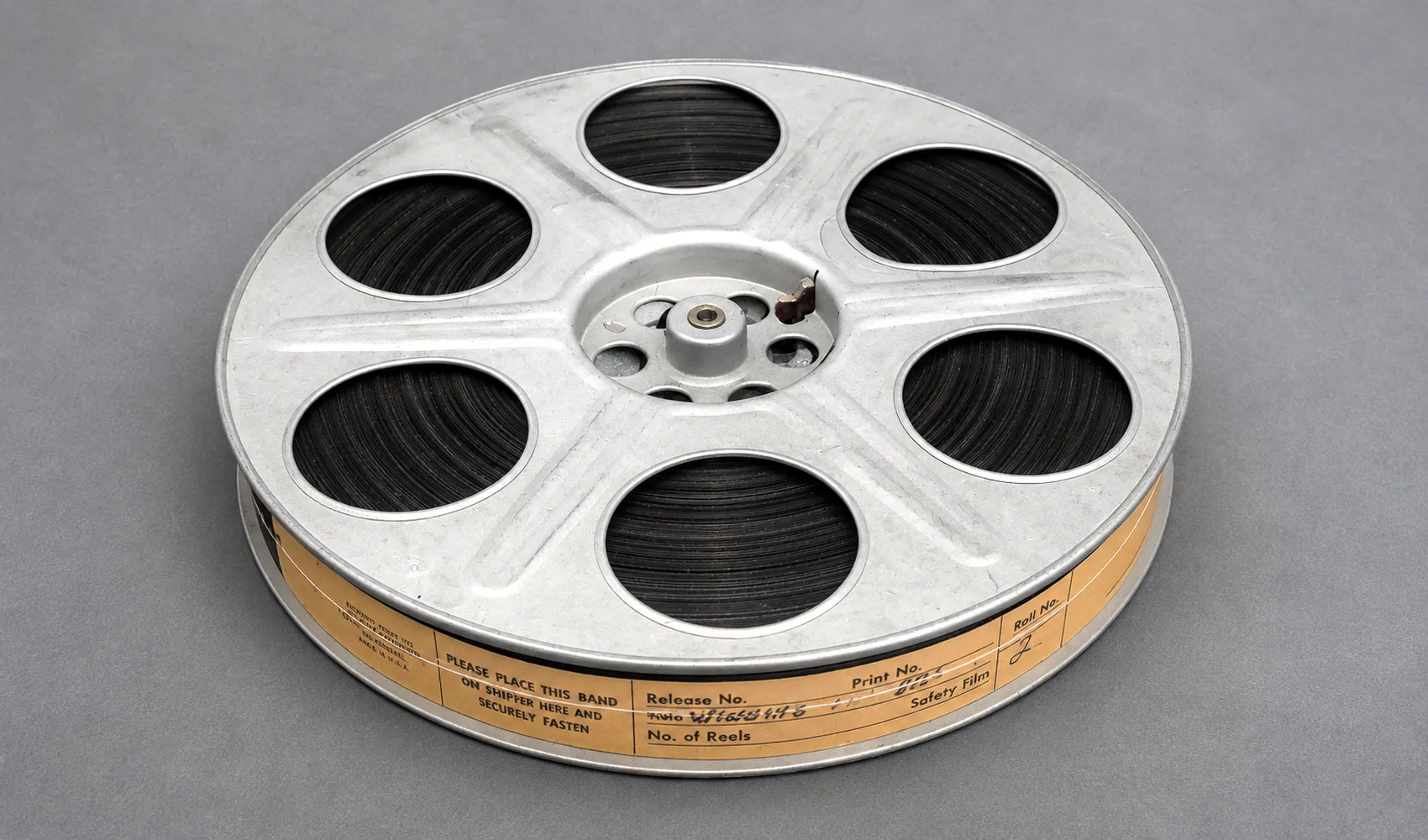
Film reels contain safety film stock that can degrade over time due to vinegar syndrome and environmental conditions.
Era: 1892-present
Manufacturer: Kodak, Fuji, AGFA, and others
The media width is 35mm and is available in lengths of 400ft, 1000ft or 2000ft. The media is typically supplied on a flat reel made of metal.
Institutional Movie Collections: These consist of professional quality movies, films and commercials. They are unlikely to be held by the home movie enthusiast unless he or she is a professional filmmaker or has worked in the film industry.
The vinegar syndrome is on the acetate base of the film. Unfortunately, 35mm film from before 1951 can be on highly flammable nitrate base and be considered hazardous. It would be best to have the film turned over to a film preservation facility.
Comments: 35mm film can have a higher resolution than video. However, the film has to be preserved first and then scanned with high resolution (e.g. 4K) from a complete 35mm frame.
Which photographic media are at highest risk of fading, and how should they be stored?
Unlike other formats stored on magnetic media or as chemical film, photographs can be deteriorating in multiple ways at once. The paper base can become discolored, turning yellow or becoming brittle, while the image layer can fade or change color. Within the image emulsion, there can be a variety of chemical reactions that affect the appearance of the image. As with all formats, the biggest single threat is improper storage conditions factor affecting the life of photographs is temperature. Cool, stable storage is best for all photographs formats. The Image Permanence Institute has free online calculators (the IPI Media Storage Quick Reference) to estimate the life of print and film storage based on storage environment.
Color Photographic Prints

Color prints from recent decades require careful storage to preserve the memories they hold across generations.
Era: 1940s (Kodacolor first released 1942)-present
Color photographs, including Kodacolor, Ektacolor, and Fujicolor printed photographs, such as 3x5, 4x6, and 5x7 format prints and others.
Kodacolor, Ektacolor, Fujicolor photographs developed at photo labs in drugstores and department stores. Most were 3x5, 4x6, and 5x7 prints.
The photographs of this era are the record of the visual history of American family life in the 20th century.
Dye fading: The three dye layers in chromogenic color photographs (Cyan, Magenta and Yellow) degrade at different rates resulting in color change over time. Prints stored in albums made with acidic materials (newspaper, magazine cuttings etc.) or in PVC photo-sleeves will degrade faster than similar prints stored in alternative locations. In average home storage environments, chromogenic color prints can show visible fading in 25–30 yearsnts are predicted to undergo a perceptible color change in 25-50 years. See Wilhelm Imaging Research’s Print Stability Ratings for more detailed information on print stability.
Older color prints tend to go yellow or red, especially in cool light. Highlights in prints will fade and corresponding detail in dark shadow areas will be lost. Over time prints become brittle.

Forever Studios · Boca Raton, FL
Professional Photo Restoration
Damaged, faded, or torn photos restored by hand by our artists.
GET STARTED →Black & White Photographic Prints

Proper archival storage conditions can extend the lifespan of photographic prints by decades or even centuries.
Era: 1840s-present
Gelatin silver prints (from 1880s to present day), albumen prints (from 1850s to 1890s), cyanotypes (from 1842 to 1930s), and platinum/palladium prints (from 1900s to 1940s).
Most Black & White photographs are stable and remain in good condition for many years. A well preserved gelatin silver print from the 1880s will look as good as new after 100+ years. A black and white photograph may develop a yellowing of the paper with age but the image itself will remain stable for long periods of time. In contrast to many 20th century color photographs, many 19th century black-and-white photographs remain in excellent condition & White photographs are in excellent condition.
Two examples of print damage are: Silver mirroring: The silver image in a black & white print can migrate from the image to the surface of the print. This results in dark areas having a bluish iridescent color. This type of damage is usually caused by high humidity or contact with poor quality storage materials. Foxing: Small brown spots on the surface of a print. This can be caused by either mold growth or metallic impurities in the paper or oxidation.
Black and White photographs do not fade. They are stable and will last for generations. The print may turn yellow with age but that is all. Many 19th century Black and White photographs have survived in excellent condition. In contrast, many color photographs from the 1970s have faded badly.
Newspaper Clippings and Printed Ephemera

Paper-based materials from the early to mid-twentieth century demonstrate the natural aging process that affects most analog formats.
Era: 1860s-present
Types of Items: Newspaper clippings, magazine clippings, birth announcements, obituaries, wedding announcements, sports programs, menus, playbills, diplomas, certificates.
Printed on groundwood-pulp paper that is acidic in nature, newsprint suffers from the presence of lignin, which rapidly deteriorates when exposed to light, heat, and oxygen. In the hot attic where folding and storing newspaper clippings would typically take place, the newsprint may become so brittle that it will disintegrate when handled when the paper is unfolded. In as few as 25 years, such a paper can become so brittle that it will crack and break when flexed, according to the National Archives.
The signs of physical deterioration are: Yellowed/brown paper, Brittle paper which is crisp and may develop cracks in the surface. These can develop into splits in the paper and even start to peel. Folded areas of paper begin to deteriorate and may break.
Newspaper clippings are some of the most urgent items to digitise as they are very fragile and deteriorate quickly. Please treat these with care as soon as they begin to become brittle. Avoid unfolding, holding or in any way manipulating the newspaper for scanning as this can cause further damage.
Documents, Certificates, and Letters
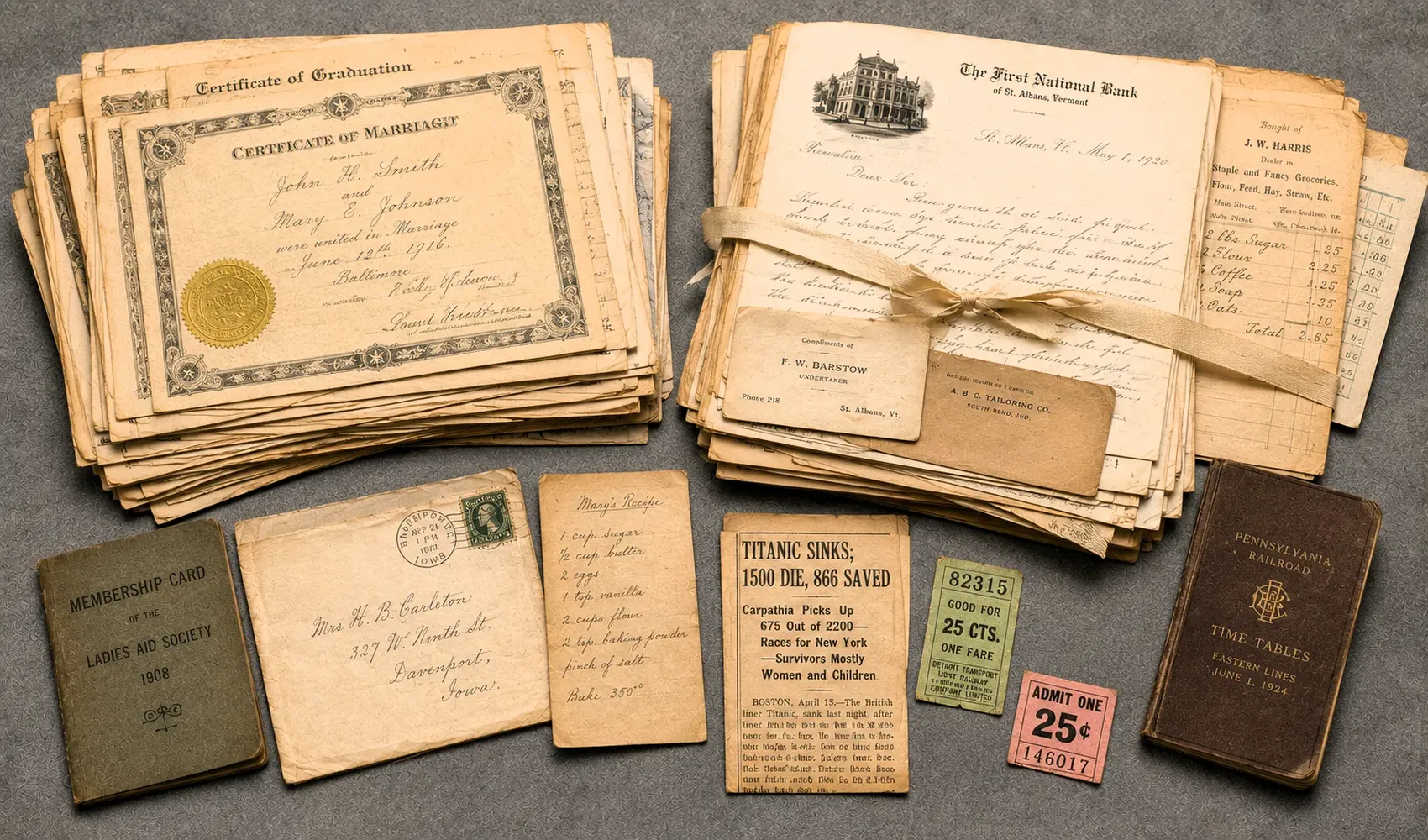
Paper documents from daily life capture personal histories that professional archives often overlook.
Era: Any
Types of Paper-Based Items: Birth certificates, military discharge papers (DD-214), immigration documents, diplomas, letters, postcards, deeds, wills.
Many documents deteriorate due to fading or bleeding of ink caused by prolonged exposure to light. Many paper documents discolour with age turning yellow and becoming brittle with a risk of cracking. Some items have been folded for years resulting in extremely brittle fold lines. Most importantly some items are sensitive to moisture and could develop mold on the document.
Historical documents such as military discharge papers (DD-214) are fragile and sensitive and must be saved for future generations. While the National Archives suggests that certified copies of DD-214s be made and the original document saved in a safe place, a high-quality scan of the documents can be used as a working copy to apply for benefits, share with family historians, and others. These documents can also be used to request replacement copies of lost documents and to keep historical records.
35mm Color Negatives
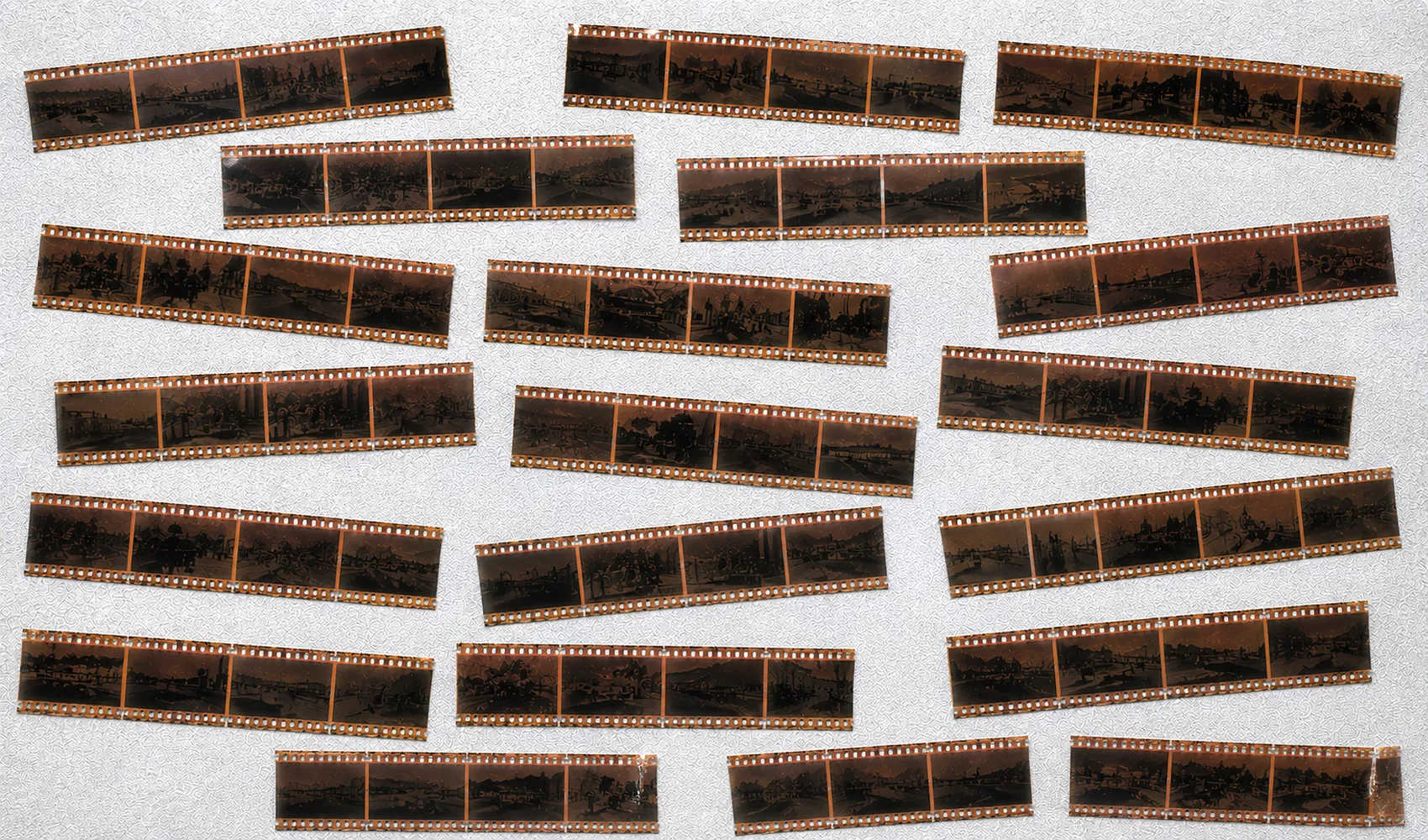
Proper archival storage of film negatives protects against physical damage and environmental degradation over time.
Era: 1936-2000s (widespread consumer use: 1960s-2000s)
Manufacturer: Kodak, Fuji, Agfa, Konica
35mm Color Negative Film. The film is mounted as a wide strip, showing the orange mask (color correction layer) on the surface. The film is packaged in film sleeves made of paper or plastic, or in negative pages. The most common package sizes for this type of film are 24 exposures and 36 exposures.
Decades of family photos were printed from this film. While many of the prints have already deteriorated to a poor quality and even faded, the negatives are in better shape than the prints. With a good scanner even better results can be achieved.
All types of color images, whether printed or viewed as slides, can suffer from color shift as the different decay rates of the three different layers of dye (cyan, magenta and yellow) mean that over time they will change out of register with each other. The rate of decay can be slowed dramatically when stored at cold temperatures and all color films will last 100 years or more if stored in a cool, dry place. Inadequate storage of color negatives can result in color shift occurring within 25-30 years. Research on the stability of color images, whether printed or on film, is carried out by Wilhelm Imaging Research.
Scanning a negative (with lots of tonal information) makes for a much better scan than scanning a print of the same photo.
Medium Format and Large Format Negatives
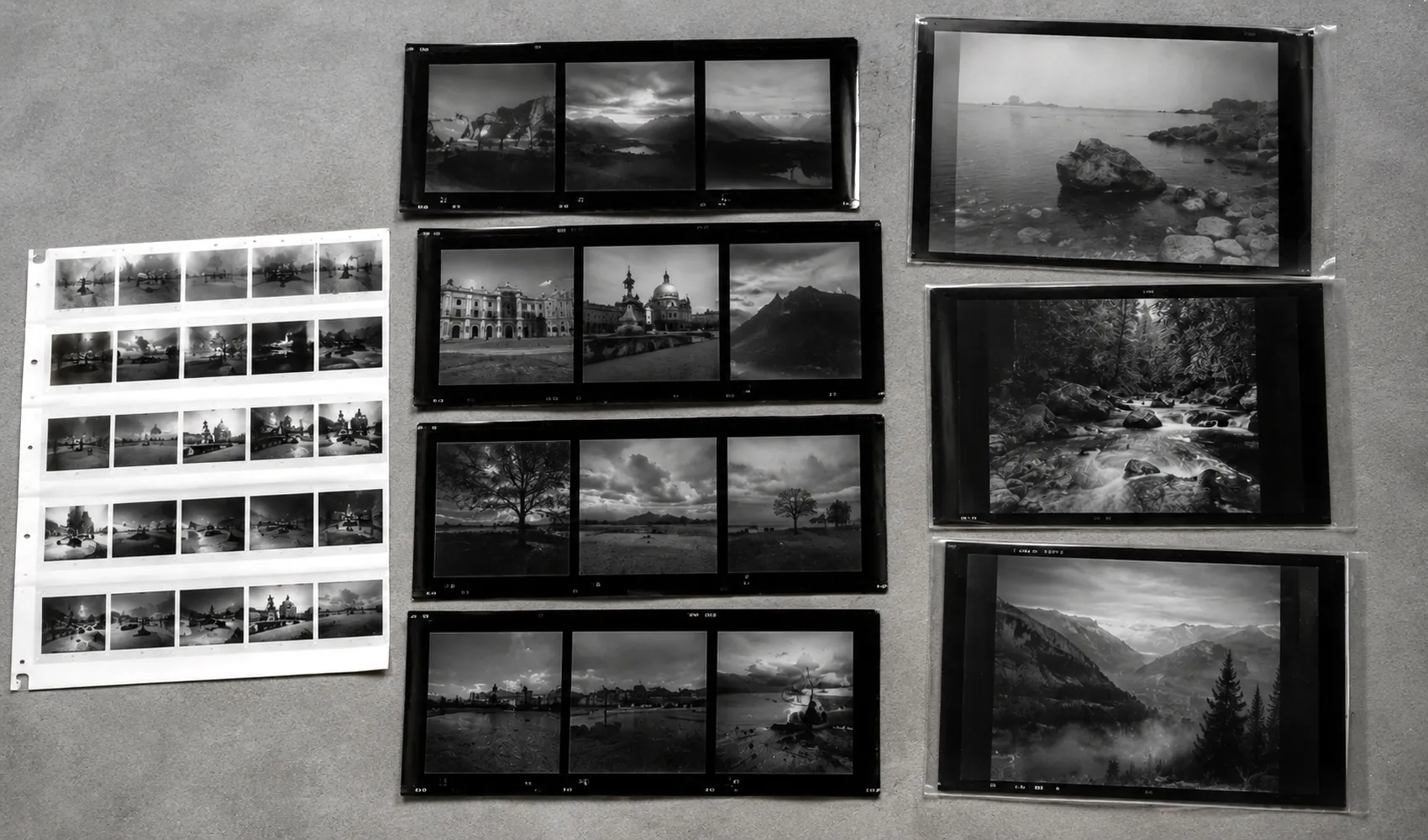
Contact sheets and medium format negatives demonstrate the selection and preservation challenges inherent in analog photography workflows.
Era: 1900s-present
120/220 roll film is about 6cm (2 3/8″) wide. Sheet film is normally stored in envelopes or in boxes, in a wide variety of sizes, from 4×5″, 5×7″ to 8×10″ or larger.
Professional portrait photography; serious hobbyist photography.
Old medium format roll film negatives of 120/220 format can also suffer from these kinds of problems. But large format sheet film negatives are usually even older and have been made on very ancient base stocks, for example on early acetate film stocks or even on a few pre-safety nitrate film stocks.
Kodachrome Slides

Kodachrome slides remain among the most stable color film formats ever produced, with proper storage extending their lifespan well beyond a century.
Era: 1935-2010 (discontinued by Kodak)
Manufacturer: Kodak exclusively
- Height: Slides are mounted in 2x2 inch cardboard, plastic or metal mounts. The color is produced by inorganic dyes which are extremely stable. This allows for the production of very vivid and highly saturated colors. The bases of processed Kodachrome films are clear not orange as are the bases of color negatives.
The physical slides are stable. The Kodachrome film was made with inorganic dyes, whereas most color films are made with organic dyes. Therefore, slides taken in the 1940s and 1950s look nearly as good as they did when they were taken. Physical damage to the slides would be the greatest threat to their stability, followed by exposure to moisture that could cause mold to grow.
There are no photo labs left on the planet that can process Kodachrome for you. Dwayne’s Photo Lab, the last lab on the planet that was able to process Kodachrome for you, closed its doors for good on December 30, 2010. However, Kodachrome slides of any age that have been processed are the most archivally stable color materials ever made.
Ektachrome and Other E-6 Slide Film

Kodak Ektachrome slides represent one of the more stable color film formats when stored properly in cool, dark conditions.
Era: 1946-present (Although Ektachrome was discontinued in 2011, Ektachrome was relaunched by Kodak a few years later. In the meantime, numerous other E-6 films by other manufacturers, e.g. by Fuji and Agfa, are available on the market).
Other E-6 films continue to be made by Eastman and Kodak, after Ektachrome was discontinued in the 1990s and then reintroduced
Ektachrome: Physical Form. Ektachrome color slide film is shot as 35mm film and then mounted as individual frames, i.e. as slides. Processed frames of Ektachrome film are mounted as 2 x 2 inch (5 x 5 cm) frames, much the same as Kodachrome slides. The base of processed Ektachrome color negative film is clear, just the same as for processed Kodachrome color negative film (as opposed to typical color negative film whose base is orange). The special packaging for Ektachrome negative film is designed to keep the film flat, to prevent it from curling up during processing.
The vast majority of Ektachrome ever made by Kodak was shot for travel, nature, portraiture and for commercial / editorial purposes. It was used by professionals for many years.
Organic dye couplers in E-6 slides can change color or even fade as early as 25-30 years. In extreme cases, the material can become brittle and eventually disintegrate. One of the most common types of degradation for E-6 slides is magenta shift. This occurs when the cyan and yellow dyes in the image fade faster than the magenta dyes. This results in an overall pinkish or reddish color image. As the magenta coupler in the image begins to degrade, the image will begin to turn a reddish-pink hue.
Daguerreotypes
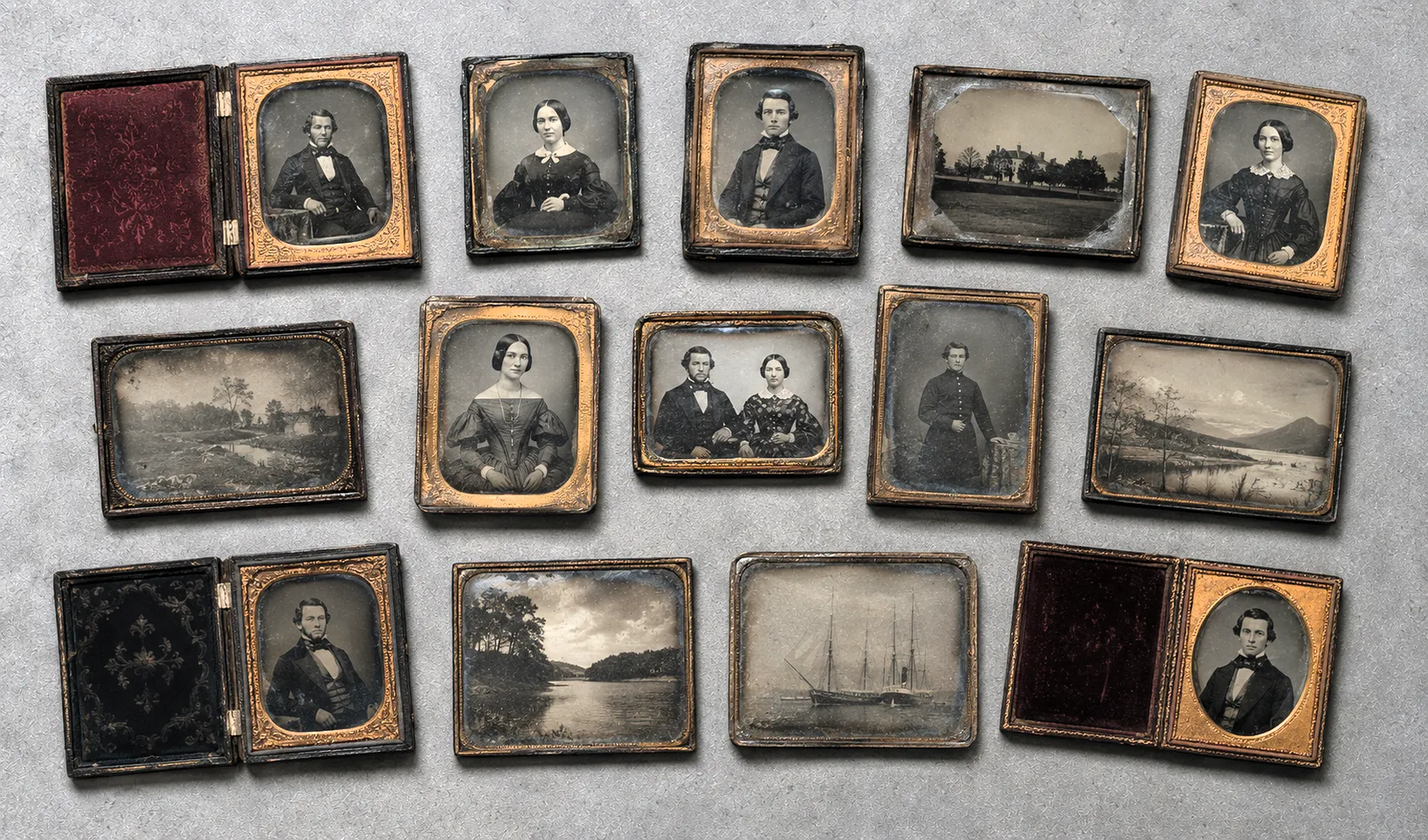
Daguerreotypes require careful storage away from light and moisture to prevent the delicate silver surface from tarnishing over time.
Era: 1839-1860s
Each image is transferred to a polished silver-coated copper plate and then placed in a beautifully crafted hinged case. The cases can be made of wood, metal, paper, etc. and are typically small. For sixth plates the format is 2.75 x 3.25 inches (6 x 4 1/4 inches) and for quarter plates and larger the format is 3.25 x 4.25 inches (8 x 10 1/2 inches). Because of the way the cases are made, when viewing a case from different angles the image appears to reverse from a positive to a negative. So when viewing the front of a case the plate appears as a positive image. However when turning the case over to view the back at a different angle the same plate appears as a negative image.
Most formal photographs of families and groups of people were made as daguerreotypes. Because of the high cost of having such photographs made, formal sittings with a professional photographer for family portraits were not common events. Therefore, photographs of one’s ancestors would have been made as daguerreotypes.
A high quality daguerreotype has great depth in the image. As stated above the surface of a daguerreotype is made of polished silver applied to a copper base. The image is contained within a decorative hinged case that is usually lined with velvet. The polished surface of the image appears to be on a mirror like surface. The image will appear to reverse from a positive image to a negative when viewed from different angles. Proper amount of light must fall on the polished surface to view. Small images are 2.75 x 3.25 inches (6 x 4.75 cm) (sixth plate) and larger images are 3.25 x 4.25 inches (8.25 x 10.75 cm) (quarter plate) and larger.
N.B. DO NOT CLEAN OR TOUCH THE IMAGES OF THESE VERY DELICATE DAGUERREOTYPES as they will likely be irreparably damaged. Therefore the images of these daguerreotypes have not been included in the digitized version of this collection. High quality images of the daguerreotypes in this collection have been created by specialized photography or have been scanned with very precise lighting in order to illuminate the image without glarenclude them in this online collection.
Tintypes (Ferrotypes)

Tintypes remain among the most stable photographic formats due to their metal base and direct positive process.
Era: 1853-early 1900s (most common: 1860s-1890s)
The prints are photographs that have been printed on thin iron sheets and coated with black or very dark colored lacquer. There are prints of gem size (1 x 1.5 inches) as well as of full plate size (6.5 x 8.5 inches). They are mostly found as single prints, in envelopes, in photograph albums, etc.
Common content: Affordable portraits- The Tintypes on these pages were the low cost option of 19th century photography. Many Civil War soldiers had Tintypes made. Traveling photographers would set up at fairs and other events with a Tintype camera and take pictures of patrons for a few dollars.
The iron bases of Tintypes can decay to iron oxide if they get wet. The surface lacquer can start to crack and peel. Tintypes are generally more durable than Daguerreotypes but can suffer serious damage from moisture.
Glass Plate Negatives

Daguerreotypes and ambrotypes represent some of the earliest photographic processes, requiring careful handling to prevent surface deterioration.
Time Period: Late 1800s to 1930s (wet collodion process: late 1850s to about 1900s; dry gelatin
This was made as a negative and consists of a glass sheet (4x5, 5x7, or 8x10 inches in size) with a layer of photographic emulsion on it. These glass negatives are extremely fragile and can easily break with slight damage. In the early years of wet collodion, the glass was often a blue-green color, but clear glass is used with a gray emulsion. Dry gelatin plates also use clear glass with a gray or brown emulsion layerray emulsion.
Professional studio photographs of seated portraits, larger format landscape studies, newspaper photographs, scientific documentation etc.
The physical breakage of a plate is one of the major problems with Glass Plate Negatives. The emulsion can detach from the glass plate over time and flake off. Silver mirroring can also occur with the emulsion over time. Once a plate has been broken it can’t be put back together, but fragments of a plate can be scanned and made available as digital copies.
Notes: Glass plate negatives are some of the most historically significant photographic materials. Estate collections of Glass Plate Negatives by a family photographer can even give a history of a community.
Which audio tape formats are at risk, and what are the signs of deterioration?
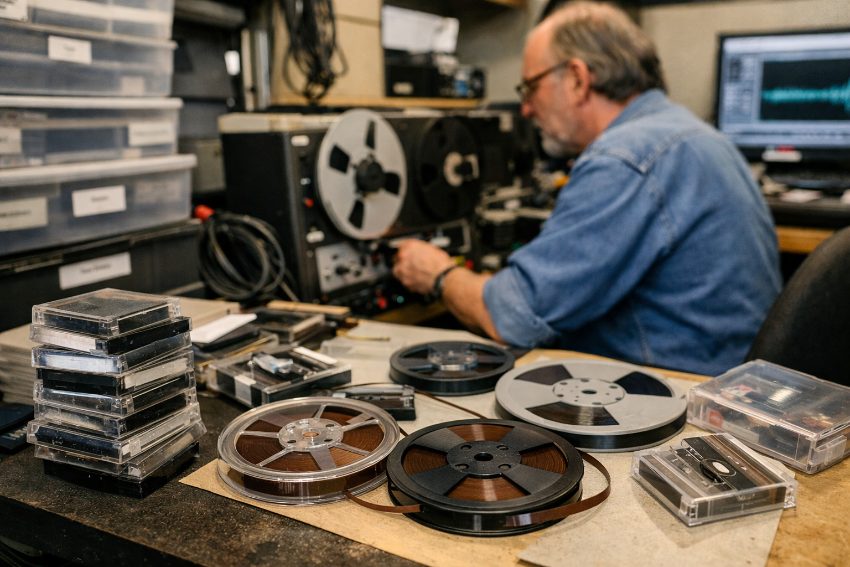
Audio cassettes and reel-to-reel tapes share the same deterioration risks as video formats
Similar to video recordings on magnetic media, audio recordings on magnetic tape are deteriorating fast. As the majority of these recordings are unique (i.e. they have not been duplicated), recordings of family events, special occasions, musical performances, children’s first words etc. can be stored on a single tape, thus being irreplaceable.
Compact Cassette
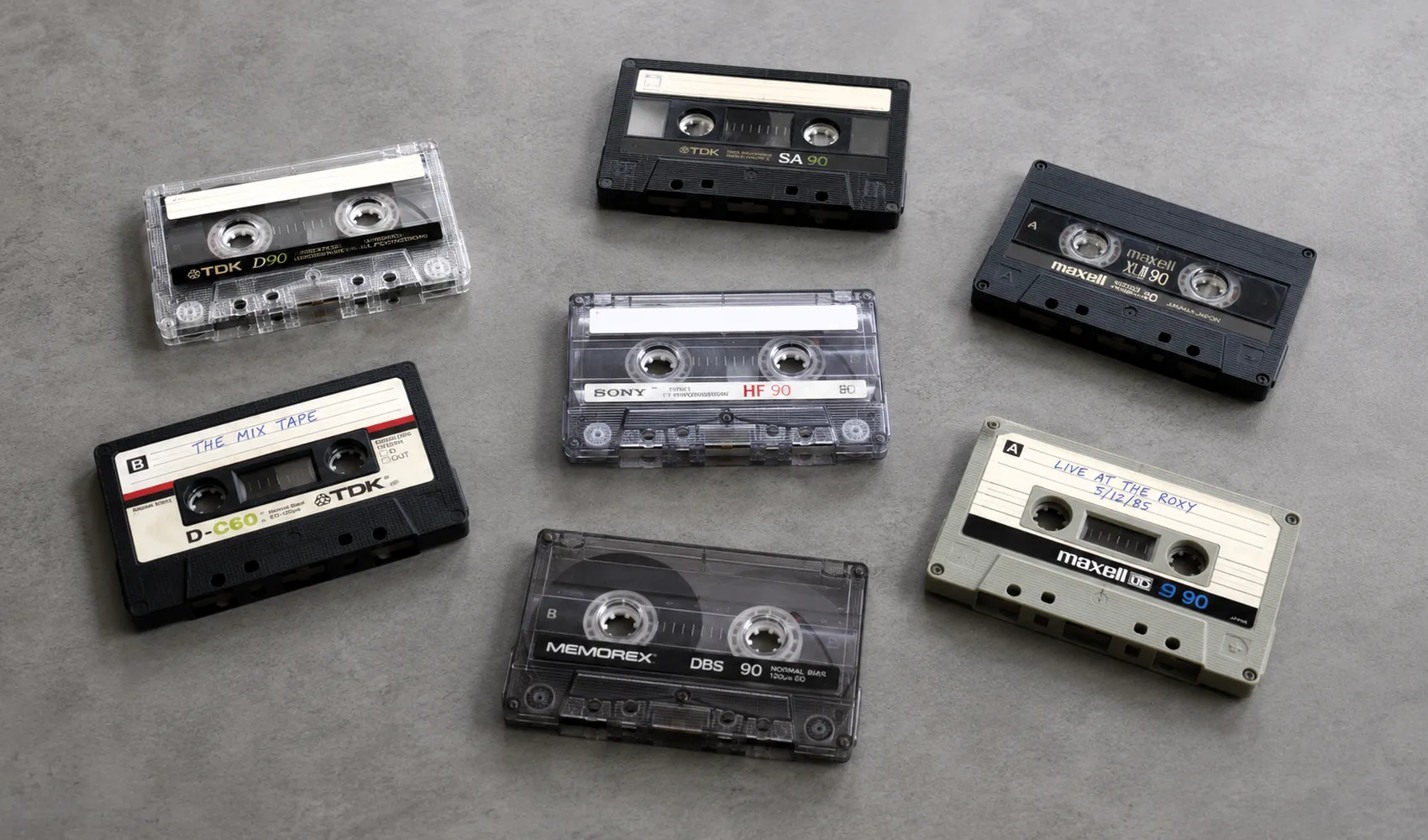
Physical media formats from different manufacturers represent the diverse landscape of analog audio preservation challenges.
Era: 1963-2000s
Compact cassettes were introduced by Philips in 1963 and later manufactured by Sony, TDK, Maxell, BASF, and dozens of other companies worldwide.
4 inches x 2.5 inches x 0.5 inches, 2 reels of tape. Made up of various binders and oxides. Ferric oxide (Type I), chrome dioxide coated ferric oxide (Type II – better high frequency response) or even metal coated magnetic tape (Type IV – considered ‘audiophile’ quality).
Uses: playback of mixed songs, home recordings, voice memos, music, dictation, answering machine messages, language lessons, books on tape, etc.
30 minutes/side for C-60 tapes, 45 minutes/side for C-90 tapes, 60 minutes/side for C-120 tapes. The C-120 tape is extremely thin and will easily stretch.
As with other formats, print-through can affect sound quality as signal from adjacent tape layers is picked up by the playback head. The tape itself can also stretch as the tape deteriorates. In addition to binder breakdown and oxide shedding, tape can develop mold growth, often worse when tapes are stored in a hot car for long periods of time, causing the tape to warp
Microcassette and Minicassette
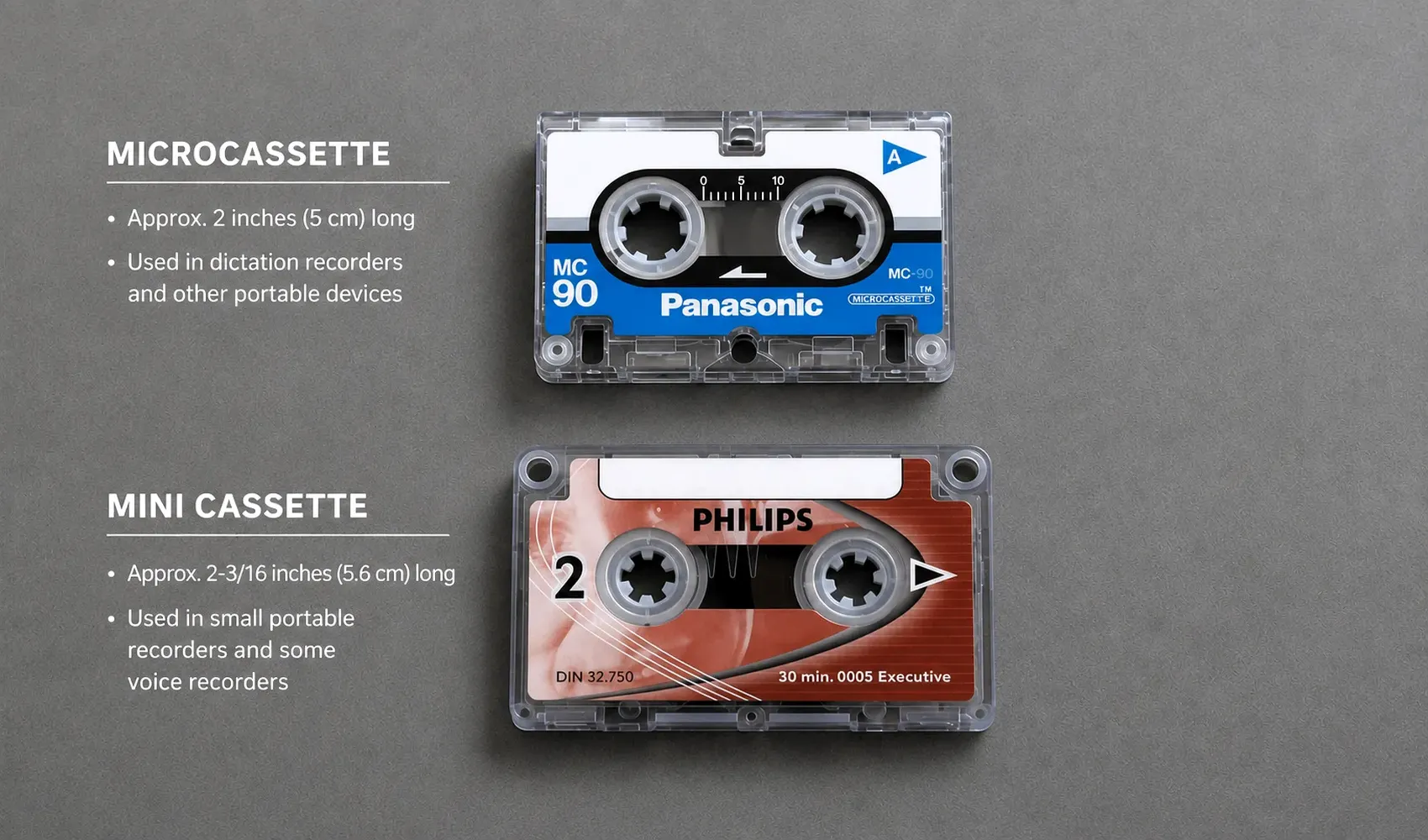
Both microcassette and minicassette formats require specialized playback equipment for digitization.
Era: Microcassette: 1969-2000s / Minicassette: 1967-present
Manufacturer: Primarily Olympus and Sony (microcassette); Philips (minicassette)
MM: 2 x 1.3 x 0.3 inches, a format about one-quarter the size of a CC.
Examples of uses for this format: Dictation; Telephone answering machine messages; Voice memos; Interviews; Meetings.
The compact cassette format has similar problems, to an even greater extent, because of the very thin and narrow form of the tape. It gets stretched or even breaks during playback.
These old microcassettes from old answering machines could hold the last messages from deceased family members. Messages that were left on an answering machine are easily overlooked, because they were left for the purpose of a phone message and weren’t recorded on purpose. Yet the voices on these tapes are irreplaceable.
8-Track Cartridge
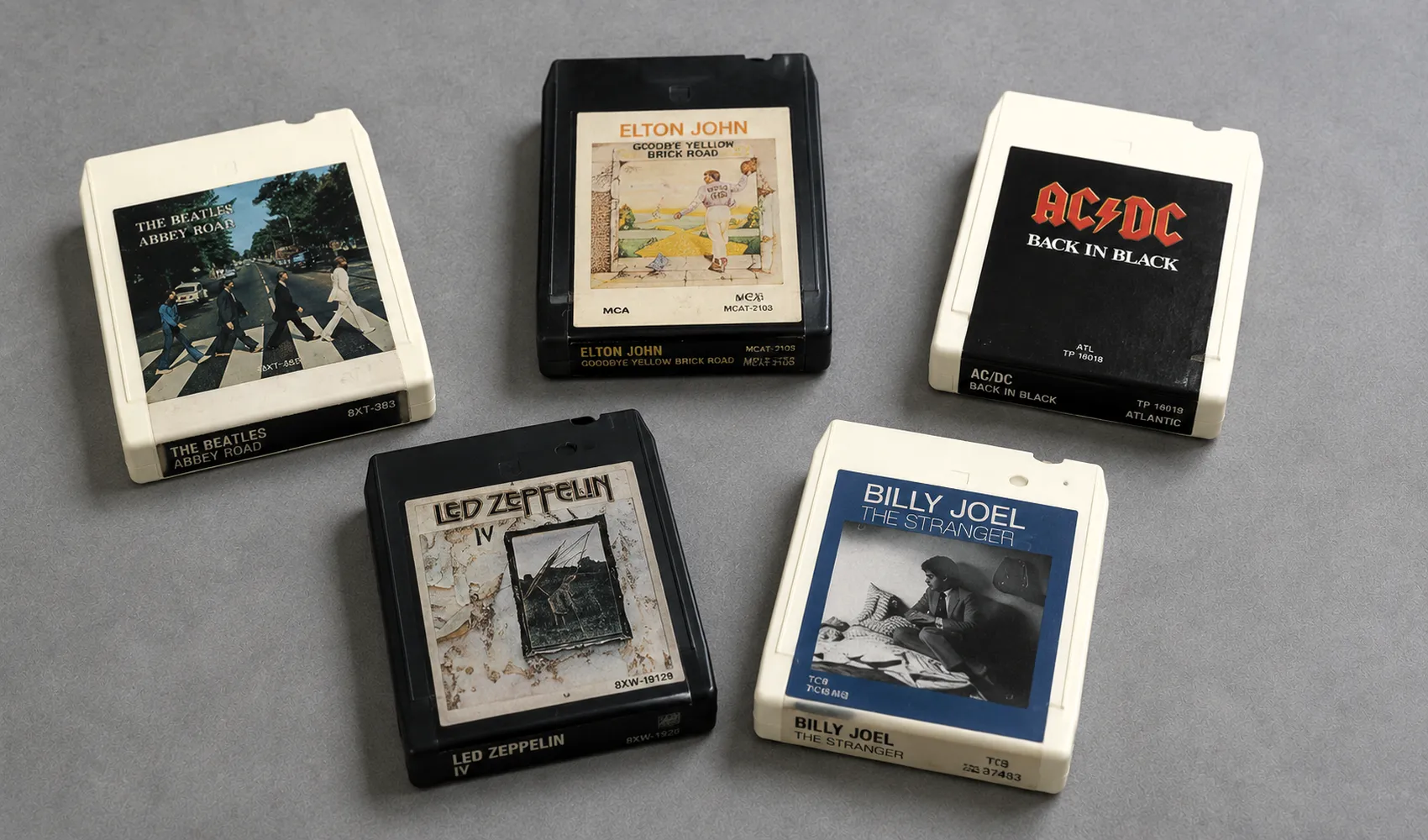
Eight-track cartridges like these classic rock albums represent a format particularly vulnerable to magnetic degradation and mechanical failure.
Era: 1965-1982
Manufacturer: Introduced by Lear Jet Corporation; manufactured widely
This cartridge is approximately 5.25 inches x 4 inches x 0.8 inches in size. A single loop of tape goes through the cartridge in a continuous fashion. The tape is pinched by an internal foam pad against the playback head.
8-Track cartridges contained pre-recorded music and were played back with a special 8-Track player. These cartridges were the most popular way that Americans played music in their cars from the mid 1960s to late 1970s. 8-Track cartridges were also made for home use with a special 8-Track player but few 8-Track cartridges contained recorded music by individuals.
There are several areas of potential failure on 8-track cartridges. The continuous loop of tape is under constant tension and therefore prone to breakage. In particular, the internal foam pad, used to hold the tape down against the playback head, can deteriorate with age causing the tape to become misaligned resulting in audio dropout. The main area of potential failure on 8-tracks however, is the breakdown of the tape itself from age and environmental exposure splice joining the ends of the tape loop. This can fail in playback resulting in rapid loss of recorded material.
8-Track tapes contained pre-recorded music, mostly commercially released. These were often packaged in special packages for car stereos but were also released for home consumption. Many 8-Track tapes also contained personal recordings. However, 8-Track players are very hard to find that work compared to cassette and VHS players.
What causes analog media to deteriorate, and which formats are most urgent?
Understanding how each format fails helps prioritize which media to transfer first.
Why do color photographs fade faster than black-and-white prints?+
Chromogenic color prints consist of three layers of organic dyes (cyan, magenta and yellow). Because of the nature of the dyes, the colors will change and fade at different rates. Typically, after 25-30 years a chromogenic color print will start to show signs of fading when stored in a typical home. In contrast, black-and-white gelatin silver prints, which are made with metallic silver particles, are extremely stable and will last for over 100 years. However, there are exceptions to the rule that all color materials fade quickly. The inorganic dyes used in Kodachrome slides, for example, resist fading for decades.
What is vinegar syndrome and which film formats does it affect?+
Vinegar syndrome is the gradual deterioration of the cellulose acetate film base as it releases acetic acid, the main component of vinegar. Vinegar syndrome can affect all types of film including Super 8, Regular 8mm, 16mm and 35mm film. As the film deteriorates it will begin to shrink and become warped. Eventually the film will become brittle and begin to crack. The Image Permanence Institute offers an A-D Strip test that can test for early stages of vinegar syndrome by measuring the film’s acidity. Films that have gone into advanced stages of vinegar syndrome cannot be restored in any further and therefore must be immediately digitized in order to save the content.
How long do VHS tapes last before they start to degrade?+
VHS tapes have a practical lifespan of 10–30 years. Tapes recorded in the 1980s and 1990s are now at high risk of deterioration. The polyurethane binder absorbs moisture over time, leading to sticky-shed syndrome, where the oxide coating becomes tacky and sheds during playback. Heat, humidity, and repeated use accelerate degradation. Many tapes stored in attics or garages already show signs of mold, brittleness, or signal dropout.
Sticky shed syndrome or sticky tape: This is a deterioration problem of tapes with polyurethane binder-coated tapes. The tapes most affected by this problem are VHS, Betamax, U-matic, Betacam and reel-to-reel tapes, mostly made in the 1970s and 1980s. The polyurethane binder on these tapes absorbs moisture and causes the tape to become sticky. The oxide from the tape surface can then shed off and stick to the same area on the tape as well as to the tape playback heads. The stickiness between the tape oxide and the tape base can cause dropouts and degrade the image on the tape playback head. Sometimes, playing these affected tapes can also cause them to squeal. Occasionally, tapes affected by sticky shed syndrome or sticky tape can get stuck fast when trying to fast-forward them. In addition, affected tapes can get stuck to each other as well as to the parts of the tape playback machinery, and can even leave a brown sticky residue on the playback heads.
Vinegar syndrome refers to deterioration of film base of all film formats (Super 8, Regular 8mm, 16mm, 35mm as well as motion picture prints). It is caused by the gradual release of acetic acid from the cellulose acetate film base. Deteriorating film will shrink, become warped, turn brittle and start to crack. Vinegar odor is the first sign of vinegar syndrome. This process is self-catalyzing and film will deteriorate as long as it exists. Therefore, it is very important to try to preserve the film as soon as possible in order to slow down or even stop the deterioration of the film. The Image Permanence Institute offers a free online test to measure the acid levels in your collection. The test is called the A-D Strip.
Dye fading is a problem affecting color photographs (prints, negatives, slides etc) made using color films using E-6 type slides. The three organic dyes used in color photographic materials to record the colors in a photograph (cyan, magenta and yellow) all tend to fade at different rates. This causes the most highly saturated color to fade first, usually leaving behind an unsightly color cast in the image, such as a reddish or magenta shift the faded area. For further information on dye fading and its causes see Wilhelm Imaging Research, experts on the topic of print longevity for photographs made using all types of photographic materials and stored under all sorts of conditions.
Silver mirroring: All Black & White photographs (prints and negatives) made with a gelatin silver emulsion that has been fixed with a thiosulfate type of fixer can be affected by this problem. The mirroring is caused by a number of factors including high humidity and contact with certain substances. The silver ions from the emulsion migrate to the surface of the emulsion and form a reflective metallic sheen over the dark areas of the imager (the shadow areas). The amount of mirroring that occurs is directly related to the amount of silver in the emulsion. Generally speaking, the mirroring will increase over time.
Binder and substrate failure: Magnetic tapes of all kinds (VHS, VHS-C, Betamax (VCR, Car Trunk VCR, Camcorder, etc) formats) 8mm Video, Video8, Digital8, Hi8, 8mm Film, S-VHS, S-VHS-C, S-VHS-ED. Magnetic oxide coating can flake off from the tape, the substrate (tape base) can stretch or become warped, and tape packs can become deformed when stored on their side.

Ready to digitize it right the first time?
Bring your tapes, film, and photos to the team that treats every project as irreplaceable. All work is handled in-house in Boca Raton, never outsourced.