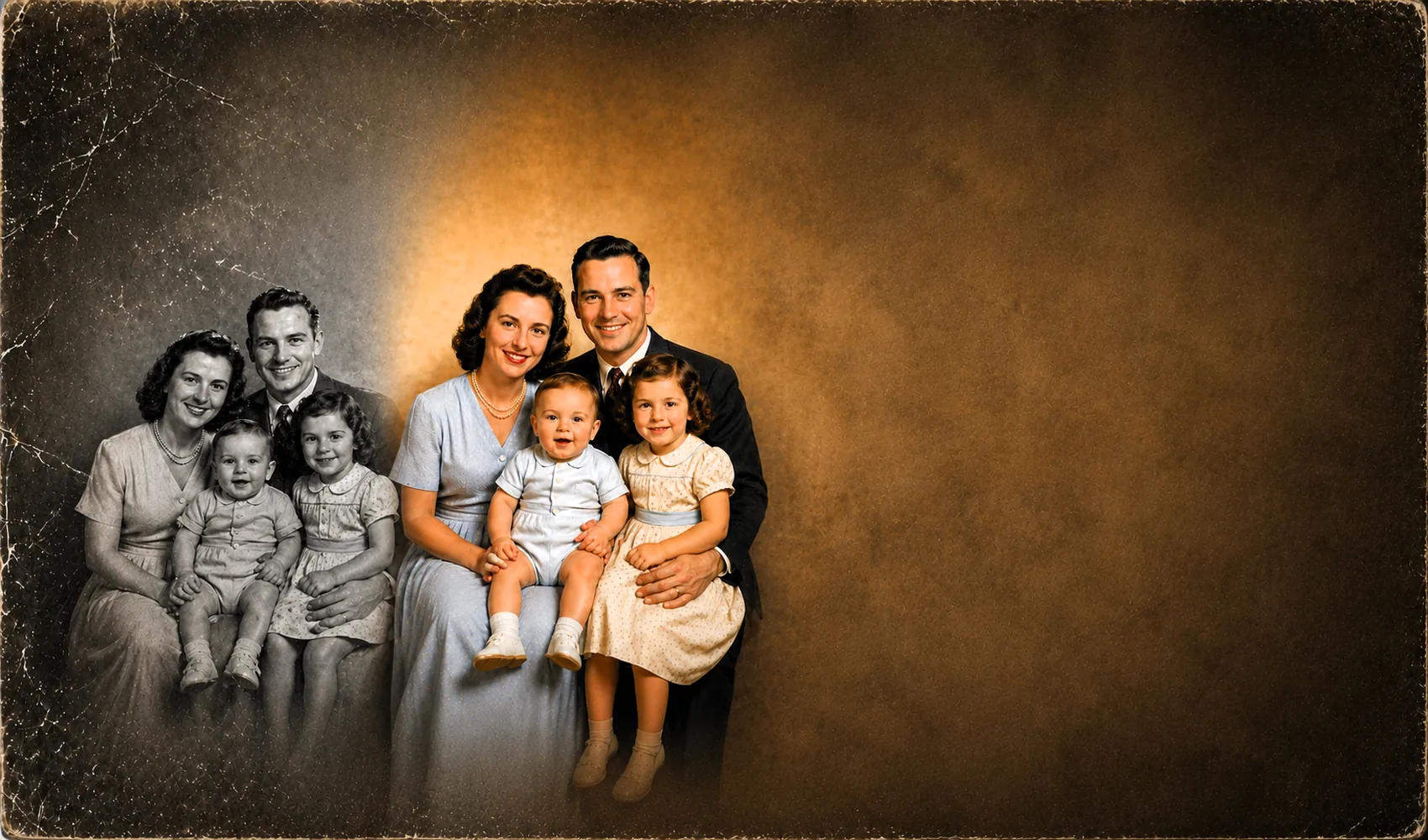
What AI Photo Restoration Can and Can't Fix (And When You Need a Professional)
A professional restorer's honest guide to where AI tools work, where they fail, and why the difference matters for your family photos.
Contents
- AI excels at fixing surface-level damage like dust, scratches, and fading when the original image data still exists in the photograph's emulsion.
- Large missing areas, destroyed facial features, and chemical damage cause AI to generate statistically plausible content that looks real but is not accurate.
- Professional restoration begins with physical examination under controlled lighting to determine what information remains versus what has been lost.
- Forever Studios scans loose photos at 300 DPI (Classic, 50¢) or 600 DPI (Gold, 70¢) and completes most restoration projects in 2–3 weeks.
- Standard photo restoration costs $35 per image; colorization adds $20 for a total of $55.

AI tools can colorize and enhance old photos, but professional restoration addresses complex damage that algorithms often miss.
Forever Studios has incorporated AI photo restoration software into restoration workflows where it serves specific purposes well, while other projects require traditional restoration techniques. Nearly two decades of restoration experience shows which approach each photograph needs. This expertise extends to loose photographs, photo albums, documents, and other family archives received at the Boca Raton facility each day. Scanning occurs at 600 DPI, each image receives individual assessment for restoration requirements, and originals return safely within 2–3 weeks.
"We have seen hundreds of photos arrive after clients attempted AI tools on their own. Surface damage responds well to AI treatment, but genuinely lost image information gets replaced with plausible fabrications instead of actual recovery. Family heirlooms with irreplaceable faces require this accuracy. Our lab examines every photograph under controlled lighting before deciding on the restoration approach, because the physical condition of the emulsion determines what is possible."
Greg E., Preservation Specialist, Forever Studios
What types of photo damage does AI photo restoration fix effectively?
AI photo restoration handles light surface scratches, dust spots, and minor specks effectively. These are localized problems on a small percentage of the image, surrounded by intact areas the AI can reference when filling them in. Scratches that do not cross critical content like faces are handled reliably by AI. Digitization of photographs with light damage benefits from AI cleanup when the underlying image remains intact.
Colorization of historic black-and-white photographs has also improved substantially. Tools like Adobe Firefly produce colorizations that are often historically plausible for era-appropriate clothing, skin tones, and backgrounds. For casual copies of family photos, AI colorization is frequently sufficient. Manual review remains necessary on photos where color accuracy truly matters, but for most family viewing purposes the output is quite goodmily viewing purposes, the output is quite good.

Modern photo restoration software provides accessible tools for evaluating and repairing damaged images at home.
Before any restoration decision can be made, photographs must be digitized properly. Loose photos, prints pulled from albums, and fragile documents require careful handling during scanning. Forever Studios scans loose photographs at 600 DPI, which captures enough detail for both restoration work and future enlargements. Loose photos are priced at 50¢ per image at 300 DPI (Classic scan); Gold scan at 600 DPI adds 20¢ per image for a total of 70¢. Albums are disassembled only when necessary, and originals are always returned in the same condition they arrived.
Forever Studios · Boca Raton, FL
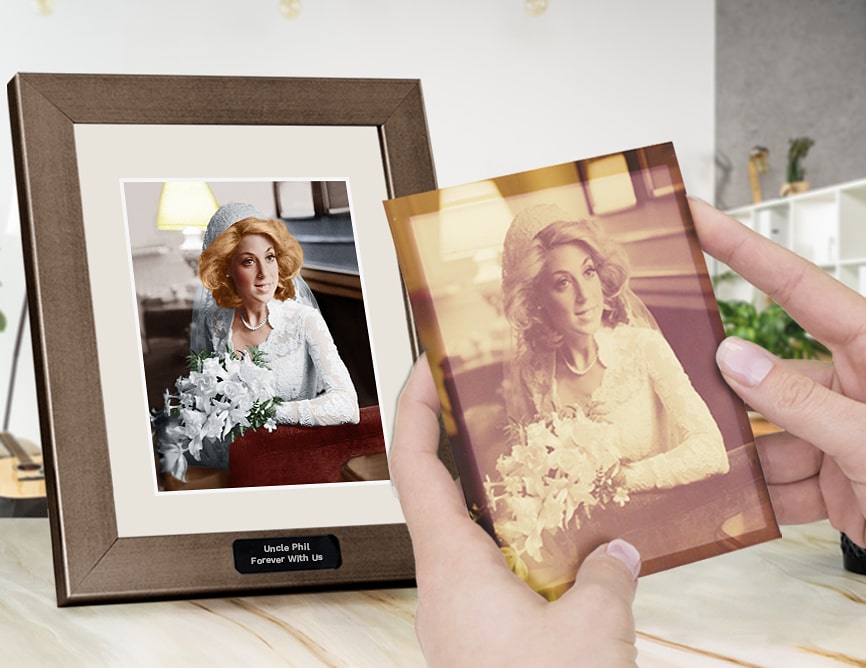
Professional Photo Restoration
Damaged, faded, or torn photos restored by hand by our artists.
GET STARTED →What types of photo damage can AI restoration not fix?
Large missing areas represent AI's biggest limitation. When a photo has been torn and one piece is gone, AI lacks the information to recover it. It generates what it statistically predicts should be there based on similar images in its training dataset. For generic backgrounds or landscapes, the generated content often looks convincing. However, for specific people in specific situations, it generates pure fabrication, a complete inventionates pure fabrication, a complete invention. There is simply not enough image data to recreate the missing parts of the image. Thus, even though the resulting image looks complete, it will not be accurate.

Severely damaged photos with complex deterioration often exceed the capabilities of automated restoration tools.
Why do AI-restored faces look plausible but inaccurate?
When AI fills in a damaged face, it draws on the patterns of many faces in its training data. It generates a face that fits the age, era, and surrounding context of the photograph. The result often looks like a real person, someone's grandmother, but not yours. AI invents a face rather than recovering one.
The details that make a face recognizable are not stored anywhere AI can access. They exist only in the original photographic emulsion, and if that is damaged, AI replaces those details with statistically plausible substitutes assembled from its training data. The result is a face where there was a void, but a composite stranger, not the person you are trying to see. The professional version recovers what is actually there.
How do professionals determine whether a damaged photo can be restored?
The first question when a photograph arrives at the lab is not "how do I fix this?" but "Is the information still there?"
Hidden images and destroyed images are two different categories requiring different approaches. Hidden images have information concealed under surface dirt, discoloration, or chemical changes affecting only the outer layers of the emulsion. Destroyed images have lost information due to physical or chemical damage that caused irreversible changes. Hidden images can be completely restored using specialized scanning techniques and manual correctionial scanning and manual correction. However, Destroyed information cannot be accurately restored with today’s technology, because the degradation has caused the light-sensitive layer to completely break down. This is true for every single loose photo, album page or document that comes to Forever Studios for restoration. Each item is first evaluated, then scanned at 600 DPI to check how much detail is left in the emulsion and then a recommendation is made for the necessary restoration work.

Trained conservators assess damage patterns, material stability, and image detail to determine the most effective restoration approach.
When is AI photo restoration good enough for family photos?
AI photo restoration is sufficient when the damage is superficial and the underlying image data remains intact. For display copies of family photographs where light fading, dust, and minor scratches are the only issues, AI tools produce acceptable results quickly. When colorization is desired for casual viewing purposes and historical plausibility is more important than perfect accuracy, AI colorization tools like Adobe Firefly perform well. The decision to use AI should be based on the intended use of the photograph. If the image is one of several copies and the goal is a cleaned-up version for digital display, AI is often appropriate. However, if the photograph is an irreplaceable original with damage affecting critical details like faces, professional restoration ensures that what is recovered is accurate rather than plausible fiction.
Forever Studios · Boca Raton, FL
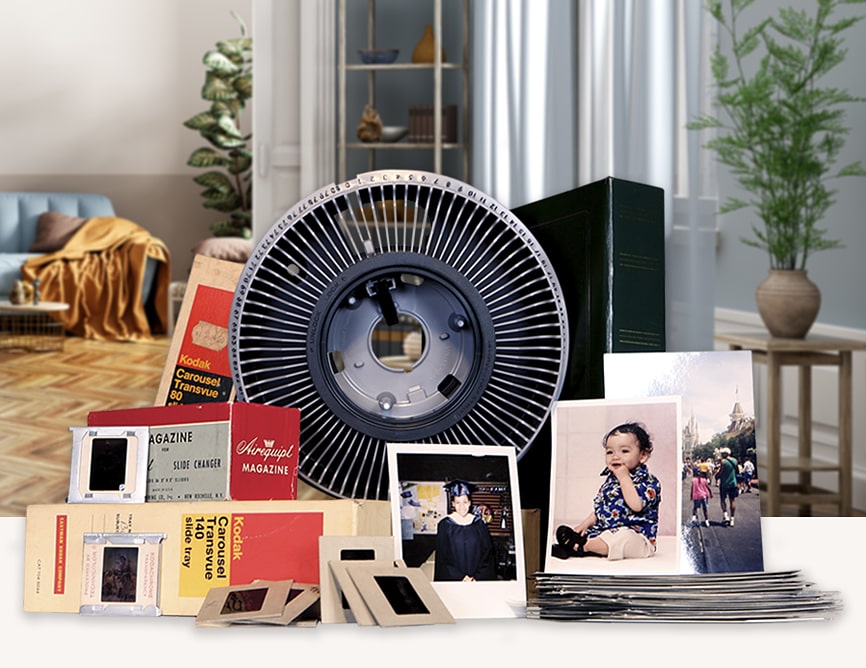
Photo Scanning Service
High-resolution scanning for prints, albums, and loose photos.
LEARN MORE →Which damaged photos should be repaired with AI versus professional restoration?
A practical guide based on nearly two decades of professional restoration work across every category of photographic damage:
Try AI restoration first:
Lightly faded color prints from the 1970s–1990s respond well to AI color correction. Minor dust, scratches, and surface spots on photographs where faces are intact and undamaged can be cleaned reliably by neural filters. Black-and-white photographs with good tonal range that need colorization for display copies are a strong candidate for AI tools. Scanned slides or negatives with consistent exposure issues across a batch respond well to automated correctionre issues benefit from AI batch processing. If the damage is surface-level and the underlying image information is clearly visible, AI will save you time and money.
Send to a professional
Automated programs cannot restore torn photographs with missing parts of faces because the information is physically absent. Water-damaged prints must be physically stabilized before scanning to prevent further emulsion loss. Chemical silvering, foxing, mold stains and smoke damage affect the image on a molecular level and therefore have to be manually corrected. This correction must be based on physical inspection of the emulsion and manual judgment about what information remains recoverable versus what has been permanently lost the remaining parts of the image and must not be based on a statistical model. Photos of faces that are damaged in some way have to be restored by professionals. If a photo is the only existing image of a person or of an event, the potential cost of an error made once is greater than the cost of doing things correctly from the start.
If you are unsure which category your photos fall into, most professional labs offer a free assessment. Send a scan and a professional can tell you honestly whether AI would serve you well or whether it would generate a plausible stranger where your family member should be. You can also read our full breakdown of how long photographic media lasts to understand the timeline of deterioration for different formats.

Starting with less damaged photographs helps establish baseline expectations for restoration results.
How do I know if my photo is too damaged for AI restoration?+
Q: How do I know if my photo is too damaged for AI restoration?, A: If damage has destroyed the photographic emulsion rather than just obscuring it, AI cannot recover the lost information. Water damage that has caused the emulsion to separate, chemical degradation like silvering or foxing, mold that has consumed portions of the image layer, or fire and smoke damage all fall into this category. A professional assessment examines the physical photograph under controlled lighting to determine whether image information still exists in the emulsion. Forever Studios offers free assessments on loose photos, album scans, and documents. Send us a scan or mail thermine whether image information still exists in the emulsion. Forever Studios offers free assessments on loose photos, album scans, and documents. Send us a scan or mail the originals, and we will tell you honestly whether AI would serve you well or whether manual restoration is necessary. Our standard service scans at 600 DPI, includes unlimited restoration revisions where needed, and returns originals within 2–3 weeks.
Why does my AI-restored photo look good but not quite right?+
Most AI powered photo restoration tools work by creating a statistically likely solution to the missing parts of an image, whether it be missing edges or an entire face. In many instances the image will have been restored to a point where the completed section looks very realistic but is in fact incorrect. Instead of accurately restoring the missing area the AI has created plausible detail and it will nearly always contain minor but obvious differences to other photos of the same person.
Can AI restore a photo that has been ripped in half?+
When a torn photograph is provided to AI software, the program cannot recover any missing information from the image. Instead, the program will use the statistical information in its training data to create new information to fill in the missing portion of the image. For example, backgrounds and generic scenes can be quite convincingly filled-in by AI. However, images containing faces and specific details will be entirely invention by the AI program and should not be relied upon to recover information from a torn image. Professional image restoration can stabilize an existing image and provide a client with an accurate assessment of what can be recovered from a torn image and what cannot.
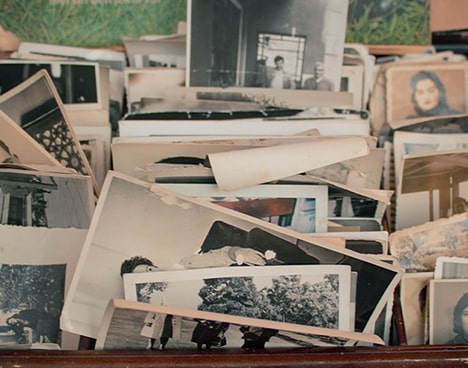
What should I do with boxes of old loose photos and albums?+
Digitize them before further deterioration occurs. Forever Studios scans loose photographs starting at 50¢ per image at 300 DPI (600 DPI available at 70¢), handles photo albums and documents with careful disassembly only when necessary, and returns all originals safely within 2–3 weeks. Once scanned, you can decide which images need restoration. Standard photo restoration is priced at $35 flat, with additional services available for reconstruction ($50), colorization ($20), or rush turnaround ($20). We provide a free assessment if you are unsure which photos need professional work versus simple scanning. Send a sample scan or mail your collection, and we will tell you honestly what each photograph requires.
★★★★★
"I didn't think it was possible to have a photo, that was badly damaged, come back to life. My grandfather worked around greasy machinery and the photo came from his dirty wallet. It was bumpy and had scratches that I couldn't fix in Photoshop. My jaw dropped when I saw this photo come back looking like it did when it was brand new. Forever thankful!"
Debbie, verified customer review
★★★★★
"I didn't think it was possible to have a photo, that was badly damaged, come back to life. My grandfather worked around greasy machinery and the photo came from his dirty wallet. It was bumpy and had scratches that I couldn't fix in Photoshop. My jaw dropped when I saw this photo come back looking like it did when it was brand new. Forever thankful!"
Debbie, verified customer review
What does professional photo restoration include that AI tools cannot do?
Physical examination of photographs prior to digital work is the first step in the restoration process. The physical images are examined by hand under controlled lighting to determine what is left in the emulsion and what has been lost. This initial physical assessment determines how best to scan the image, what corrections need to be made first, and how to approach difficult damage patterns decisions when an area is ambiguous.

Professional restoration combines digital tools with trained judgment to preserve the authentic character of original photographs.
Ready to digitize it right the first time?
Bring your tapes, film, and photos to the team that treats every project as irreplaceable. All work is handled in-house in Boca Raton, never outsourced.