The Top 5 Most Important Movies Shot on a Camcorder
Discover the charm of movies shot on a camcorder, capturing authentic moments with a nostalgic feel. Perfect for indie films and personal projects.
Contents
Camcorder or found-footage films are unique in cinema because they are meant to be raw and unfiltered (or styled that way). They're an art form that focuses on the characters' perspectives, not an onlooker's typical third-person point of view. They drag the viewer into the action, blurring the barrier between the events of the film and the inherent detachment of a bystander. And they’re all the result of a revolution in home electronics called the camcorder.

A Brief History of the Consumer Camcorder:
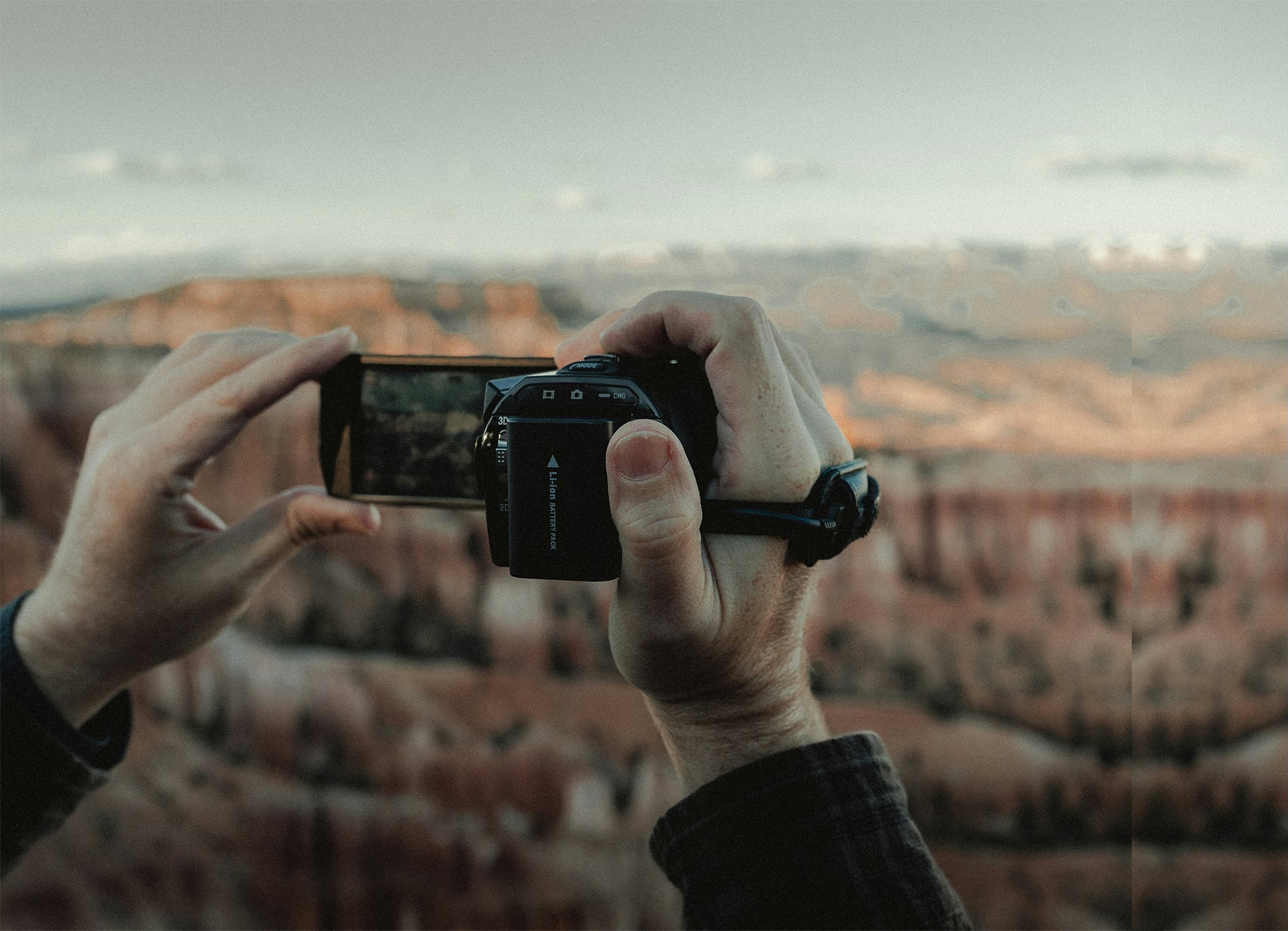
The arrival of consumer-grade camcorders in the early 1980s, especially with the launch of products like the Sony Betamovie, made homemade movies affordable and accessible. It was a cultural phenomenon. All of a sudden, everyone was filming their Christmas mornings and birthdays. While others (who would otherwise be known as geeks at the time) were creating amateur films with a dream of becoming actual filmmakers.

Homemade Star Wars movie!
WHY WERE CAMCORDERS SO POPULAR?
Camcorders were very useful. The videotapes were reusable, and the content could be viewed directly on home TVs, allowing the whole family to rewatch the drama of family get-togethers or little Timmy's best attempts at recreating Star Wars.
Camcorders and the Found Footage Genre of Film
The image quality of a camcorder film has become a statement, a distinctive aesthetic that mainly defines the horror movie genre. Camcorder feature films utilize consumer-grade video cameras rather than the sophisticated film stock or professional digital cinema cameras that are standard in the film industry.

Digitize your movies today!
WHAT MAKES THE FOUND-FOOTAGE GENRE UNIQUE?
The found-footage genre typically has a low-budget, low-production aesthetic often associated with indie films. It's the perfect way for amateur filmmakers to produce narrative films and share their stories despite limited resources. It simplifies the process, and there's no need for expensive film strips or film stock.

Whether you’re an amateur filmmaker or a professional, camcorders are a great way to make your next movie.
WHAT MAKES A CAMCORDER MOVIE “FOUND-FOOTAGE?”
The cinematic technique of found footage presents the storyline from the characters' perspectives as they record their environment accompanied by commentary and audible reactions. Often, movies reveal that the footage was later "found" and presented as evidence or research. In some cases, camcorder movies are actually shot by the actor, making the effect more realistic.
WHAT GENRES USE CAMCORDER MOVIES?
As mentioned before, camcorder movies are typically associated with the horror genre, where the grittiness and often indistinct picture elements are more forgiving of iffy image quality. The grainy, raw film often enhances the unsettling atmosphere.

Horror Movies!
Our Selections for the Best Movies Shot on Camcorders:
Many low-budget "real-footage" films have acquired a notable following and significantly impacted the film industry. Before I get into my list, let me state that there are no 100% right answers to which ones were the most significant. As one of my favorite TikTokers (SammyJReacts) would say, It's my list; I cannot miss. If you disagree with my opinions, I'm sorry.
DISHONORABLE MENTIONS:
So, dishonorable mentions are The Connection (1961) by Shirley Clarke and Cannibal Holocaust (1985) by Ruggero Deodato. Both movies have significant controversy surrounding them, so I won't go into details for the sake of my readers and my sanity. They are known as two of the earliest found-footage movies in the film industry, and each had a significant influence on the genre in their own way.
The Blair Witch Project:
The Blair Witch Project (1999) by Daniel Myrick and Eduardo Sánchez was immensely successful and still has quite a cult following with horror fans. The movie centers around three wannabe filmmakers: Heather, Michael, and Joshua. Against any common sense, they go for an oh-so-lovely hike into the Black Hills to shoot a documentary on the Blair Witch. Like in a good horror movie, they go missing, and the found footage "shows" what they went through.

The Blair Witch Project poster (https://www.imdb.com/title/tt0185937/)
WHAT WAS THE BUDGET FOR THE BLAIR WITCH PROJECT?
The original production budget was really low, like $30,000-$60,000 (after post-edits, the budget for the finished film turned out to be closer to $200k–750k). The movie made millions at the box office!
WHAT CAMERA WAS USED FOR THE BLAIR WITCH PROJECT?
The movie was shot with a CP-16 film camera and a Hi8 video camcorder. Heather Donahue had never actually used a camera before, so she took a "crash course" before shooting started. Despite having very limited information on what she was doing and no professional education, she did a bang-up job shooting that movie.

The Blair Witch Project promotional poster (https://fortune.com)
FUN FACTS ABOUT THE BLAIR WITCH PROJECT:
Twenty hours of film were shot, and it was edited down to only 82 minutes (am I the only person who wants to see the entirety of that 20 hours?). The marketing campaign was absolutely brilliant, listing all the actors as missing or deceased (no one was actually hurt, of course). It generated so much hype. And! And! A lot of the dialogue was improvised!
Cloverfield:
The Cloverfield science fiction anthology franchise by Matt Reeves and J.J. Abrams (Cloverfield Lane, Cloverfield Station, etc.) follows various storylines of interdimensional creatures attacking Earth because of an outer space experiment to find a new energy source. True to any decent Syfy movie, the experiment gets messed up and opens multiple portals that allow monsters to wreak pure havoc.

Cloverfield (https://www.imdb.com/title/tt1060277/)
WHAT CAMERA WAS USED FOR CLOVERFIELD?
The science fiction horror films were shot with a Panasonic HVX200 for interior scenes and the Sony CineAlta F23 camera for exterior scenes. The movies were edited in a cinéma vérité style to copy the aesthetic look of hand-held cameras. T.J. Miller, Hud, actually taped quite a bit, and almost half of it made it into the finished film.
REC:
REC (2007) is a Spanish zombie flick that follows Angela, a TV host, and her cameraman, Pablo, as they shadow firefighters during the night shift. For the sake of brevity, it is a zombie movie with a lot of people making dumb decisions, a bunch of biting, and, well… stuff I watched way too early in life. Lol.
FUN FACTS ABOUT REC:
REC is a true example of what a mock documentary movie is supposed to be. It's claustrophobic and confusing. Unfortunately, I can't for the life of me find info on the camera used to shoot the film. All I can find is information on the "shaky-cam" technique and how the approval ratings for the film were relatively all positive despite the movie having "no depth."

REC (https://www.imdb.com/title/tt1038988/)
HOW DID REC BECOME A SUCCESSFUL FRANCHISE:
REC (and, in the following years, the direct sequels) premiered at the Venice International Film Festival and various other competition events. So, let this be a lesson to all the aspiring filmmakers who want to be the next Quentin Tarantino or Steven Spielberg; hang in there. Maybe submit your work to a film competition like Sundance.
Project X:
Project X (2012) is a comedy/crime movie that follows three friends on their epic attempt to skyrocket to high school popularity by hosting one hell of a party. Predictably, nothing goes right, and... well, there's a flamethrower involved. It's a really good movie that kinda goes off the rails.

Project X (https://www.imdb.com/title/tt1636826/)
WHAT WAS PROJECT X BASED ON?
The producer, Todd Phillips, and Michael Bacall, the main writer, created an amalgamation of all the best and craziest high school party stories they heard or were a part of and used that as the basis for Project X. It is rumored that the movie was also based on an epic, out-of-control party that happened in Australia hosted by Corey Worthington (circa 2008).
WHAT CAMERA WAS USED FOR PROJECT X?
The film was shot with a digital HD Sony F23 video camera because of its ability to handle various different light situations (from daylight to erratic strobe lights). Other character perspectives were filmed with iPhones and BlackBerrys.
WHY IS PROJECT X A COMPELLING MOVIE TO WATCH?
Much like Cloverfield, Project X was shot utilizing the "cinéma vérité" technique to showcase the realism of a teenage party and the partiers' antics. The movie purposefully pulls the audience into the out-of-control party so that they would feel like they were part of the crowd.
As Above, So Below:
As Above, So Below (2014) by John Erick Dowdle and Drew Dowdle is my Roman Empire (those who get it will know what I mean). It's been stuck in my head from the first time I saw it. For those who don't know, the movie is about an archaeologist looking for the Philosopher's Stone (the myth about the stone is not just Harry Potter-related) in the Paris catacombs. If you read Dante's Inferno or you know anything about it, that is the basic gist of the entire movie, and it is amazing.

The entrance to the Paris catacombs.
FUN FACTS ABOUT AS ABOVE, SO BELOW:
I am such a huge fan of As Above, So Below that I could wax poetic for an entire essay. The overall ratings for the movie were mid-range to negative, but I disagree completely. For your sake, not mine, I will forgo my Ted talk and merely leave you with my favorite quote of all time: "Abandon all hope, ye who enter here."
As Above, So Below was shot in the Paris catacombs. The director wanted an Indiana Jones-style movie that played on the reality of people getting lost in the labyrinth that is the catacombs. I can't find info on the cameras they used to create the film, but there is no electricity or cell service so far underground, so everything was shot as a documentary and lit up by headlamps.
How Did These Movies Influence the Film Industry?
Found-footage movies change the way that the audience interprets and enjoys the film. They force you to feel like you're participating actively in the movie instead of just being bystanders. Older found-footage movies have paved the way for documentary-style films to become the norm (i.e., Face 2 Face and Hardcore Henry, which were shot with GoPros) and have influenced amateur filmmakers to create their own stories that they can debut to the world.

Debut your movies to the world!
What Should You Do With Your Old Camcorder Tapes?
If any of my dear readers are filmmakers (hi, thank you for reading), it would be very prudent to digitize your old camcorder tapes. No matter whether your camera employed mini DVDs or tapes, your precious videos are likely to be lost to time without proper preservation. Digitizing them at companies like Forever Studios will give them new life and make them accessible to a larger audience. So what are you waiting for! We’d love to see your old “found footage films” from back in the day!

Ready to digitize it right the first time?
Bring your tapes, film, and photos to the team that treats every project as irreplaceable. All work is handled in-house in Boca Raton, never outsourced.