Betamax vs. VHS Tapes: What is the Difference?
Discover the differences between Betamax and VHS tapes, learn which analog tape format was superior and why.
Contents
- Betamax offered 500-line resolution compared to VHS's 240 lines and superior Hi-Fi audio quality.
- VHS won the format war with longer recording times (up to 4 hours vs. 1-2 hours) and lower production costs.
- VHS gained broader manufacturer support from JVC and multiple electronics companies while Sony primarily backed Betamax alone.
- Sony ceased Betamax production in March 2016 after 41 years of manufacturing.
- Both formats face magnetic tape degradation and should be digitized to preserve recorded content.
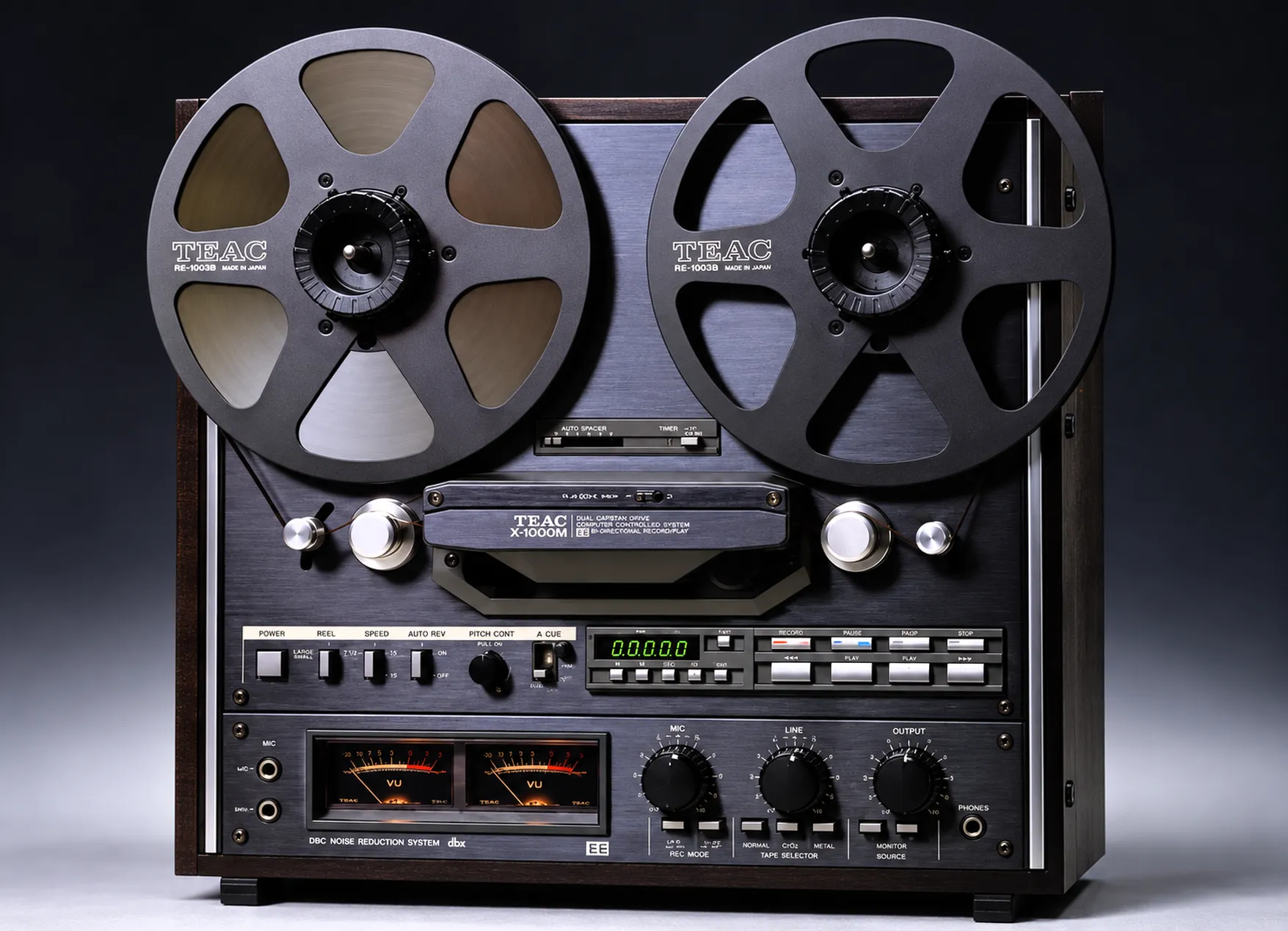
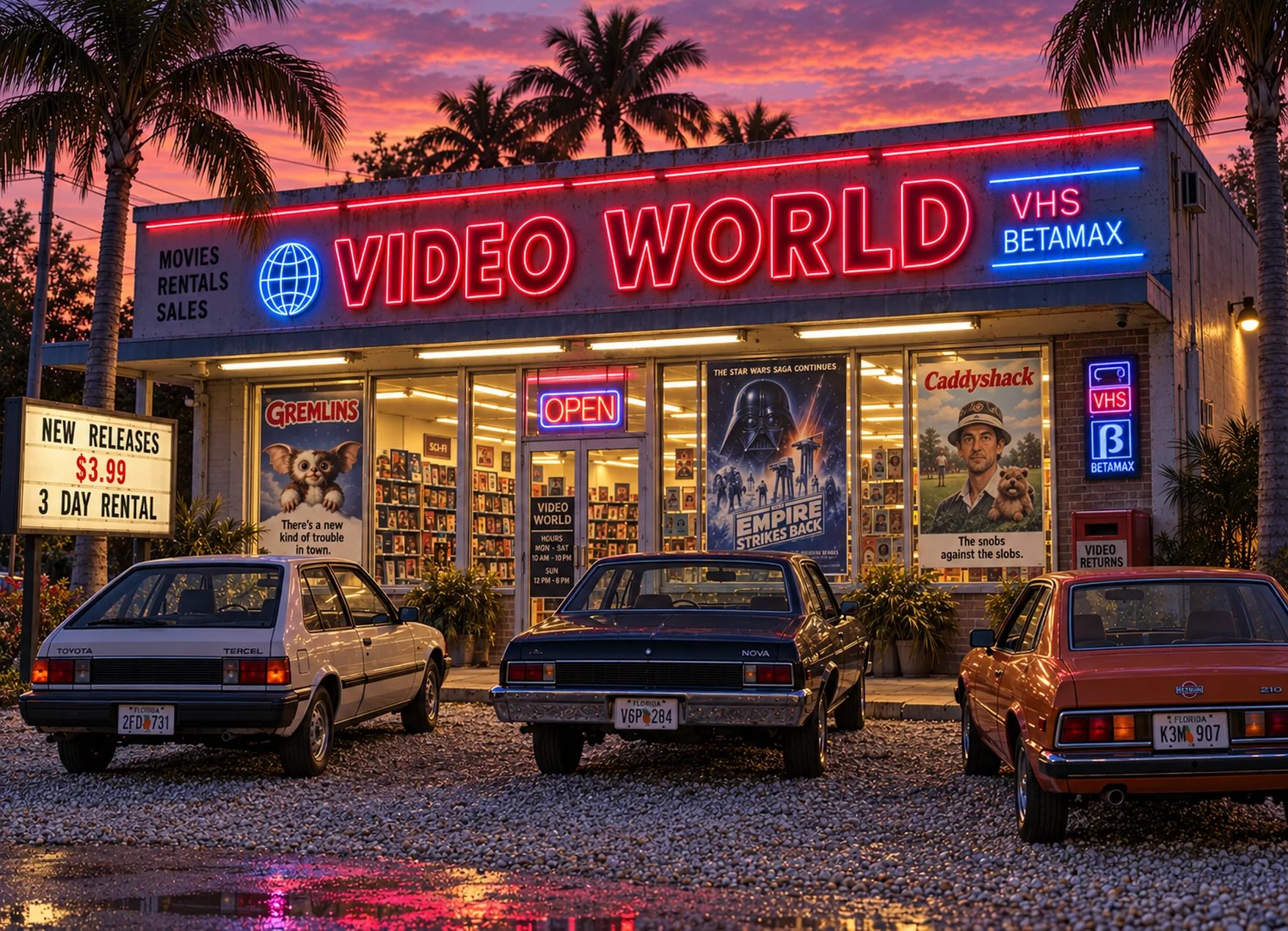
Two formats fought for dominance of home video recording: Betamax and VHS (or Video Home System). To most people Betamax and VHS are simply two brands of video tape. In fact, they were two quite distinct videotape formats, each requiring its own video players and recorders that were not compatible with the others. The Format War battles played out in video rental stores and consumer electronics showrooms throughout the late 1970s and 1980s. in living rooms around the world.
What Are the Technical Differences Between Betamax and VHS?
At Forever Studios we digitize your Betamax or VHS tapes to the format of your choice. We have special equipment to play back most older formats of videotape and have been converting tapes since 2007.
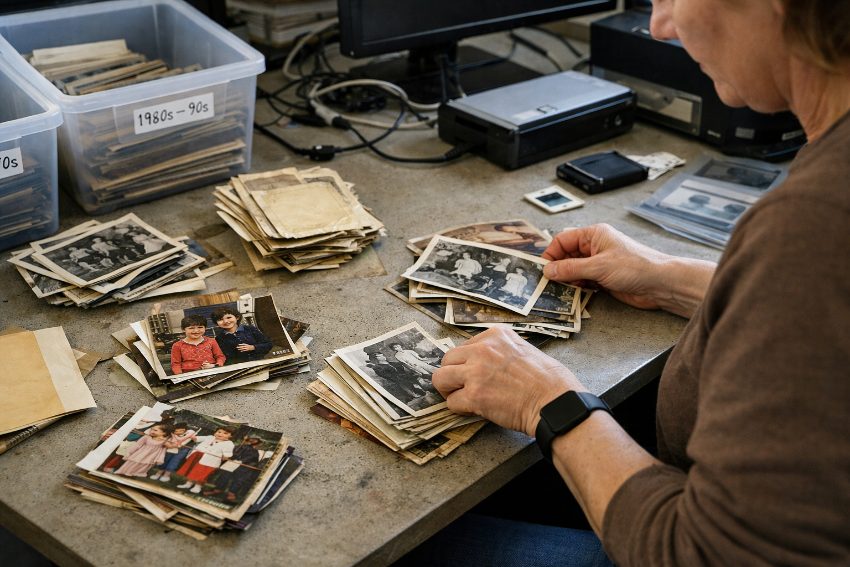
At Forever Studios we specialize in the videotape digitization and photo restoration of old pictures and films. We work with families and organizations globally to transfer memories from old media such as VHS, Betamax, 8mm film, audio cassettes, and old photographs to modern formats. Our goal is to help safely transfer your memories to the latest media for future generations.
"We frequently work with both Betamax and VHS tapes in various states of preservation. Many clients are surprised when their Betamax tapes show better image quality after decades of storage than VHS tapes from the same era. This happens because Betamax had superior recording specifications. However, both formats face the same enemy: magnetic tape degradation. We recommend digitizing all tapes regardless of format before further deterioration occurs and before playback equipment becomes completely unavailable."
Heather F., Preservation Specialist, Forever Studios
How Did the Betamax vs. VHS Format War Begin?
Both the Betamax and VHS video technologies were introduced in the 1970s. Sony developed Betamax and released it in 1975, while JVC introduced VHS in 1976. Both formats were aiming to be the first with mass adoption that could bring entire movies to home audiences. Both formats provided the first ways for consumers to record and watch television programs and movies at home video record and play back video content at home video recording television onto blank tapes.
Ultimately the winning movie distribution format will be a product of many parties looking to fulfill their wants and needs, including the major movie studios, the retail side of movie rental stores, and the various needs of individual home consumers.
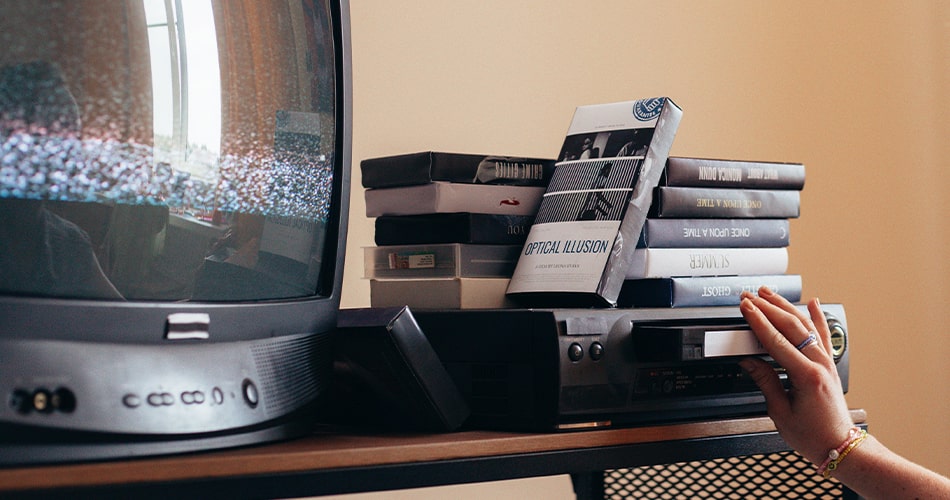
The format war between Betamax and VHS played out in living rooms where consumers chose between competing technologies.
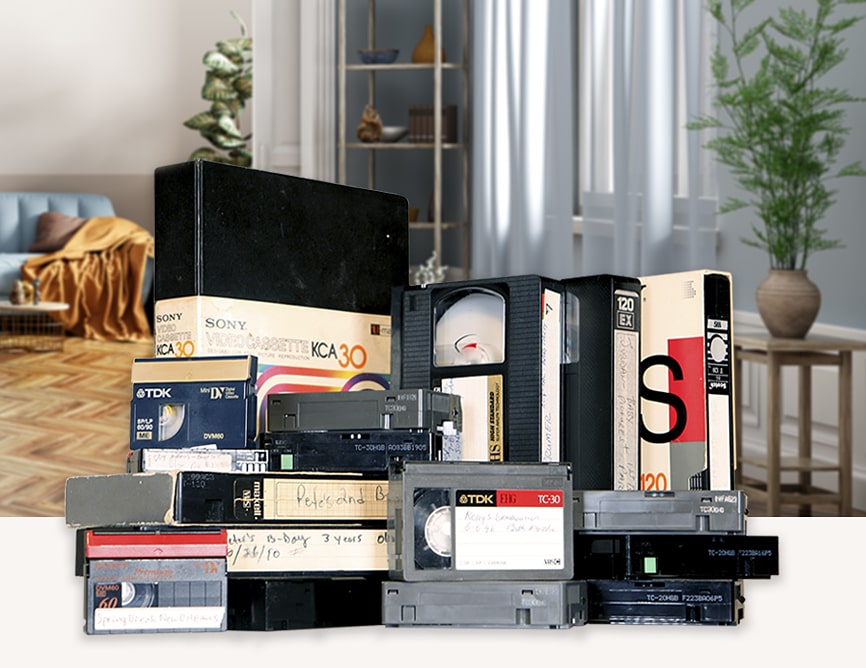
One of the main differences between Betamax and VHS was the cassette size. Betamax cassettes were smaller, allowing for a more compact design of the player, while VHS cassettes were approximately twice the size of a Betamax cartridge. The Betamax cassettes have thicker shells and play quieter than VHS cassettes. The VHS cassettes have thinner and more pliable cartridges than Betamax.
Also, within the tape itself, there were marked differences in video resolution between the two systems. The Betamax video tape was designed to deliver higher resolution video than VHS, in fact as high as 500 horizontal lines as opposed to VHS at 240 horizontal lines. Although later VHS models approached Betamax quality for video, in terms of build quality, reliability and low video noise, early models were actually better than their VHS counterparts, delivering a higher quality video experience.
Forever Studios · Boca Raton, FL
VHS Tape Transfer
We clean, repair, and digitize VHS and camcorder tapes, including flood-recovery cases.
GET STARTED →Professionals preferred Betamax for home studios because of its Hi-Fi audio quality, which early VHS lacked. By most technical measures, Betamax delivered superior video and audio quality. Market forces, however, operated on different priorities than technical excellence. And the premium price model of Betamax may have been a bigger factor than the superior image quality when it came to determining a winner.
Despite Betamax's superior technology, VHS was cheaper to produce and its tapes recorded more hours of content. The longer recording time was what gave VHS tapes the edge, as people could use their video cassette recorders to tape multiple movies or multiple shows on one tape and maximize hours of content available on one tape. Few consumers prioritized maximum quality over convenience and costrs prioritized absolute quality over the practical ability to record entire movies or sporting events on a single tape recorder pre-recorded movies had to be split across multiple tapes. The cheaper per unit price also ended up making it more popular in the booming video rental market. When people are making decisions with their wallets, and businesses have profit margins to worry about, image quality sometimes isn't the deciding factor.
Did Betamax Really Have Better Video Quality Than VHS?
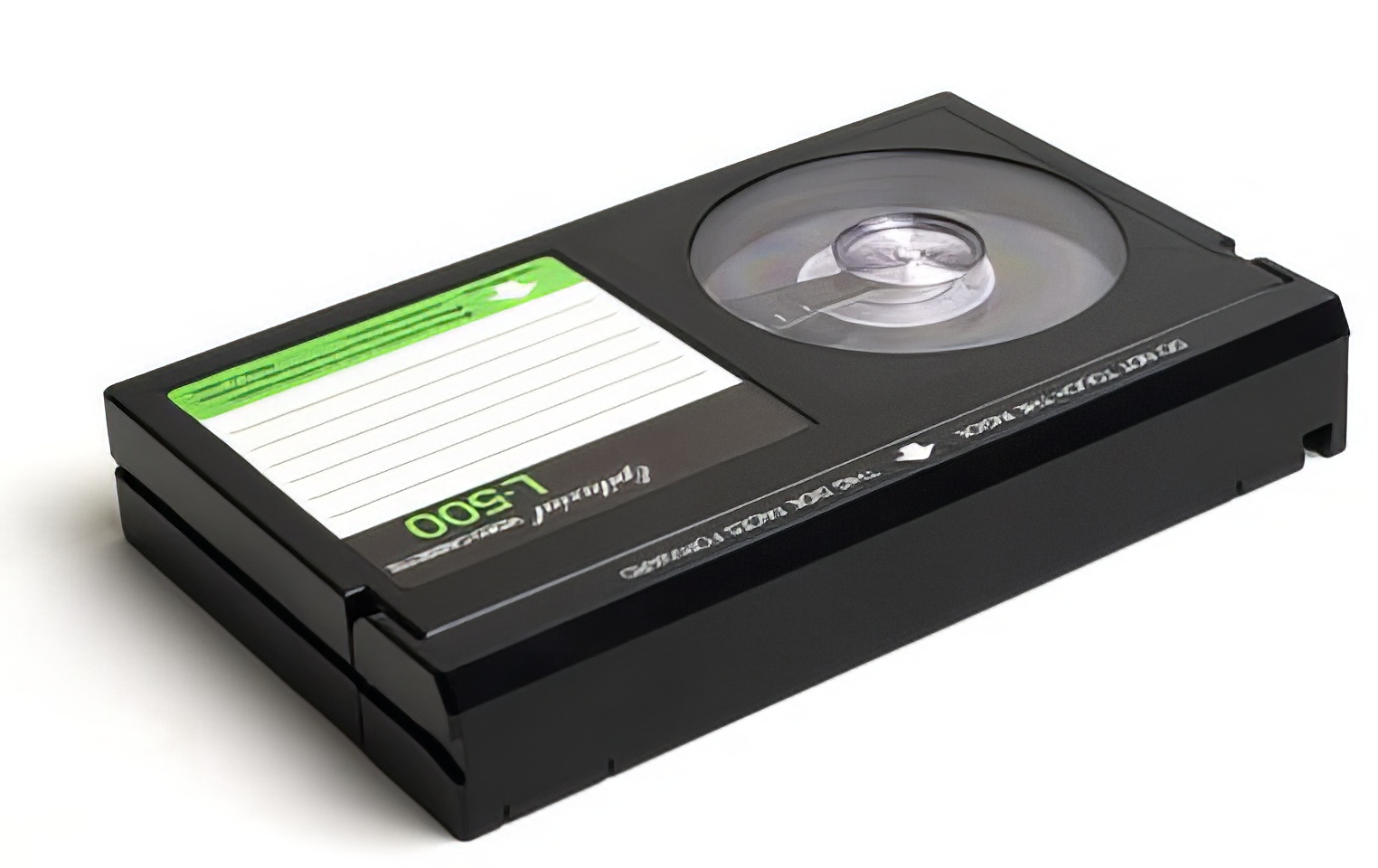
Betamax cartridges featured a more compact design that prioritized video quality over extended recording time.
The VHS format reduced the resolution of images to enable economy by longer playing tapes. The Betamax approach was to reduce the playing time to maximize quality of images and sounds. This was the crux of the format war.
How Can You Convert Betamax and VHS Tapes to Digital?
Looking back on media history with the benefit of retrospect reveals how market dynamics shaped technology adoption. And today, we live in a world where both Betamax and VHS are old enough that many kids don't even know what either of them are. If you want to view media stored on old tapes, you may have discovered that your equipment no longer works or that you lack functioning playback devices or a display to connect them to. And don't even get us started on the price of properly functioning VHS and Betamax players these days.
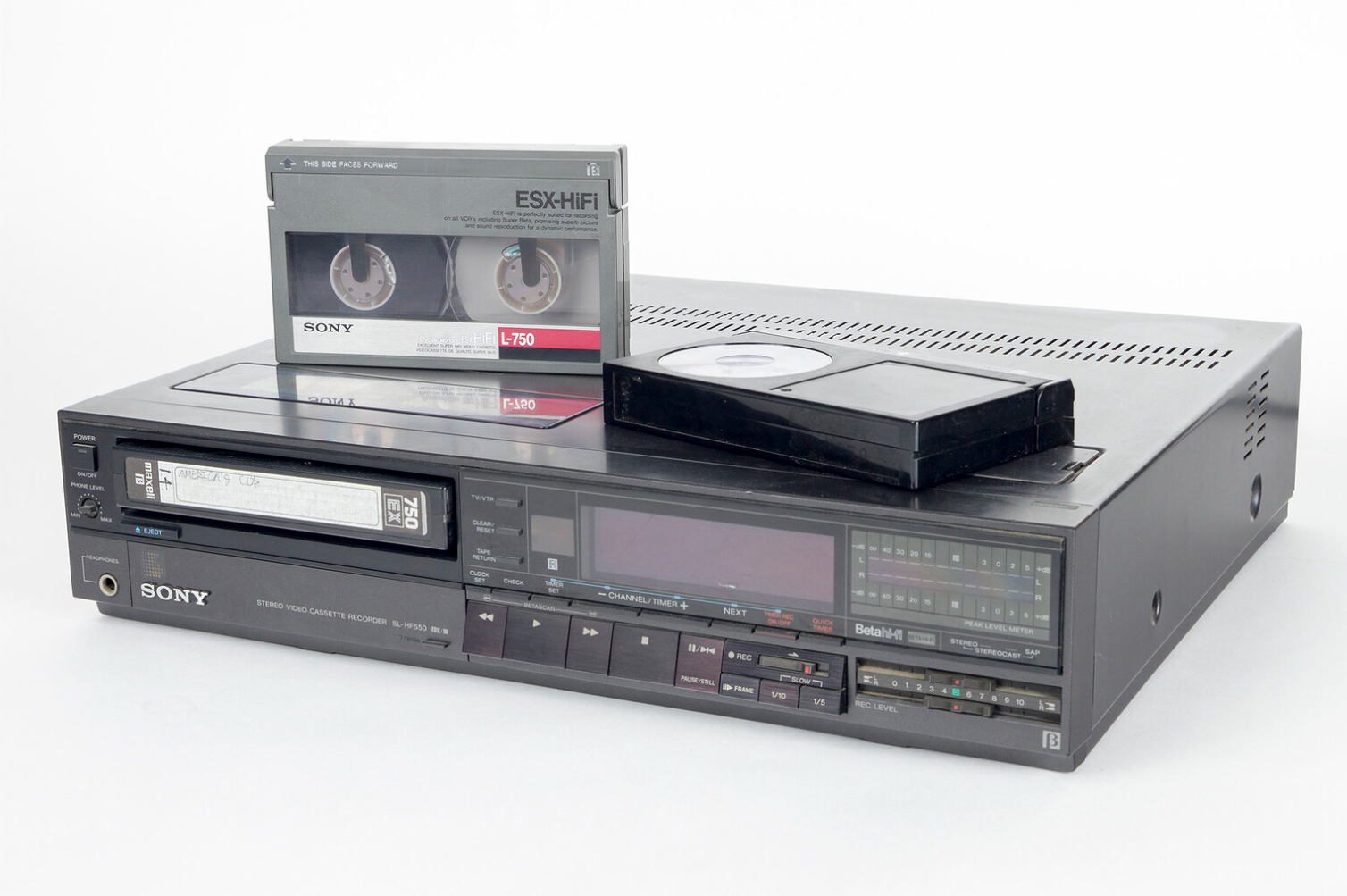
Professional video transfer services use specialized equipment to digitize both VHS and Betamax formats while preserving original quality.
Forever Studios · Boca Raton, FL
VHS Tape Transfer
We clean, repair, and digitize VHS and camcorder tapes, including flood-recovery cases.
GET STARTED →Don’t Toss Them All! Forever Studios specializes in transferring VHS tapes to digital video and even more importantly, transferring your precious Betamax tapes to digital video as well. Our media transfer services were developed in-house by a very special, handpicked and experienced group of media transfer experts who individually work on each and every order to guarantee the highest quality possible transfer of all your precious recordings. Forever Studios can transfer almost any format of old analog video and we can output in almost any digital video format that you desire. We can place the transferred recordings on DVD, on a thumb drive or even in our Forever Cloud – a virtual storage facility for your personal collection that can be accessed from your computer, your tablet or your smart phone.
★★★★★
"So glad I finally did the transfers of my VHS tapes to digital! Some of my tapes were 40 years old. Now I can scan through them easily on my computer or TV. I'm getting ready to send in my next order of mini cassette tapes to have digitized as well."
Ava, verified customer review
Why Did VHS Win the Format War Against Betamax?
Several factors contributed to the lack of widespread adoption of Betamax and its eventual demise as a consumer video format.
Higher cost: There were higher costs for the Betamax machines as opposed to their VHS counterparts. In many cases, a Betamax machine would cost several hundred dollars more than a comparable VHS model.
Early Betamax videocassette tapes had a limited recording time of 1-2 hours, compared to VHS tapes that could hold up to 4 hours of recording time. This aspect made VHS tapes more suitable for users who wanted to record movies and sports events.
Lack of support: While Sony was the primary manufacturer of Betamax machines and tapes, many other electronics companies supported the VHS format. This created more VHS options for consumers across price points and feature sets. Sony later won the Blu-ray vs. HD-DVD format war despite facing similar market challenges.
Marketing: VHS manufacturers, led by JVC, were more aggressive in marketing their format and convincing retailers to stock their machines and tapes. This gave VHS a significant advantage in the marketplace.
With all these issues VHS became the dominant video format by the mid 1980s and as a result Betamax sales declined dramatically until production was finally stopped.
Can Betamax tapes still be played today?+
Yes, you can play Betamax tapes. Most Betamax machines from the 1980s and 1990s are still working. However, parts for these machines are becoming increasingly scarce and it is getting harder to find people who can repair them. In addition to the risk of magnetic particle loss, tape stock and tape binders deteriorate over time. That is why professional digitization of your Betamax tapes is the best way to preserve them, before it is no longer possible to play them back.
Which format is easier to digitize today, Betamax or VHS?+
VHS is generally easier to digitize because working VHS players are more common and affordable. Professional transfer services like Forever Studios maintain both Betamax and VHS playback equipment, but consumer-level DIY digitization is simpler with VHS due to equipment availability. Betamax players are scarce, expensive, and often require repair or calibration. However, professional services handle both formats equally well, using broadcast-quality capture equipment and time-base correctors to extract the best possible image from deteriorating tapes regardless of format.
How long do VHS and Betamax tapes last before degrading?+
Home videos stored on magnetic media, such as VHS, can last for 10 to 25 years or more if they are properly stored in a cool, dry, dark environment at temperatures between 60°F and 70°F (15°C to 21°C) and at 30% to 40% relative humidity. Unfortunately, most home videos are stored in attics, basements, or garages. These areas are typically warmer, more humid, and subject to greater temperature fluctuations than other parts of the home, and deteriorate rapidly due to magnetic fields. The average home video has a shelf life of 10 to 15 years. Sticky-shed syndrome is the most common problem with magnetic media, and is caused by the deterioration of the binder on the tape surface. The tape then sticks to itself. The Library of Congress and the National Archives recommend the digitization of magnetic media 15 to 20 years after it was created in order to preserve it before it deteriorates irrevocably.

Ready to digitize it right the first time?
Bring your tapes, film, and photos to the team that treats every project as irreplaceable — handled in-house in Boca Raton, never outsourced.