What to Do With Old Photos Found in a Parent's House
A guide to triaging inherited photographs and home videos: what to preserve first, what's most at risk, and when to call a professional.
Contents
Last updated: May 2026
Cleaning out a parent's home is hard. The photographs make it harder.
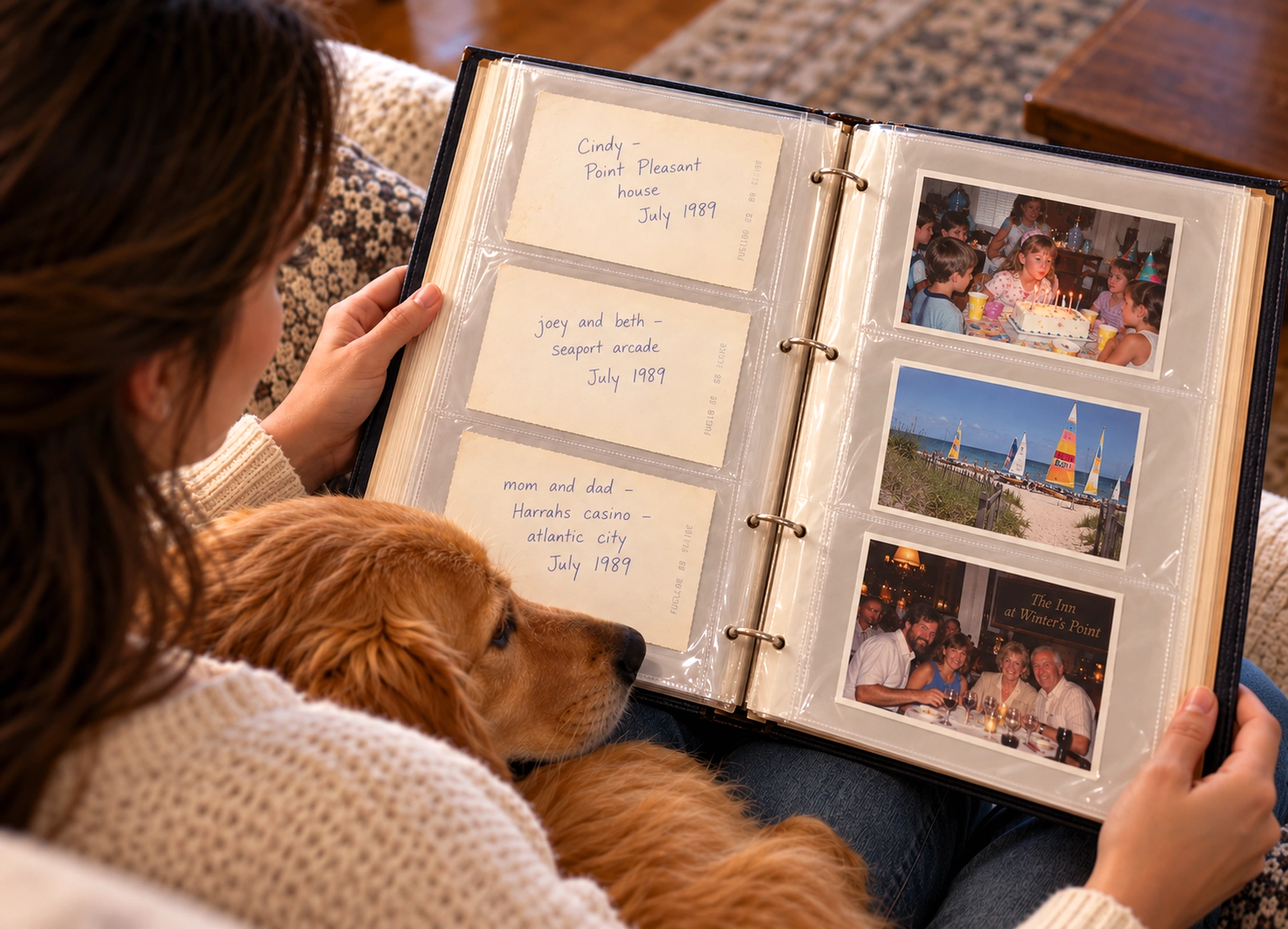
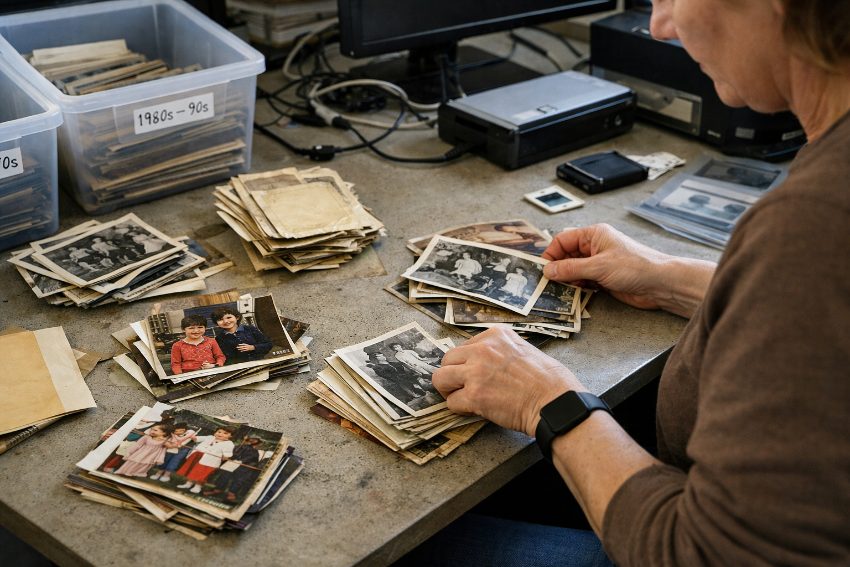
You'll find them everywhere: in shoeboxes under beds, in old albums in the back of closets, tucked inside books, stuffed in a plastic grocery bag with some rubber bands around it. And right next to them, usually, you'll find the tapes. VHS tapes, Hi8 tapes, the little MiniDV cassettes from a camcorder someone got as a gift in the early 2000s.
Here's the thing most people don't know: photographs and tapes are completely different preservation problems, on completely different timelines. We see families treat them as one big pile all the time. That's the first and most expensive mistake.
At Forever Studios, boxes from estates come through our door constantly. The families who call us, almost without exception, say the same thing: they had no idea how urgent it was until they opened the box and found the tape had already started to fail.
Key Takeaways
- VHS tapes and camcorder media are the most urgent item in any inherited collection. Many are at or past their expected 30-year lifespan.
- Do not play old tapes on a home VCR to check what is on them. A fragile tape can be permanently destroyed in under 30 seconds.
- Photographs stored in cardboard boxes or old magnetic peel-and-stick albums are degrading, but on a slower timeline than tape.
- 35mm negatives contain significantly more visual information than the prints made from them. A 4,000 DPI scan often reveals detail the family has never seen before.
- The window to identify who is in old photographs closes as older relatives age. Start labeling while that knowledge is still accessible.
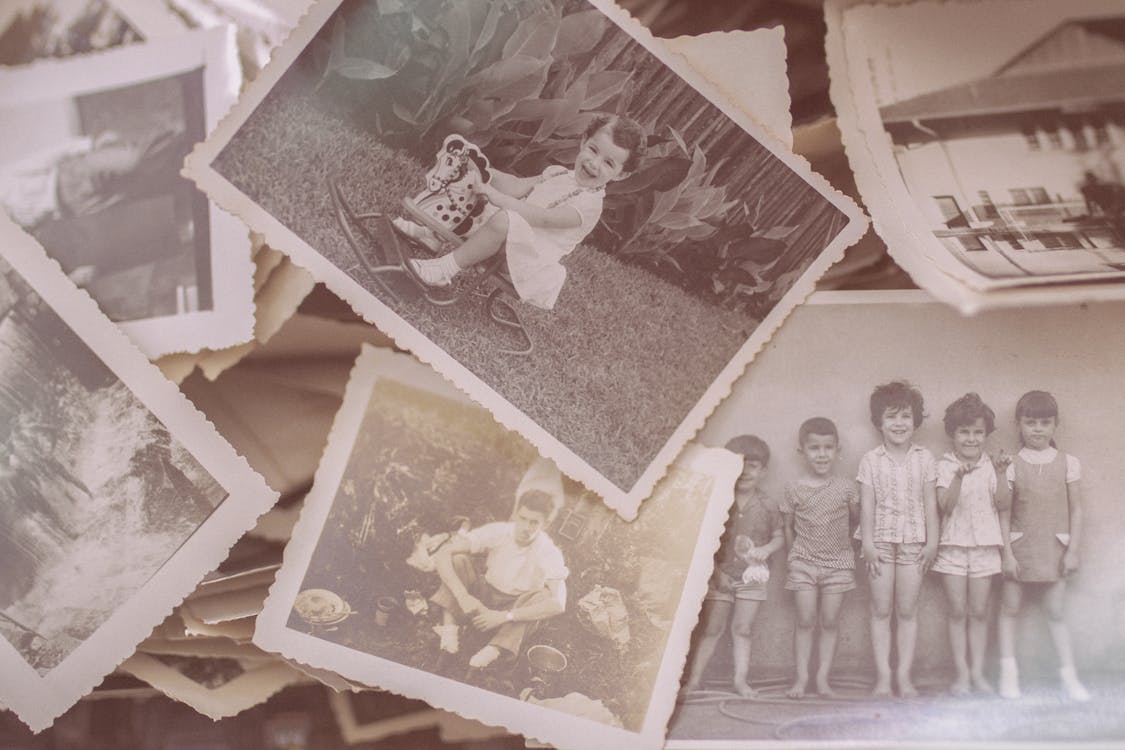
Old family photographs discovered during an estate cleanout. Scattered loose prints are among the most at-risk items in any inherited collection.
The Box Sat in a Closet for 30 Years. Here's the Real Problem With That.
What's happening inside a photograph over time
Pick up an old photograph. The image is there. It looks fine.
The problem is what's happening at the chemical level that you can't see yet.
All printed photographs undergo oxidative deterioration over time. In color prints, the dye layers don't fade at the same rate. Cyan dyes go first. That's why old color photographs look reddish or orange before the image fully breaks down. The cyan has already been lost by the time the photo looks visibly wrong. Black-and-white silver gelatin prints are more stable, but humidity and acidic storage will still damage them.
The cardboard shoebox that most families default to is actually one of the worst things for photographs. Cardboard is acidic. Over years and years, that acid migrates into the paper the photos are printed on and accelerates the breakdown. Store those boxes somewhere humid (a basement, a garage, an attic in Florida) and mold becomes a real possibility too. Small fuzzy spots, often dark or white. By the time you see them, they've already been spreading.
None of this means the photographs are ruined. It means the clock has been running, and it's worth acting before it runs further.
Why magnetic tape is an even more urgent problem
VHS tapes and camcorder tapes are a completely different and more urgent problem. Magnetic tape degrades through a process called hydrolysis. The binder that holds the magnetic particles to the plastic base absorbs moisture over time and eventually breaks down. When that happens, the oxide layer (the layer that actually carries your video signal) starts shedding off the tape during playback. We call this sticky shed syndrome. The tape plays for a few seconds. Brown residue builds up on the playback heads. The machine stops. If the tape keeps running through a machine in that condition, you can lose whatever is on it permanently.
Some tapes with sticky shed syndrome can be baked at low temperature in a modified oven to temporarily restore the binder, which buys enough time for one final capture. Others are already too degraded for that to help. This is why tapes are the crisis item in an estate collection. Not the photos.
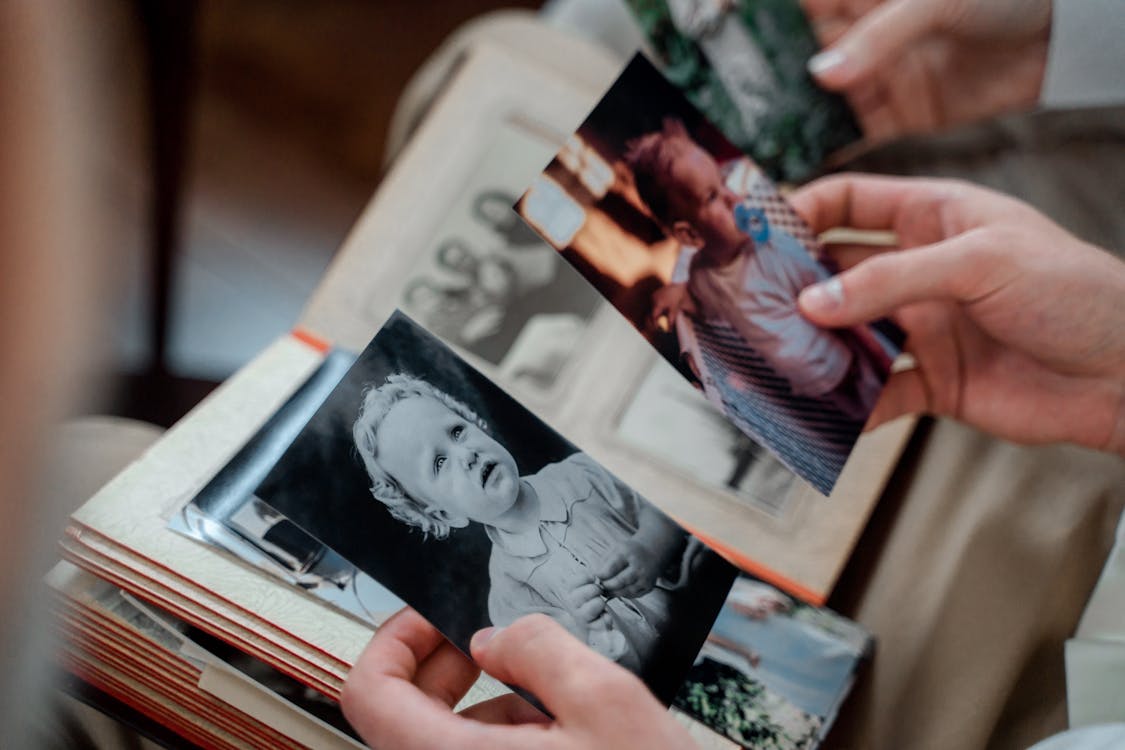
Handle prints by the edges only. Oils from fingers can accelerate deterioration on photo paper over time.
Don't Sort by Sentiment First. Sort by What's Most at Risk.
Opening a box of family photographs, the instinct is to flip through them. Who is that? When was this taken? Oh, I remember that trip. That's a completely natural response. It's also not the right first move when preservation is the goal.
What works better is a triage order.
First: Magnetic tape media. Pull out every VHS tape, VHS-C tape, Hi8, MiniDV, 8mm camcorder tape, Betamax, or film reel you find and put them in a separate pile. Do not play them on an old VCR to see what's on them. An untested machine can destroy a fragile tape in about thirty seconds. Get them professionally assessed.
Second: Loose photographs. Loose prints stored without acid-free sleeves, or in old magnetic albums with the sticky pages, need attention relatively soon. The adhesive in those old magnetic albums is extremely damaging to photographs over time.
Third: Bound albums. Albums that use proper photo corners and acid-free pages are the safest storage format. These can wait. Prioritize them last.
Fourth: Documents, letters, slides, and negatives. These often get pushed aside in the sorting, but they can be the most historically valuable material in the box. A 35mm negative contains significantly more visual information than the print made from it. When we scan negatives at 4,000 DPI, families are often seeing detail in the original image they've never seen before.
The triage sequence comes from years of working through what families bring us. What's at the top of the list? If ignored, it becomes unrecoverable. What's at the bottom? More time. Not unlimited time, but more.
What to Do With the Photographs (Including the Ones You Don't Recognize)
Once the tape media is set aside, photographs are the main project.
Sort and identify before you scan
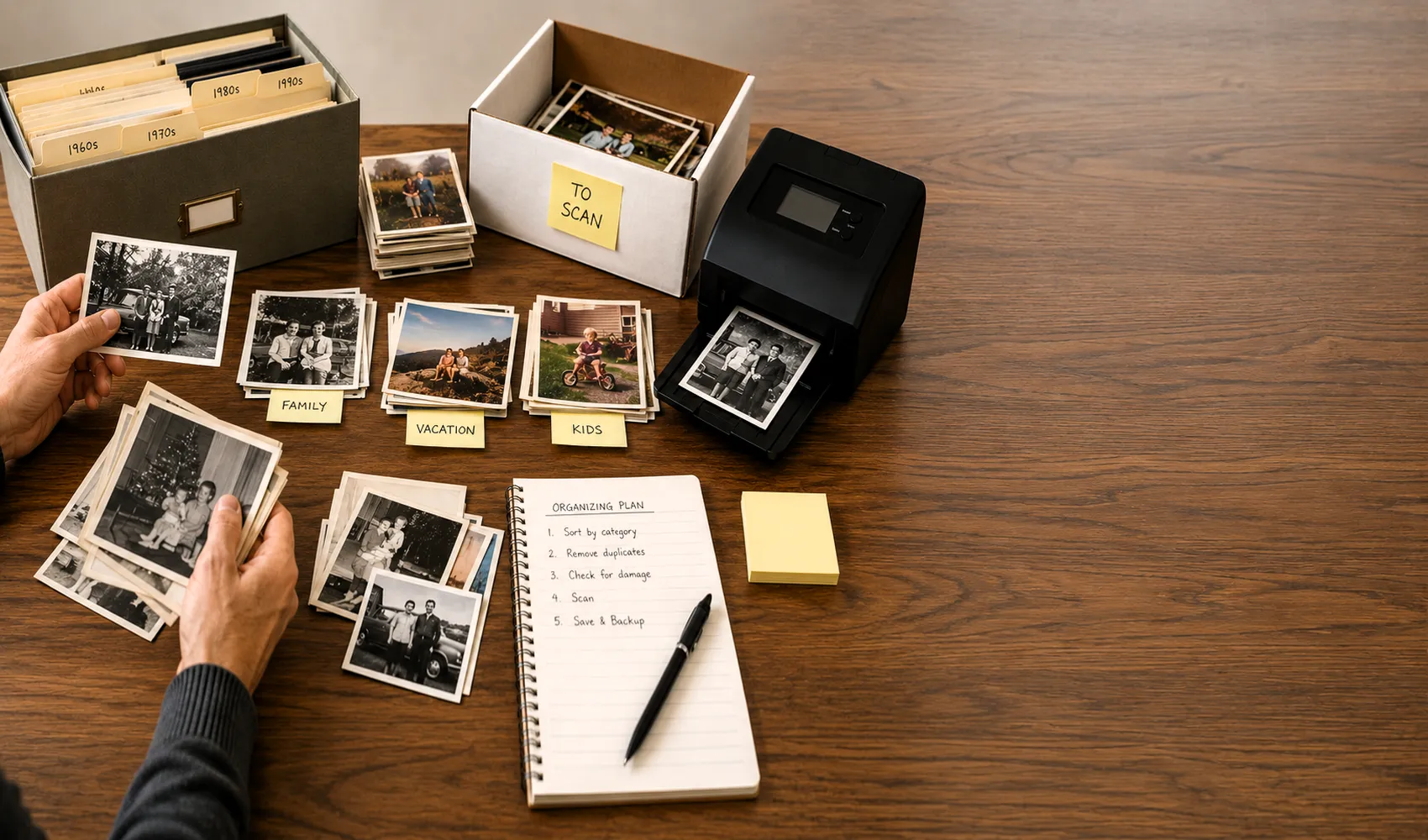
Group by approximate era first, then by person or event. Don't throw anything away yet. Photographs you don't recognize may be identified by a family member you haven't asked yet: often an older aunt, an uncle, a family friend. We've processed boxes where a photograph in the "unidentified" pile turned out to be the only surviving image of a great-grandparent. That photograph had been in a discard stack. Once a photograph is gone, it's gone.
Assess condition before you handle everything
Look for fading, discoloration, tears, water staining, and mold. If you find mold (small fuzzy spots, dark or white), do not try to clean it. Seal the affected photographs in a plastic bag and contact a preservation professional. Mold spreads to other photographs in the same box.
The scanning decision
The short answer: scan everything. At Forever Studios, our professional photo scanning service charges $0.50 per photo for standard scanning. For a collection of 500 photographs, that's $250 to have every image digitized at archival quality. Most families underestimate how large the number is until they actually count what's in the box.
If budget is a real constraint, the priority order is: photographs of people over landscapes, older prints over recent ones, and anything visibly deteriorating before anything else.
Photographs you don't recognize
Scan them. Label the file with a best guess at the decade based on clothing and hairstyles. Photo format gives you information too: size, paper quality, tonal range in a 1920s print are completely different from a 1970s print. The Library of Congress recommends photographing the back of prints as well. Handwritten inscriptions on the backs of old photographs are often the only documentation of who is in them and when they were taken.
VHS Tapes and Film Reels Need Attention Before the Photos Do
Back to the tapes, because this is where families consistently lose their most irreplaceable content.
A VHS tape made in the early 1990s is now more than 30 years old. The magnetic particles holding the video signal lose their charge over time through remanence decay. Add humidity, temperature fluctuation, and physical aging of the binder, and the typical lifespan of a VHS tape in normal home storage conditions is somewhere between 10 and 30 years. You can read our full breakdown on how long VHS tapes last. Many tapes have already crossed that window. Many others are right at the edge.
The tapes that concern us most are ones stored in garages or attics where temperatures swing significantly with the seasons. Heat and humidity cycles are the accelerant. A tape kept in a climate-controlled bedroom closet its whole life is in far better shape than one that spent 25 summers in an attic in South Florida.
"The families who wait the longest are always the most upset. Not because we can't help, but because by the time they call, some of what was on those tapes is already gone. The tapes sit in a garage for twenty years, and then there's another year or two while the family figures out what to do with the estate. That delay is the part that costs them."
Greg Evangelista, Marketing Director, Forever Studios
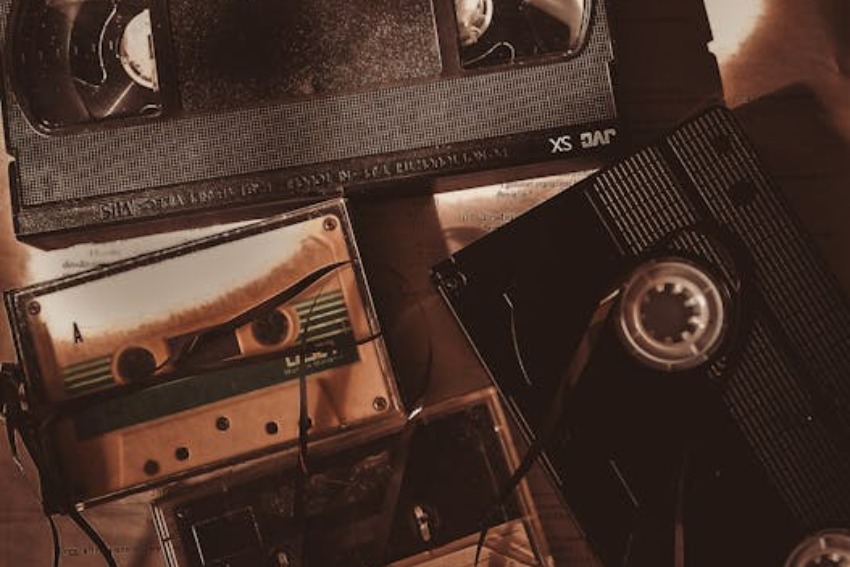
VHS tapes, Hi8, MiniDV, and audio cassettes all degrade on similar timelines. Do not attempt playback on an untested home VCR.
What to do when you find tapes
- Do not attempt playback on an old home VCR. A fragile tape can shed oxide onto the heads, damaging both the tape and the machine.
- Handle tapes by their plastic case only, never by the tape itself.
- Store them somewhere cool and dry until they can be professionally transferred.
- MiniDV and Hi8 camcorder tapes degrade just as quickly as VHS. Smaller does not mean safer.
8mm and Super 8 film: a different kind of decay
8mm and Super 8 film reels are handled differently. Film degrades through vinegar syndrome: the acetate base off-gasses acetic acid as it breaks down. That's why old reels sometimes smell sharp or sour. That smell is active degradation. Visible warping, brittleness, or surface separation are signs the reel needs immediate professional attention.
Professional tape and film transfer services play the original media on calibrated equipment, bake where needed, and output to a digital file. At Forever Studios: $12 per VHS or camcorder tape, $15 per reel of 8mm or Super 8 film.
Scanning Photos Yourself vs. Sending Them to a Studio
The decision is whether to scan the photographs yourself or send them out.
When DIY scanning makes sense
DIY makes sense when you have fewer than 100 photographs, you already own a flatbed scanner, you want to organize and label as you go, and time is genuinely not a factor.
A flatbed scanner set to 600 DPI produces archival-quality results for standard prints. The National Archives recommends 600 DPI as the minimum for prints intended for enlargement or long-term preservation. Slides and negatives need 2,000 to 4,000 DPI. Handle prints by the edges only.
When to use a professional service
Professional scanning makes more sense when you have more than 100 to 200 photographs, the collection includes fragile, damaged, or mold-affected prints, you need slides, negatives, or oversized formats handled, or you want restoration or colorization done at the same time.
The realistic time estimate for personally scanning 500 photographs on a home flatbed, including handling each print, placing it, scanning, and saving the file, is 40 to 60 hours. That's not a rough estimate. It's what we hear back from families who try it. Most start the project, get through the first hundred or two hundred, and put the rest back in the box. The photographs stay there.
Professional services turn large collections around in days, not months. If you're coordinating an estate across multiple family members or doing this from a distance, having the collection scanned and delivered as digital files removes a significant obstacle.
What to Do With the Physical Originals After You've Digitized Them
After digitizing, the question is what to do with the prints themselves.
Proper long-term storage for physical prints
Proper long-term storage uses archival-quality, acid-free materials. The Library of Congress guidelines recommend acid-free, lignin-free enclosures; storage in a cool, dry environment at 60 to 70 degrees F with 30 to 50% relative humidity; protection from light especially UV; and no PVC plastic sleeves, which off-gas and damage photographs over time.
Archival photo boxes from suppliers like Gaylord Archival or University Products cost under $30 per box and are the right solution for most families.
What to do when keeping everything isn't practical
If storing originals isn't practical, consider distributing the most meaningful prints to family members who want them, donating photographs with community or local historical context to a regional historical society, or keeping a curated selection of 25 to 50 of the most significant originals in archival storage and letting go of the duplicates.
You don't need to keep every print once you have a quality digital scan. The digital file is the preservation. The print is a secondary copy.
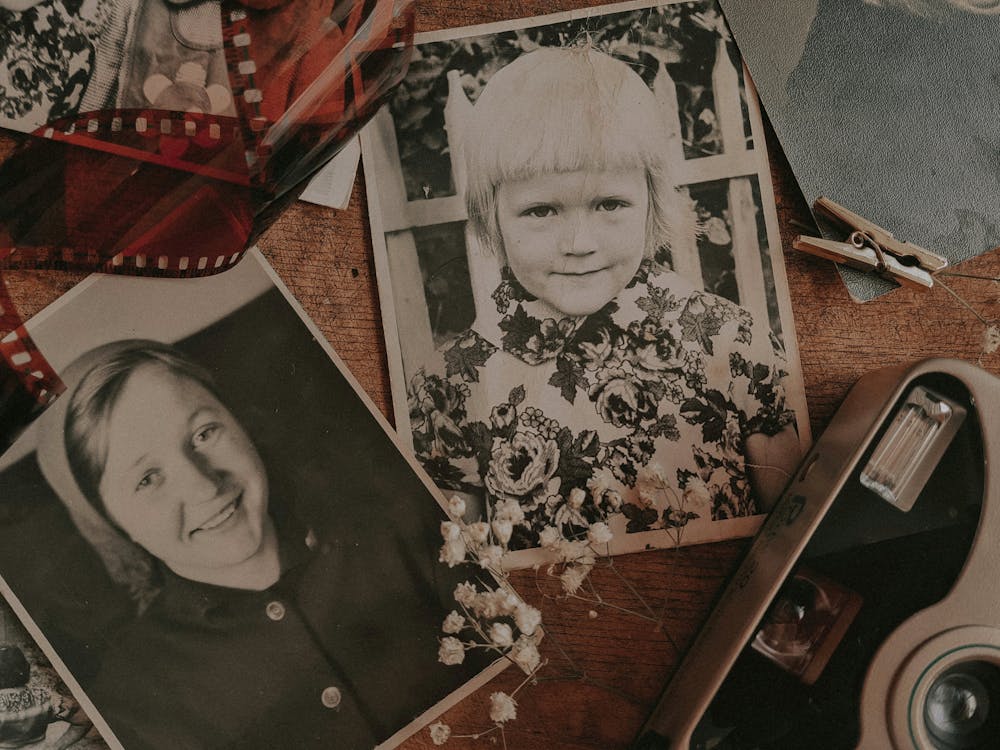
Before discarding any photograph, check whether another family member can identify it. The only surviving image of a relative is often found in the unidentified pile.
What Families Say After Recovering Their Inherited Collections
The families who work through this process share a consistent experience: the material they were most worried about losing was usually still recoverable, as long as they didn't wait too long. Here's what a few of them found in their boxes.
★★★★★
"I found three 16mm film reels in my parents' archives from 1947-48. I had been unable to find a way to digitize them, and had all but given up. They digitized the videos and the quality was excellent. I now have priceless videos of my parents' wedding that I can share with the whole family."
Bill, verified customer (August 2025)
★★★★★
"I had VHS tapes from 1990 that were copies of our old 8mm family home movies from the 1950s and 60s. The old movie films were lost, all I have left is the VHS tapes and I knew they would soon be lost to deterioration. I'm so grateful to now have them permanently on a thumb drive."
Patty, verified customer (October 2025)
★★★★★
"My needs required a VHS tape conversion, 35mm slide conversion, 35mm negative strip conversion and one photo restoration project. All parties communicated timely and the original schedule predictions remained accurate. I would recommend trying them if you have similar needs."
Deryk, verified customer (September 2025)
How to Share the Memories With the Whole Family
A digitized collection has the most value when the whole family can access it, not just whoever did the work of going through everything.
Shared cloud storage
Google Drive, iCloud, or Dropbox can host large family collections accessible via a shared link. Organize by decade or by family branch. Label files with who is in the photograph and the approximate year.
Printed photo books
Services like Artifact Uprising or Chatbooks produce professional-quality books from digital uploads. A single book covering the key decades of a parent's life is something every family member can have a copy of.
Compiled home video highlight reels
If home videos have been transferred to digital, a video editor or a service like Forever Studios can cut the most significant footage into a single highlight reel with titles and music. Something grandchildren can watch without needing any technical context. If you found audio cassettes in the box too, our guide on what to do with old audio cassette tapes covers the same triage approach for audio recordings.
Label while you still can
Even a simple system (naming files by year and subject, adding notes in file metadata) gives future family members context they wouldn't otherwise have. The window to do this properly is while older relatives who can identify subjects are still living. Most families say they wish they'd started this earlier. If siblings are involved in dividing the collection, our guide on how to divide family photos among siblings walks through the process fairly.
The One Thing People Tell Us They Wish They'd Done Sooner
After years of receiving collections from families in exactly this situation, the feedback is consistent: they wish they had started earlier. Not earlier in the estate process. Earlier in a broader sense: before the loss, while the person who knew the names, the stories, and the specific details in those photographs was still there to ask.
That part can't be fixed after the fact. But what happens next can be.
"We always say: the photograph is patient. The tape is not. If someone calls us six months after finding a box, the photos are usually fine. The tapes are the ones that may have crossed a line in those six months. That's the one we wish more people understood before they put the box in the garage."
Zachary Goldberg, Founder, Forever Studios
If you're working through an estate and have found a collection of photographs and home videos, the most useful thing to do in the next two weeks is get the tapes and film into professional transfer as quickly as possible. The photographs can follow. The physical media can be assessed and stored properly. But the tapes are the urgent item.
Forever Studios, a professional photo and video preservation studio in South Florida, handles the complete scope: photo scanning at $0.50 per photo, VHS and camcorder tape transfer at $12 per tape, 8mm and Super 8 film transfer at $15 per reel, and photo restoration and colorization at $35 per image. We work with estates, with families managing this from across the country, and with individuals who have collections of all sizes.
Not sure where to begin? A short conversation about what you have, what condition it's in, and what's most at risk usually gives families a clear sense of what to do first. Reach out anytime.

Ready to digitize it right the first time?
Bring your tapes, film, and photos to the team that treats every project as irreplaceable. All work is handled in-house in Boca Raton, never outsourced.