How to Divide Family Photos Among Siblings Without Fighting
A photo preservation studio owner's honest guide to splitting a family collection without destroying the family in the process.
Contents
Last updated: April 2026
The most reliable approach is to digitize the entire collection before anyone takes a single print home. Once digital copies exist, every sibling can have everything, which dissolves the scarcity driving most of the conflict. The original prints can then be distributed using a simple, fair method. Here's what I've learned in 17 years of helping families through exactly this situation at Forever Studios, a photo and film preservation studio in South Florida.
I run a photo and film preservation studio in South Florida. We digitize old photos, 8mm film, VHS tapes: the kind of stuff families hold onto for decades and then panic about when someone passes. I've watched, more times than I can count, entire families hold it together through the funeral, the estate lawyer, the furniture, the jewelry. And then completely fall apart over a shoebox of photos.
Not kidding. A shoebox. Sometimes a photo album. Once, a single framed portrait of a relative nobody could even identify. They went back and forth about it for forty-five minutes. I timed it.
So if you're in the middle of this right now, or trying to get ahead of it, here's what I've picked up in 17 years of owning Forever Studios, from being the person families call after things have already gone sideways.
Why Family Photos Hit Different Than Everything Else
You can split money. You can sell furniture. You can argue about who gets the car and eventually somebody takes a number and moves on.
Photos are different. They've got a price tag of zero and an emotional value of everything. Nobody's fighting over a blurry Polaroid because they need it. They're fighting over it because it's the only proof that a moment happened. That a parent looked that way. That a family was together in that exact place at that exact time, and now they're not, and that photo is the only thing that's left.
Here's what I've figured out after watching this happen over and over: a lot of the time, people don't actually want the photo. What they want is to make sure the right person gets it. Or they want to make sure the wrong person doesn't. Both of those things feel exactly like wanting the photo, but they're not. Once you see that, you're already thinking more clearly than most people in this situation.
Oh, and some of the photos nobody actually wants. I say this with love. You'll find out around hour three. Keep going.
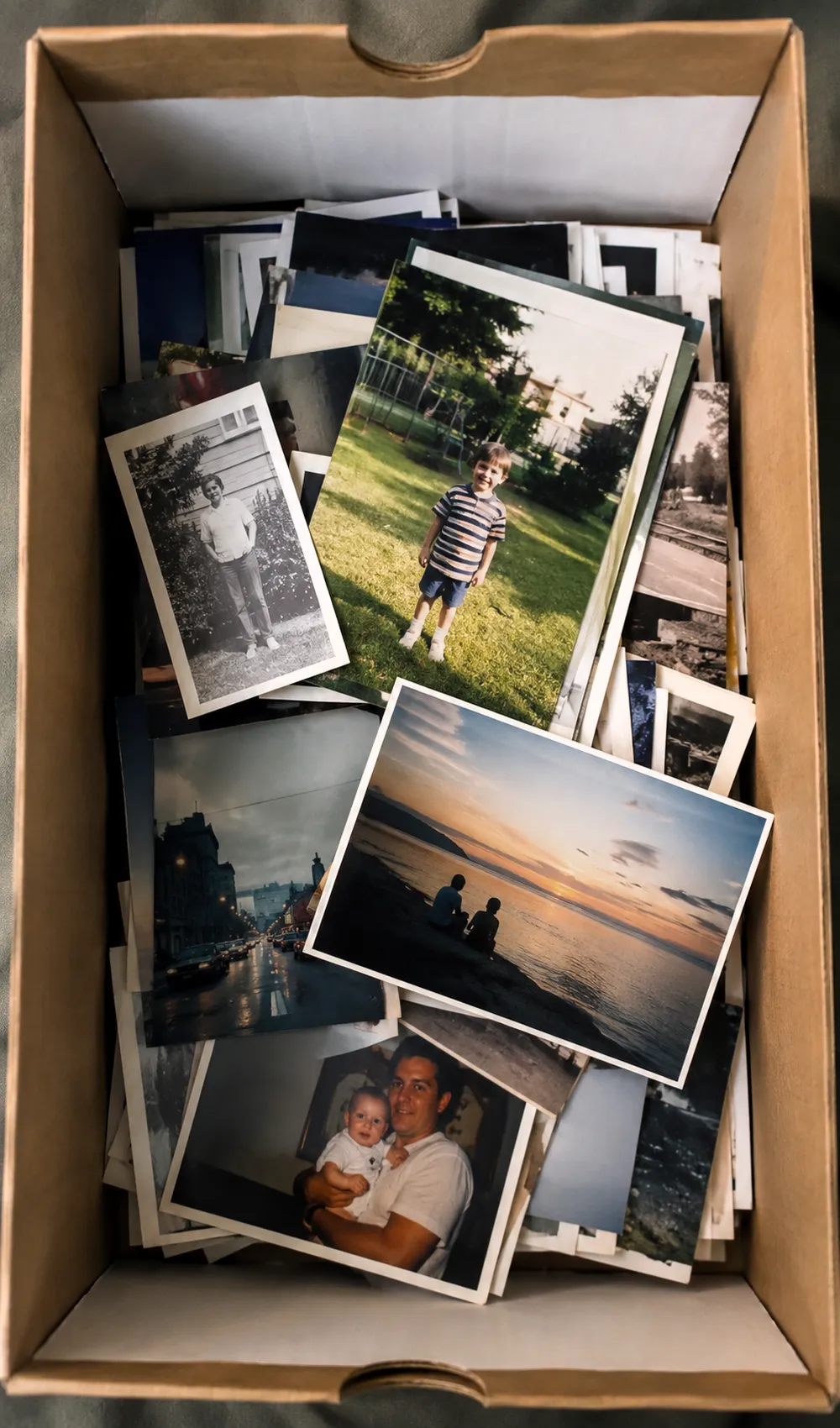
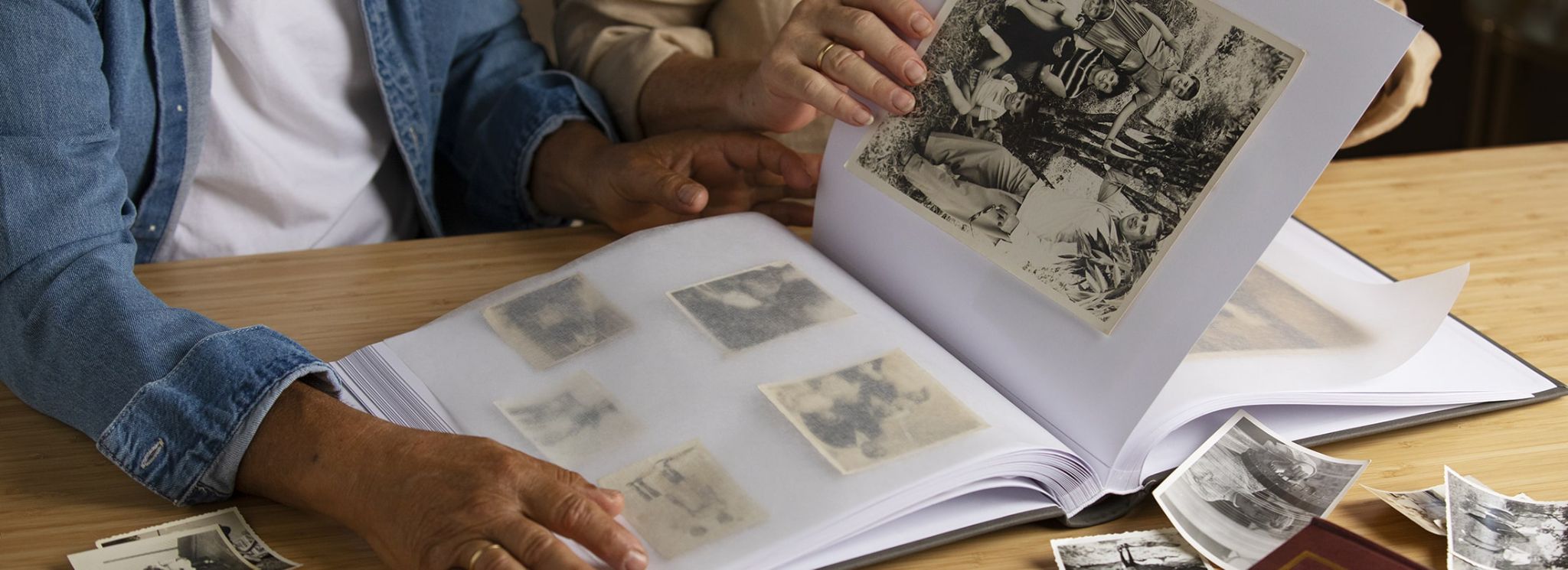
A typical inherited photo collection: hundreds of prints, no order, no labels.
That shoebox you keep putting off sorting through? It's worth more to your family than almost anything else in the house.
The One Thing You Should Do Before Anyone Takes Anything Home
This is the part where I give you the advice that also happens to be good for my business, but I promise it's genuinely the right move: before anyone takes a single photo home, scan all of them.
Here's the actual problem. Most of these fights aren't really about the photos. They're about scarcity. One print exists, so somebody has to lose. The moment you digitize everything, that scarcity is just gone. Everybody gets grandma at the beach. Everybody gets the Christmas from 1987. The original print can go to one person, and the memory can belong to all of them.
At that point you're not dividing the photos anymore. You're just deciding who keeps the paper.
Digitize first, then divide. The digital copy is what every sibling can take home.
Digitizing the collection before you divide it eliminates the zero-sum problem entirely. Everyone gets a copy.
I can't count how many times someone has called me after the argument already happened, asking if we can scan a photo that a sibling took home three weeks ago. Usually we can, but now it involves shipping, waiting, and somebody asking a favor from a person they're currently furious with. I have been in those phone calls. It's not fun for anyone involved.
None of that has to happen. Scan first, then divide. The National Archives warns that photographic prints degrade irreversibly: fading, color shifts, and silver mirroring can accelerate faster than most families expect. Getting a professional scan done while the prints are still in good condition is much easier than trying to recover them afterward. Our guide to photo album scanning walks through what the process looks like.
How to Actually Do This Without It Turning Into a Whole Thing
Once everyone has digital copies, you're just dividing paper, and the stakes drop a lot. These are the methods I've seen work.
The Round-Robin
The simplest method: everything on a table, take turns picking one. You can go by age, reverse age, draw straws. Whatever method you pick, it doesn't really matter as long as you pick one and stick with it. The problem is someone always wants to trade after. And then someone else wants to trade back. Call it before you start: no trades, period. Trust me on this one.
The Who's-In-It Rule
Photos go to whoever has the strongest connection to them. The photo of your mom at eighteen goes to whoever she wanted to have it, or to whoever that part of her story belongs to most. It's not perfectly fair in terms of stack size. Some people end up with more photos. But that's not really what fair means here. The goal is right photos, right hands.
The Real Opt-Out
One thing a lot of families forget: you have to let people opt out for real. Not "you can opt out but we'll make you feel guilty about it." Actually opt out.. Some people can't handle this process right now. Some people genuinely don't care about physical objects and will pretend they do because they feel like they should, which just makes everything slower and stranger. Give people a real out. Tell them the offer is open whenever they're ready. Move on.
The Nobody-Wants-It Pile
There will be a pile of photos nobody wants. Relatives nobody can place, eleven shots of the same birthday cake, events that happened before anyone in the room was born. Don't throw them out. Scan them for genealogy purposes and drop them in a shared folder, or donate them to a local historical society. The Society of American Archivists maintains a directory of repositories that actively collect community photographs and family documents. Old photos turn out to matter a lot to people, usually someone who wasn't in the room for this conversation, twenty or thirty years from now.
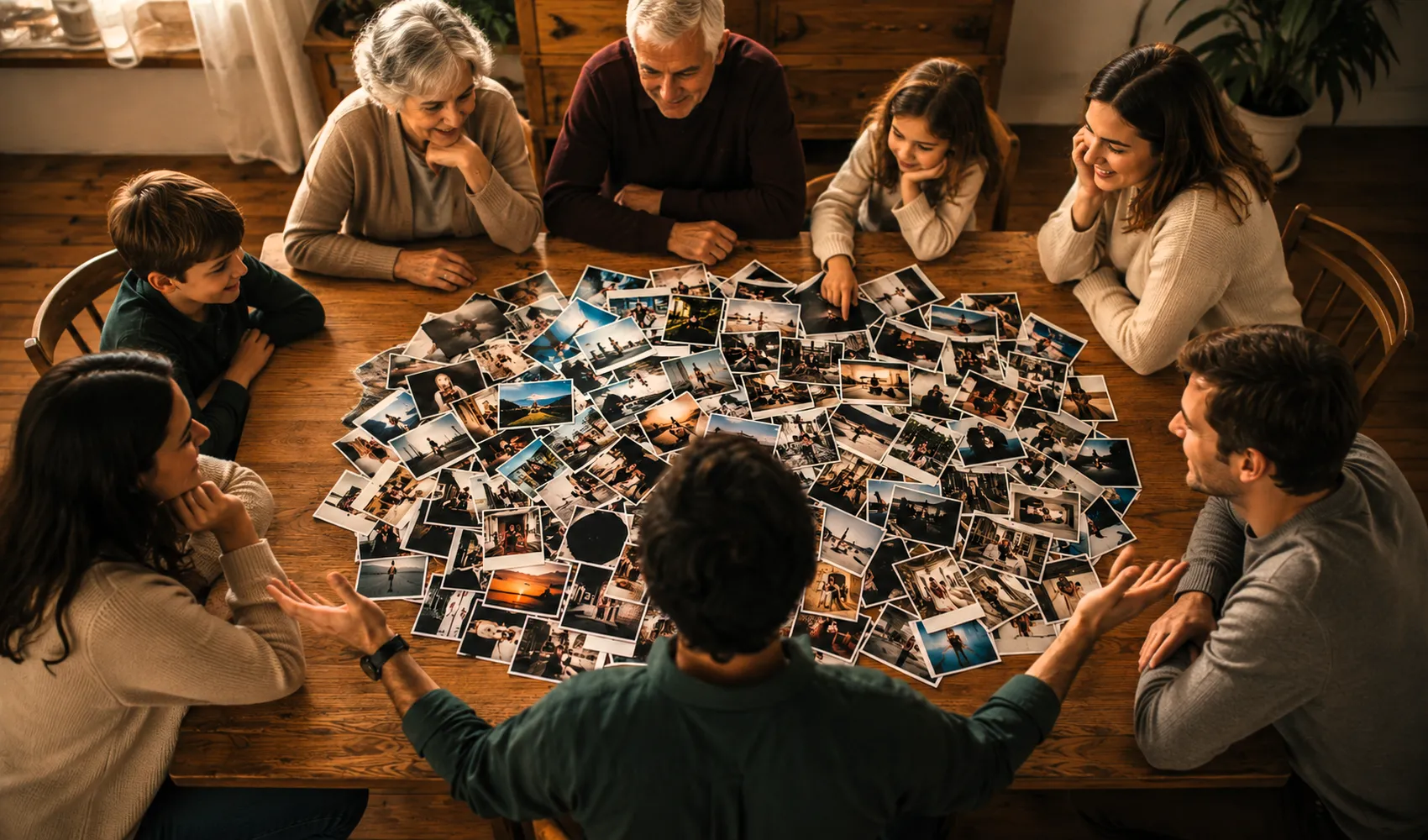
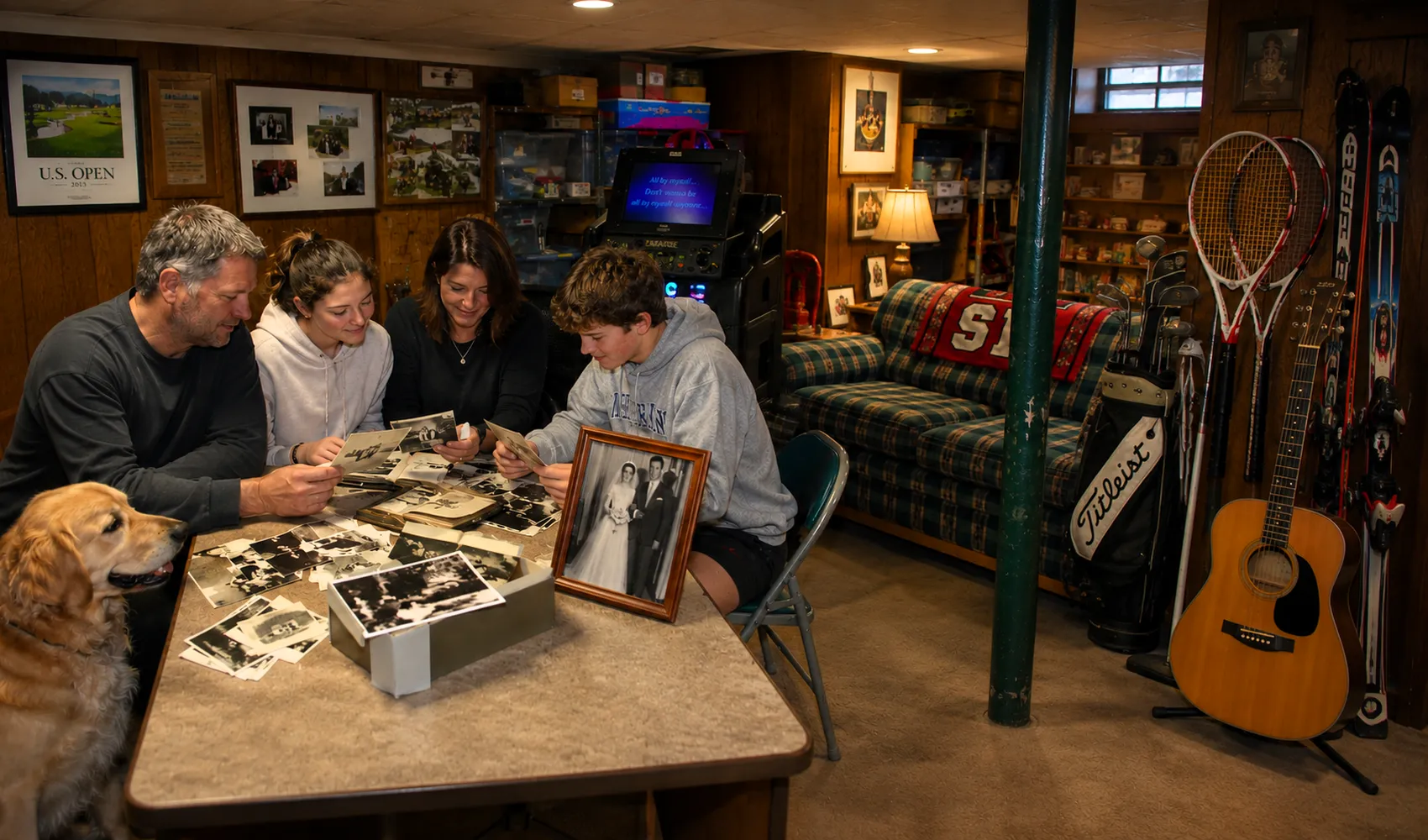
When everyone is in the same room, the conversation goes faster than coordinating by text.
The round-robin method works best when the rules are set before anyone sits down.
When One Family Member Just Won't Move
Sometimes one person digs in. They want a specific photo, won't budge, two other people have an equal claim, and the whole thing has stalled out.
My actual advice, and I know it's annoying: let them have it. A physical print is almost never worth what it costs to fight about in a family. The grudge lasts years. The photo gets forgotten. You will stop thinking about that picture way before you stop thinking about the argument.
If it's something genuinely irreplaceable (one of a kind, real historical weight), lean on the scan. The person who needs the original gets it. Everybody else has a copy. Nobody loses the memory. Everybody goes home.
If the Photos Are Already Falling Apart
People bring me photos expecting bad news. A lot of the time it's not as bad as they think. Restoration technology has gotten really good, and images that look completely gone are often recoverable. The Library of Congress photo preservation guidelines note that even severely faded or water-damaged photographs can often be stabilized and restored with modern techniques.
If the family's arguing over a photo that's also deteriorating, restore it first, before you divide it, not after. It's a better thing to hand someone. It also removes one more thing people can feel cheated about.
And just as a general principle: these photos are going to outlast everyone who's currently in this argument. They deserve to be in better condition than the relationship currently is.
What I Actually Hope You Get Out of This
Nobody wants to fight with their family over old photos. I have genuinely never met a person who walked away from one of these situations feeling good, regardless of what they ended up with.
What they actually wanted, underneath all of it, was to feel like the person who died is being remembered with some care. That the memories aren't being treated casually. That someone in the family was thoughtful enough to handle it right.
Scanning the collection does something that dividing originals never can: it makes the memories belong to everyone equally. Nobody wins at someone else's expense. The whole story goes to every person who was part of it. That's why protecting your family's photo collection is worth doing sooner rather than later.
That's the outcome that's actually worth working toward. And in my experience, even in situations that have gotten really messy, even when someone has already taken the shoebox, it's usually still possible.
If you're dealing with a collection and not sure where to start, reach out. An assessment is free, and it tends to make the rest of this conversation a lot easier.
Frequently Asked Questions
What is the best way to divide family photos among siblings?
The most practical approach is to digitize everything first, then divide the originals. Once every photo exists as a digital file, the scarcity that causes most arguments disappears. Every sibling can have a copy of every photo. After scanning, use a round-robin selection for the original prints, or assign photos based on who has the strongest personal connection to the subject.
Should you scan family photos before dividing them?
Yes. Scanning before dividing is the single most important step you can take. Once you digitize the collection, the argument shifts from 'who gets this photo' to 'who keeps this piece of paper.' Everyone can have the memory; only one person needs the original print. Professional photo scanning services can digitize an entire shoebox in a day.
What do you do with family photos nobody wants?
Do not throw them away. Scan them first, then place the digital files in a shared family folder (Google Drive or iCloud work well). The physical prints can be donated to a local historical society or genealogical society, which often accepts photos of unidentified people from their region. Photos that seem unwanted now often become meaningful to future generations.
How do you handle a sibling who won't agree on photo division?
In most cases, the most practical resolution is to let the person who feels most strongly about a specific photo keep the original, and ensure everyone else gets a high-quality scan. The digital copy preserves the memory; the paper print is just the container. Fighting over the container rarely ends well and always costs more than the object is worth.
How long does it take to go through a family photo collection?
A typical shoebox of 200-400 loose photos takes most families 2-4 hours to sort through when doing it together. Albums take longer because people stop to talk about the photos. Budget a full day for a large collection, and plan for more time than you think you need. Trying to rush the process is one of the most common causes of arguments.
What should you do with damaged or deteriorating family photos during estate division?
Restore and scan damaged photos before dividing them, not after. A restored photo is a better thing to hand someone than a deteriorating original. Modern photo restoration can recover images that appear completely gone, including faded, water-damaged, torn, and mold-affected photos. Getting the restoration done while the family is gathered makes the decision process easier.
How do you divide original photo albums versus loose prints?
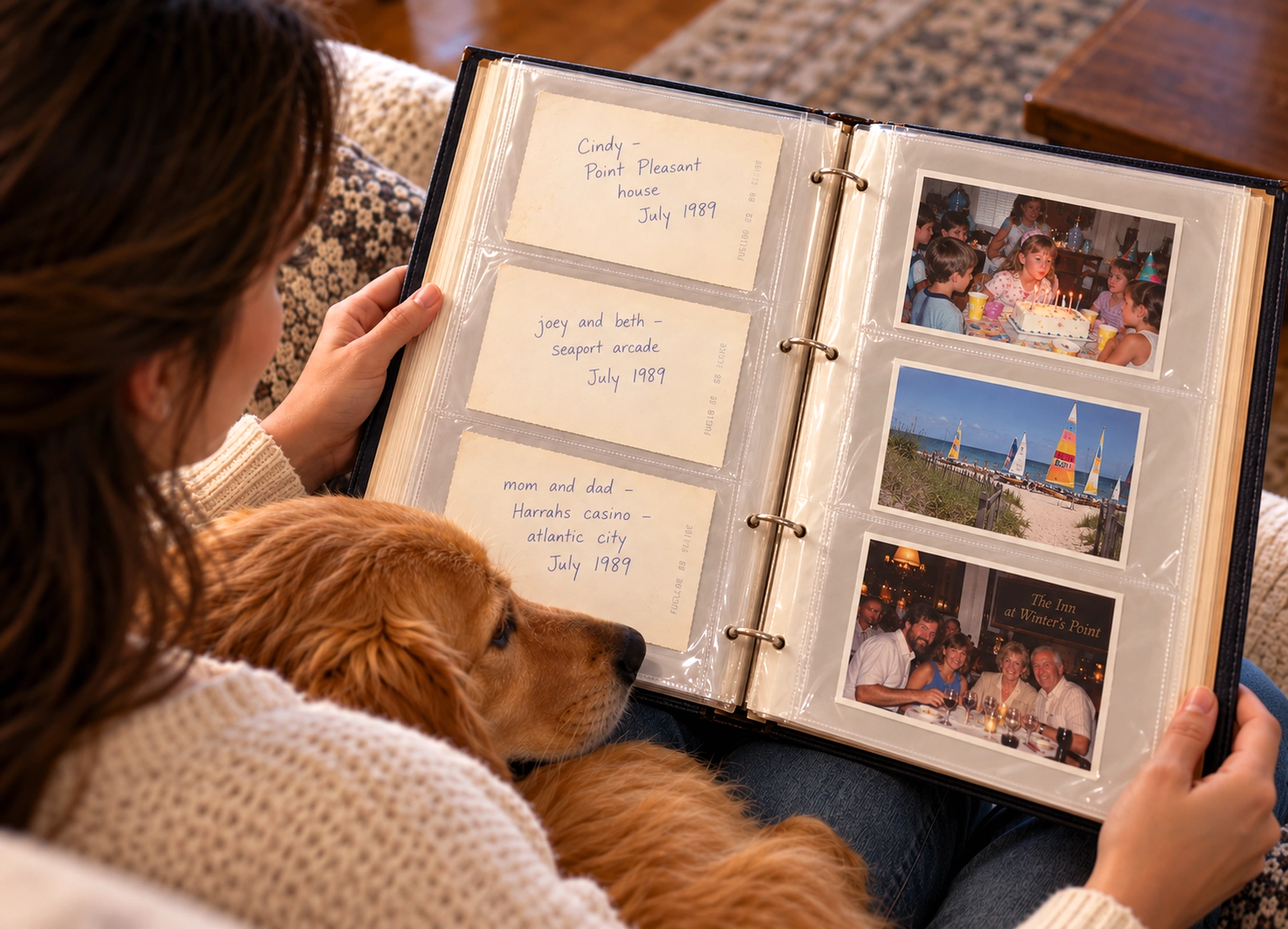
Albums with a clear narrative or belonging to one specific person (a wedding album, a child's baby album) should generally stay intact and go to the person most connected to that chapter of the story. Loose prints are easier to divide by round-robin or subject matter. When in doubt, scan the album and distribute copies, then decide who keeps the physical book.
Can you make copies of old family photos to give to everyone?
Yes. Professional photo scanning produces high-resolution digital files that can be printed at any size. A scanned photo at 600 DPI or higher can produce a print that is virtually indistinguishable from the original. Services like Forever Studios offer photo scanning that results in files ready for reprinting, sharing, or archiving.
What happens to family photos if nobody takes them?
Photos left in an estate with no designated recipient often end up in storage, donated to thrift stores, or discarded during cleanouts. The most common outcome is that they are eventually lost. If no one claims them during division, scanning the collection and creating a shared digital archive is the best way to preserve them for future family members who may later want access.
How do you digitally organize family photos after scanning?
Organize by decade or life event rather than strict chronology. Folders structured as 'Family Name - 1950s,' 'Mom - Childhood,' or 'Parents - Wedding' are easier to navigate than a flat folder of 800 numbered files. Include a simple README text file in the shared folder that explains who is pictured in key photos. This context becomes invaluable within one generation.
Ready to digitize it right the first time?
Bring your tapes, film, and photos to the team that treats every project as irreplaceable. All work is handled in-house in Boca Raton, never outsourced.